I am happy to report that all my misgivings about the IMS Museum renovation were swept away- no- blown away by the gale force winds that came through the state last week. My visit earlier today put all my concerns at ease.
This is not your grandfather’s IMS Museum. It is a far cry from the six cars sitting in the ticket office at the corner of 16th and Georgetown. It’s even a far cry from what it was 15 months ago.
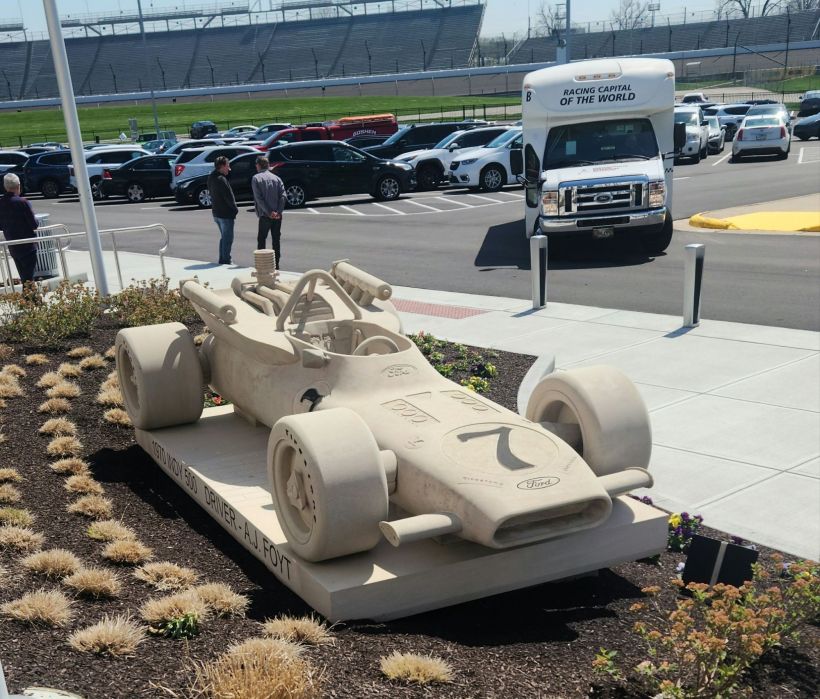
The static museum with artifacts randomly lining the walls has given way to a dynamic, immersive presentation of the history of the Indianapolis Motor Speedway. The similarity to the former place ends when you enter the front door. Yet, change begins outside as well. The two car sculptures, the 1949 Novi and the 1970 Foyt car, have been moved to flank the walkway leading to the entrance. The cars now have more visibility than they had on the lawn in front of the fountain.

Once inside, visitors are greeted by a wall with three screens of race highlights which change. I happened to enter when a photo of Bill Vukovich in Victory Lane flashed into view. They must have known I was there.
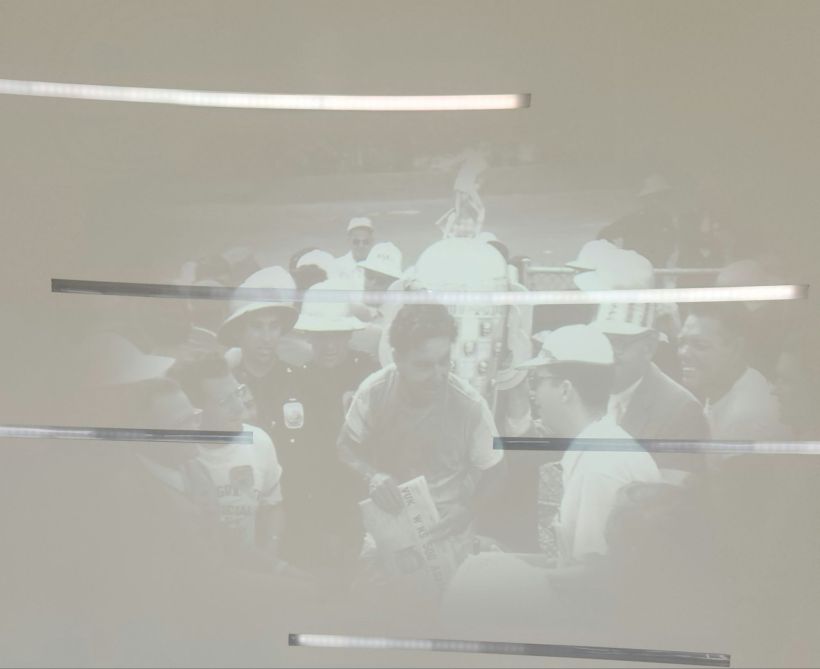
The images are faint, but take a minute to watch some of them. This was in the center of the screen and there are pictures on either side.
The former single floor display now encompasses all three levels of the building. There are five parts to the museum as it tells the story of speedway from its humble beginnings to the modern racing facility it is today. The story is told with respect, and it honors those who have built the Indianapolis 500 into the Greatest Spectacle in Racing.
Gasoline Alley
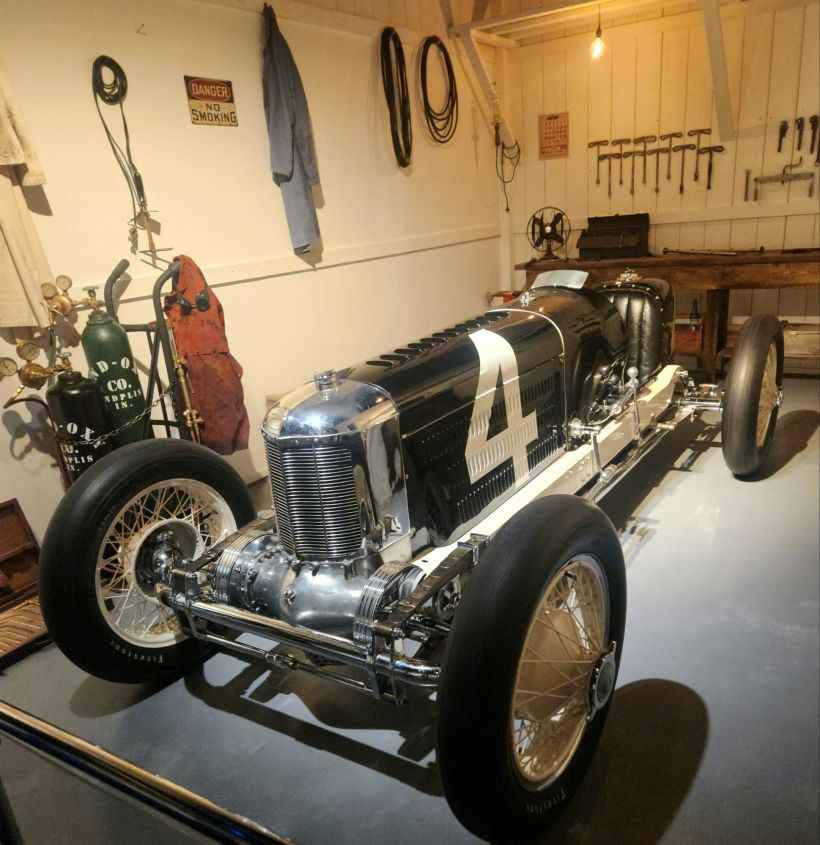
The journey begins in Gasoline Alley, a corridor just past the admission counter. On the left is a timeline beginning in 1909. Artifacts and photos are arranged in an orderly fashion, numbered with corresponding explanations below.
On the right are cars of several era in the garages as they would have looked at that time. While the cars were great to see, following the development of the garages was more interesting to me.

Starting Line Experience
I am not going to describe this because it needs to be experienced firsthand. I will say it an intense, multi-sensory presentation. and you will get race day goosebumps during the three-minute show. I saw some people wiping their eyes as they left.

Winners’ Gallery
The winning cars are essentially in the same area as they were, but each now has its own niche. This is the part where I had the largest concern with the new project. There is actually more access to the cars. The Boyle Special and the Fuel Injection Special are among the cars with individual stands. Some cars are in wall niches, but those platforms are banked so visitors can get a good look at cockpits. If I have one small nitpick, the lighting causes photos to make the cars look a different color than they are. The Boyle Special looks more red in a photo. I found using a flash helps.

Kids’ Area
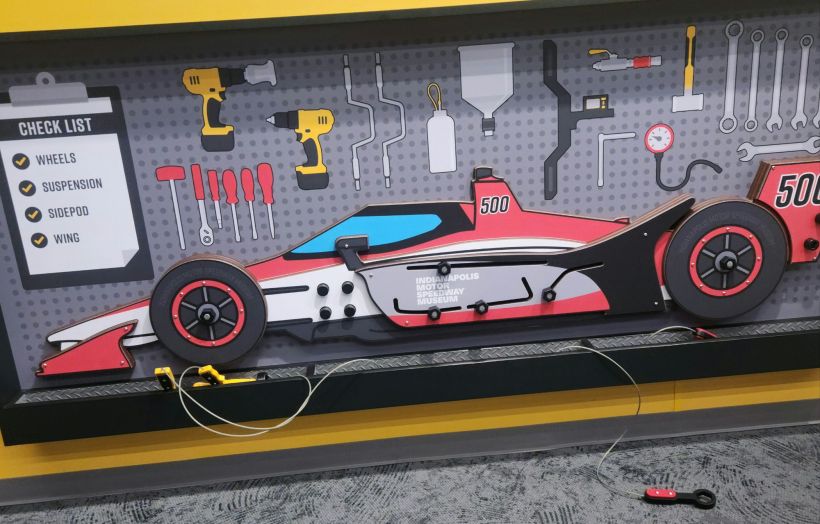
I like that a kids’ area is included in the museum. The area is educational as well. There are many activities for the kids, including working wrenches, moving a toy car around the oval and the road course, and sim racing. Each activity involves easy to read facts about the car and racing.
Four Time Winners’ Gallery
This is likely a special exhibit. It features each of the four time winners. Each winner has a corner of the area.

Penske Gallery
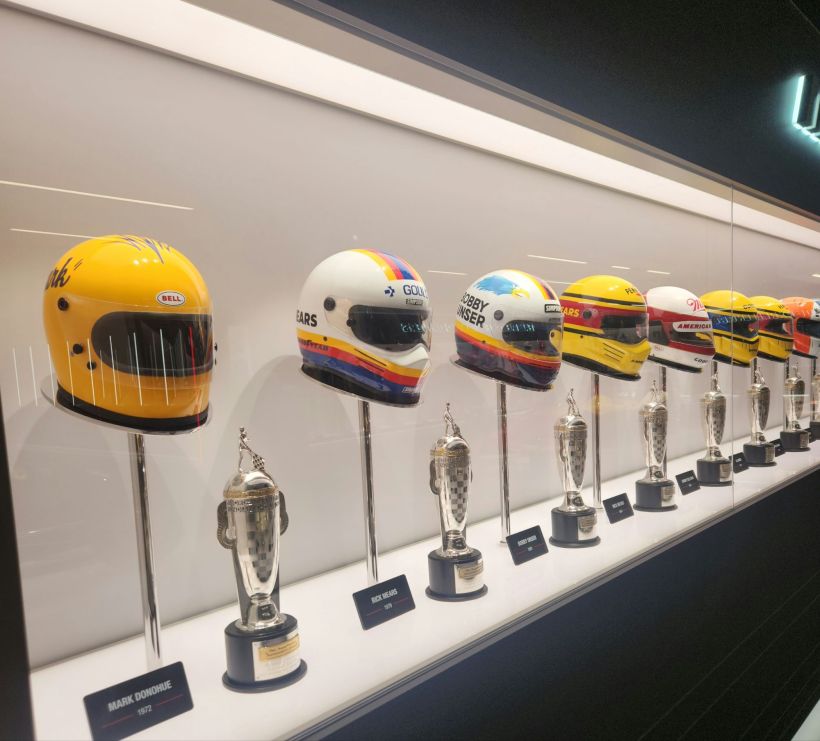
The Penske Gallery displays the history of Roger Penske. All drivers who won for him and some of the winning cars are represented. My favorite part of this exhibit was the row of helmets of the winning Penske drivers. It is a nice history of the evolution of the helmet from 1972 to today.
Interactive Displays
Throughout the museum there are interactive display screens ranging from a driver database to a speedway timeline to a winner’s database. The nice thing is there two of each, which eliminates waiting for those who like to linger over these devices.
If you are coming to the race in May, please take some time to visit the museum. It is well worth the time and the price is fair.
While I loved the former iteration of the place- it was my winter sanctuary and place of comfort during difficult periods the new museum presents a more orderly and dignified telling of the history of IMS. I think I will find comfort here as well.
 The Pit Window by Mike Silver