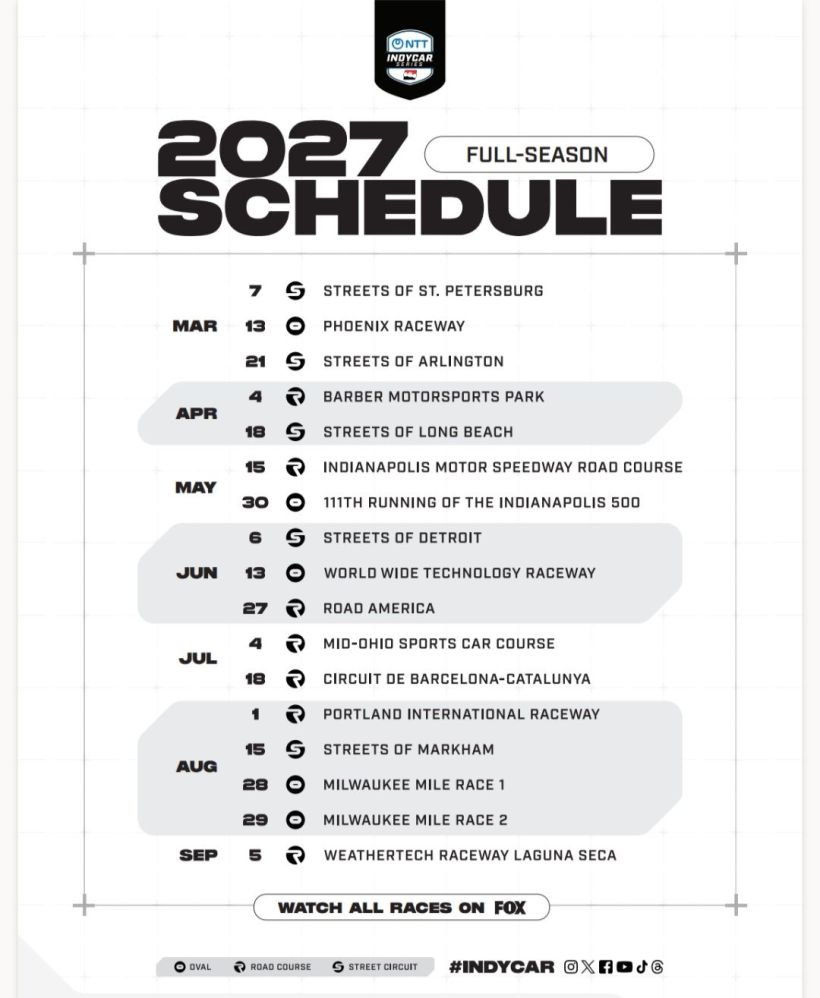
From IndyCar. My thoughts up later.
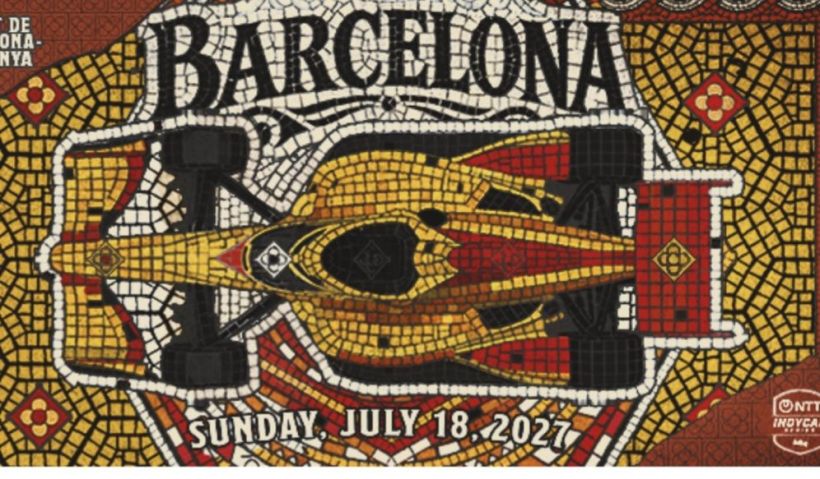
| New Marquee Race Weekend in Barcelona Highlights Action-Packed Summer, Furthers Series Momentum All NTT INDYCAR SERIES Races Again To Air on FOX INDIANAPOLIS (Friday, Oct. 23, 2026) – Following the historic announcement of an NTT INDYCAR SERIES race at iconic Circuit de Barcelona-Catalunya earlier today, INDYCAR has announced Phase Two of next year’s action-packed and momentous schedule. The summer lineup includes a mix of fan-friendly and dynamic race weekends leading up to the climactic moment at WeatherTech Raceway Laguna Seca when the 2027 INDYCAR SERIES champion hoists the Astor Challenge Cup.For the third consecutive season, all races will be broadcast on FOX in the United States, with three additional telecasts scheduled during the two days of qualifying for the Indianapolis 500 presented by Gainbridge and coverage of Miller Lite Carb Day at Indianapolis Motor Speedway. The NTT INDYCAR SERIES is once again the only premier motorsports series in North America with all races broadcast on network television. “The 2027 season will build off a record-shattering and landmark year for the NTT INDYCAR SERIES,” Penske Entertainment Corp. President and CEO Mark Miles said. “The sport’s growth has been immense, driving incredible viewership gains, reaching new fans in younger demos and attracting increased commercial interest from emerging and long-term partners. Our relationship with FOX Sports continues to set an industry standard, and this schedule will help us build on all of these gains and take things to the next level.” After announcing Phase One of the 2027 schedule in August, Phase Two of the 17-race championship picks up Sunday, June 13 at World Wide Technology Raceway near St. Louis. In 2026, the race on the challenging 1.25-mile oval featured 17 lead changes, wheel-to-wheel action throughout the field and an INDYCAR SERIES track-record 268 passes for position. Two weeks later, the NTT INDYCAR SERIES heads to picturesque Elkhart Lake, Wisconsin, for the series’ 37th race at historic Road America on Sunday, June 27. Known for its sweeping corners, long straightaways and 4-mile layout, the historic road course remains one of the fastest and most demanding circuits on the schedule. Racing at Mid-Ohio Sports Car Course has become a Fourth of July holiday tradition for INDYCAR, and it will continue Sunday, July 4. The technical, 2.258-mile, 13-turn road course, known for its elevation changes and tight corners, will host its 44th INDYCAR SERIES race in 2027, the longest-running road course event on the schedule. Following the international showcase in Barcelona, the series returns to the Pacific Northwest for its annual stop at Portland International Raceway on Sunday, Aug. 1. The 12-turn road course is known for its challenging opening chicane and history of thrilling finishes. In 2026, four different race teams were represented among the top four finishers. The series then crosses the border into Canada for the Ontario Honda Dealers Indy at Markham on Sunday, Aug. 15, on the Streets of Markham. The 2.19-mile temporary street circuit, which debuted in 2026, features 12 turns, a double-sided pit lane and technically challenging sections. The 2026 race featured 258 on-track passes, the most of any street circuit last season. The 2027 NTT INDYCAR SERIES championship enters its final stretch with a return to the historic Milwaukee Mile for a pivotal doubleheader Saturday and Sunday, Aug. 28-29. The legendary 1-mile oval, which opened in 1903, features relatively flat corners that demand precision and offers drivers two opportunities to earn valuable championship points in one weekend. Last year’s first 250-lap race featured a season-high 696 on-track passes and track records for passes for position, passes in the top 10 and passes in the top five. The final round of the 2027 season is scheduled for Sunday, Sept. 5 at legendary WeatherTech Raceway Laguna Seca in Monterey, California. The iconic 2.238-mile road course features 11 turns, dramatic elevation changes and the world-famous Corkscrew turn complex, providing a fitting showcase for the final race of the 17-event championship and the presentation of the Astor Challenge Cup, manufacturer award and Rookie of the Year award. It is the 13th time the legendary circuit on the Central Coast will host the INDYCAR SERIES season finale. “One of the things that makes INDYCAR so special is that winning a championship requires drivers and teams to be competitive on every type of racetrack,” INDYCAR President J. Douglas Boles said. “From high-speed ovals to tight street circuits and challenging road courses, they face a different test almost every weekend. The 2027 schedule continues that tradition, featuring the 111th Running of the Indianapolis 500, alongside some of the most iconic racetracks in North America, and the historic addition of Circuit de Barcelona-Catalunya. With 25 full-time entries battling for a championship and every race broadcast on FOX, our fans have an incredible season of racing to look forward to.” Tune-in times for next season’s events will be announced at a later date. The 2027 schedule for INDY NXT by Firestone, INDYCAR’s developmental series, also will be announced in the coming weeks. |