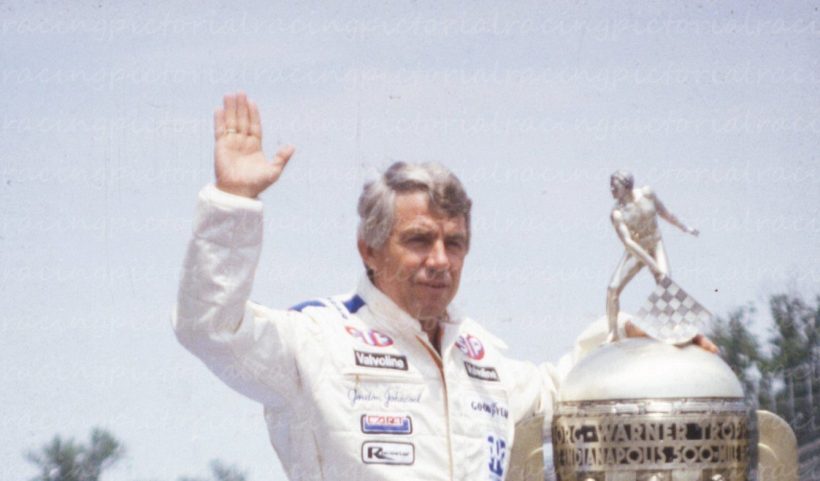
Gordon Johncock-Champion of Life

To live life like Gordon Johncock is to be content. He raced and excelled at it. He retired and put all things racing aside, then focused on his lumber business, shunning the spotlight. Johncock, two-time Indianapolis 500 winner and 1976 national champion, died last night at the age of 90.

Johncock had a stellar racing career in an era of auto racing superstars, competing with A. J. Foyt, Mario Andretti, and Johnny Rutherford. He competed on an equal footing and won his fair share of races. While he may bot have grabbed the headlines that Foyt or Andretti commanded, drivers knew Johncock was someone they would have to fight for a victory.

The first word that came to my mind to describe him was gritty. Johncock was a hard charging, no nonsense racer. A look at his results from his 1976 championship show one of the most consistent seasons in IndyCar history. Johncock won just two races, but he 12 podiums, 13 top fives, and just one DNF.

His career stats – 25 wins, 20 poles, and 2 Indianapolis 500 wins- stand among the best all time Johncock was one of the most consistent drivers in history. In addition to his 1976 championship, he had nine season finishes in the top five. Johncock was third int he standings three times. fourth twice, and fifth four times.

Indianapolis 500

Johncock had great success at Indianapolis with 11top 10 results, including eight top five finishes. He could have won more than twice. In 1966 he completed the 500 miles in less time on track than winner Graham Hill, but extended time in the pits cost him track position. In 1977 Johncock was leading when the crankshaft on his car broke on lap 184, handing Foyt his fourth Indianapolis win.

His two victories ironically stand out for very different reasons. The rain-delayed, rain shortened, tragedy filled race in 1973 was one of the most forgettable days in Speedway history, but his thrilling win over Rick Mears by 0.16 seconds. At the time that finish was the closest in 500 history. It still stands as the seventh closest finish.

Johncock has two other distinctions in his Speedway career. His fifth-place finish in 1965 was the last top five finish for a front engine roadster. Johncock’s win in 1982 made him the last winner of the Indianapolis 500 to have driven both a front engine and a rear engine car in their career.

There are now only three winners who driven front and rear engine cars- Foyt, Andretti, and Johnny Rutherford. Only Foyt had riven each type to victory at Indianapolis.

Fans were puzzled when Johncock retired briefly in 1985, but he returned in 1987 and competed through the 1992 race. He then reti4red quietly and returned to Michigan to run his lumber business. He described racing as “A job I once had.” Johncock seemed content to be away from racing. He was always direct, knew what he wanted, and knew when he had had enough. That’s a lesson some pro athletes today should learn from.

I saw on social media this morning that there are only nine drivers from the 1960s still living. Time catches up with all of us, and as I have said before, if you see one of these heroes at a track, stop, say hello and thanks. The opportunities to do so are quickly dwinding.
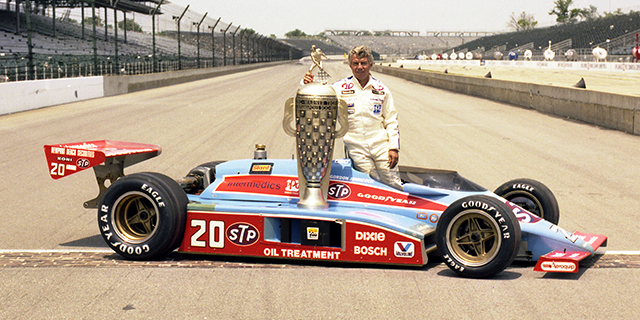
Two-Time Indy 500 Winner Johncock Dies at 90

Editor’s Note: A sad day for the 500 community. My thoughts will be posted tomorrow.

From IMS:

  INDIANAPOLIS (Monday, Sept. 28, 2026) – Gordon Johncock, whose stirring drive late in the 1982 Indianapolis 500 earned him a second victory in “The Greatest Spectacle in Racing,” died of natural causes Sept. 28 at his home in South Branch, Michigan. He was 90.

Born Aug. 5, 1936, in Hastings, Michigan, the lifelong resident of the state was the INDYCAR SERIES national champion in 1976 and won 25 races in the series. Yet, Johncock was known for winning both memorable and forgettable “500s,” each time driving for Patrick Racing.

Johncock’s duel with Rick Mears in the closing laps of the 1982 race was the most thrilling to that point, prompting renowned television broadcaster Jim McKay to claim he’d “never seen anything like it.”
Johncock masterfully covered Mears’ last-lap passing attempt in Turn 1, then outran the 1979 race winner to the finish line. Their margin at the checkered flag was a then-record .16 of a second, still the seventh closest ever

.Johncock later said he was fortunate to win as he hit an unfamiliar bump low in Turn 3 on the last lap that pushed his car up the track and gave Mears an opportunity to gain ground.

“I pretty near lost it,” he told The Indianapolis Star in 2016. “Ask Rick; he saw it (because) he was right there
“I had never run that low before in Turn 3, but I knew I had to if I was going to be able to stay in the throttle. It was just a little rougher down there than I expected.”

The 1973 “500” was one of tragedy and poor weather, with rain postponing the race two days. Johncock started 11th and grabbed his first lead on Lap 40, but soon after teammate Swede Savage and crew member Armando Teran were involved in separate horrifying accidents.

Johncock, who led 64 laps, was in front of Bill Vukovich II when rain ended the race on Lap 133. With the annual Victory Banquet canceled, Johncock and his Patrick crew “celebrated” with hamburgers at a local Burger Chef restaurant after visiting Savage in the hospital.

Johncock was able to properly celebrate following his 1982 victory, and Mears said he never felt so good finishing second.

“I remember thinking during the race that if we can’t win it would be great to see him win,” Mears said.

Said Johncock of watching replays of the duel with Mears, “It gives you goosebumps … (that) well, I did it again!”

After a successful stint as a sprint car racer, Johncock’s INDYCAR SERIES career began in 1964 with a dirt race in Springfield, Illinois, and it didn’t take him long to show his talent. Johncock finished fifth as a rookie in the 1965 “500” in a roadster, in a race that saw five rookies finish in the top nine. He won for the first time nine races later at the Milwaukee Mile. Johncock also scored the first of his 20 career poles that year.

Johncock started his own team in 1967, joining A.J. Foyt as the sport’s only owner/driver. Johncock won six races during that three-year span.

Johncock nearly won a few more Indianapolis 500s. He finished third in 1976 and 1978, and he was fourth on two other occasions (1966 and 1974).

In 1977, Johncock was leading Foyt, the eventual winner, with 16 laps remaining when his car’s crankshaft broke. He had led 129 laps.

Johncock’s career in the INDYCAR SERIES spanned 262 starts over 25 seasons. He actually retired twice, the first during the first week of “500” practice in 1985. He served on the IMS Radio Network for that race. Two years later, he replaced the injured Jim Crawford and finished 22nd.

Johncock’s last “500” was in 1992 after he retired on Lap 60 with engine failure. He finished 29th. His 24 starts in the race rank fifth among all drivers, tied with Johnny Rutherford and Scott Dixon.

Johncock led 339 laps in the Indianapolis 500, which stands 15th all time.

Johncock was one of the last living drivers to have competed in front- and rear-engine Indy cars.

He was successful in stock car racing, too, competing in 21 of NASCAR’s top-division races. He made three starts in the Daytona 500, qualifying fifth in 1973. He had three top-five finishes in NASCAR, highlighted by a fourth in the 1973 Firecracker 400 at Daytona International Speedway He also won a pole at Atlanta Motor Speedway that season.

After Johncock’s second retirement, he turned his focus to his timber business in South Branch, Michigan, located 200 miles north of Detroit. Johncock enjoyed such a quiet life away from racing that some employees were surprised to learn he had been a race car driver, much less a two-time Indy 500 winner.

Johncock kept most of his racing memorabilia in his basement, although his two winner’s plaques have shared a wall with artwork of the 1982 win, the race’s checkered flag and a stuffed deer head in his living room.

He seldom attended the “500” after retiring.

“It was a job I used to have,” Johncock said of racing.

“Now I have a different job.”

Johncock was inducted into the Indianapolis Motor Speedway Hall of Fame in 1997 and the International Motorsports Hall of Fame in 1999.Johncock is survived by his wife, Sue; three daughters (Patsy, Pamilee, Peggy), two sons (Gordon Jr., Wally); stepdaughter (Valerie); and 12 grandchildren, 17 great-grandchildren and one great-great grandchild. 
 

 Indianapolis 500 Folk Hero ‘Jigger’ Sirois Dies at 91

From IMS.

Editor’s note: I was at the track that day in 1969. It was as dramatic as a bumping run.

INDIANAPOLIS (Thursday, Sept. 24, 2026) – Leon Duray “Jigger” Sirois, who became part of Indianapolis 500 folklore by nearly earning an improbable pole for the 1969 race, died Sept. 23. He was 91.
Sirois, a native of Shelby, Indiana, made no starts in “The Greatest Spectacle in Racing” despite attempting to qualify every year from 1969-75. But his close call at earning the top starting spot in unique circumstances in May 1969 became a legendary story in the history of the world’s greatest race.

Midget car standout Sirois drew first in line to attempt to qualify on Pole Day, May 17, 1969, in the No. 14 Gerhardt-Offenhauser owned by California car dealer Myron Caves. After a long rain delay, Sirois entered the 2.5-mile oval late in the afternoon to make the first four-lap qualification attempt of the day.
His first three laps ranged between 160 and 162 mph, but Caves waved off the final lap of the run due to a perceived lack of speed, negating the run. Moments later, Arnie Knepper began his qualifying attempt, but rain began to fall during his warmup laps and continued, washing out all track activity for the rest of the weekend.
If Sirois’ final lap had not been waved off, he would have been the lone qualifier of the weekend and have sat on the coveted provisional pole for that week, perhaps even holding it through Bump Day the next weekend and starting the race from the top spot. Sirois’ second and third attempts the next weekend also were waved off due to lack of speed or mechanical problems, and he didn’t qualify for the race.
Qualification rules were changed in 1971 to guarantee all cars in line on the first day of qualifying at least one chance to make the field during the first round, ending any chance of another “Jigger” story.

Sirois continued to attempt to qualify for the “500” every year through 1975, including the sluggish Jack Adams Turbine in 1970. It was the last qualifying attempt ever for the Indianapolis 500 by a turbine-engine car. He was the second alternate for the 1974 race, falling just short of making the field.
The failure to qualify at Indianapolis belied Sirois’ skill at many levels of open-wheel racing.
Sirois failed to qualify for the five USAC Champ Car races he entered in 1967 driving for team owner Bob Cavanaugh. But he attracted strong attention from Indianapolis 500 car owners in 1968 after he was forced to withdraw from the inaugural USAC Champ Car race at Michigan International Speedway due to clutch failure while running as high as second in low-budget equipment.
He made 10 USAC Champ Car starts, with a best finish of fifth in 1969 at Phoenix. He also finished third – in a turbine-engine car – behind winner A.J. Foyt and Knepper in the rain-shortened Ted Horn Memorial USAC National Dirt Car Championship race in September 1972 at DuQuoin, Illinois.

.Sirois enjoyed the most success in midgets, primarily racing around the Chicago area. He won four championships in 1961, including the UARA midget title. He was inducted into the National Midget Racing Hall of Fame in 2013
.One of the most popular veteran drivers, Sirois returned to IMS in May frequently to meet fans and media members, always well-liked for his geniality and courtesy. His sportsmanship surrounding the fateful decision to wave off his 1969 qualifying attempt – he never once blamed Caves or his crew – led the American Auto Racing Writers & Broadcasters Association (AARWBA) to create the annual “Jigger Award” to honor the year’s “hard luck” driver during qualifying. Sirois was the first recipient in 1969.

Sirois was born into the sport. His father, Earl “Frenchy” Sirois, was a longtime Indianapolis 500 mechanic who worked on the winning cars of Lee Wallard, Sam Hanks and Jimmy Bryan during his 40-year career. Sirois was named after two-time “500” pole winner Leon Duray.
The legendary nickname “Jigger” referred to two-time Indy 500-winning riding mechanic Jigger Johnson, a family friend. Sirois’ older sister also called him by that name.
Sirois suffered from a stutter that began during a tornado scare near his hometown of Shelby when he was 3 years old. He began to manage his stutter in his mid-60s after receiving speech therapy and worked tirelessly to promote awareness and treatment of stuttering disorders in youth. 
 

Swedish Hometown To Honor Indy 500 Winner Rosenqvist with Public Celebration

FromIMS:

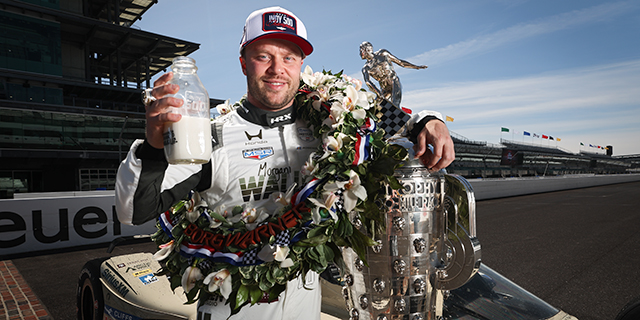
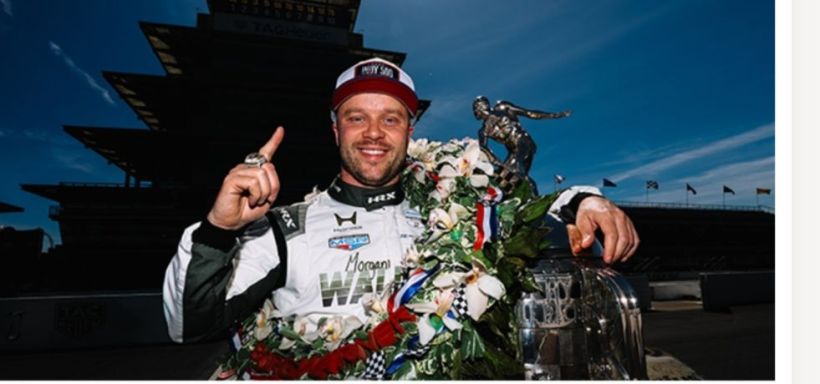
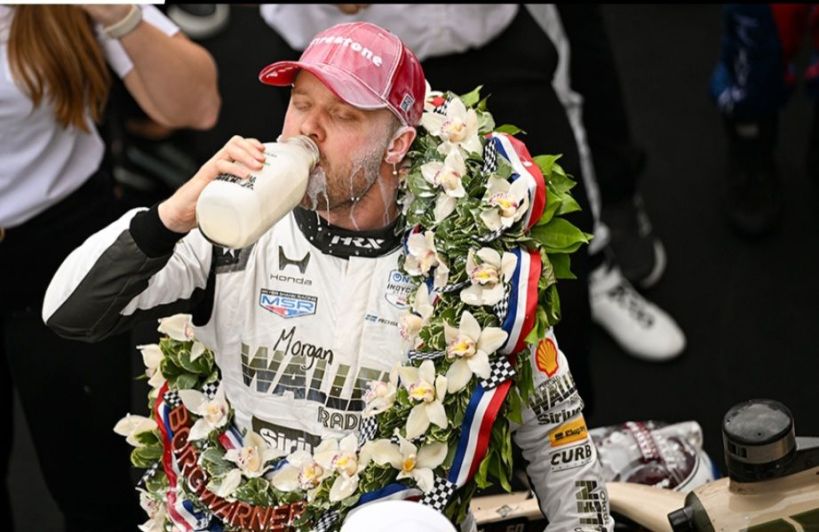
  INDIANAPOLIS (Tuesday, Sept. 15, 2026) – 2026 Indianapolis 500 presented by Gainbridge winner Felix Rosenqvist will be honored Saturday, Dec. 5 by his hometown, Värnamo, during a public celebration in the Swedish city.
Local residents, motorsports fans and visitors from near and far are invited to join the city in celebrating his historic victory May 24 in the Indianapolis 500. The free, family-friendly event will take place in central Värnamo with Rosenqvist as the guest of honor.
“Celebrating an Indy 500 victory in my hometown will be an unforgettable way to conclude the best year of my life,” Rosenqvist said.
“Sharing an occasion like this with everyone in Värnamo, where the dream began, will feel completely surreal. It will truly be one of those pinch-me moments.
“It is truly amazing to think that we will all be able to experience and share this together. I am really looking forward to seeing friends, family and everyone else in Värnamo in December.”T
he program will include tributes from the stage, interviews, live music and motorsports-themed activities. Representatives from INDYCAR will take part in the celebration. Additional news and highlights will be announced closer to the event
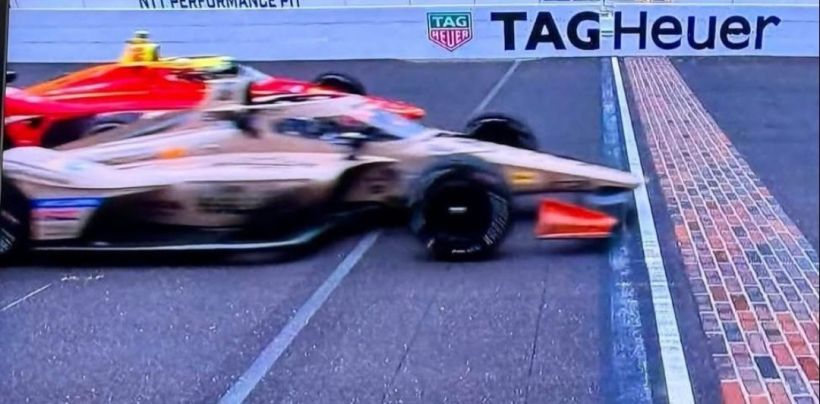
.Rosenqvist earned his first victory in ”The Greatest Spectacle in Racing” in the No. 60 Honda for Meyer Shank Racing w/Curb Agajanian. He beat David Malukas of Team Penske by .0233 of a second in the closest finish in the century-plus history of the race.
“Felix Rosenqvist’s success is an outstanding achievement that has inspired tremendous pride and joy throughout Värnamo,” said Staffan Svensson, project manager and destination development officer at Värnamo Municipality.
”We want to give the people of Värnamo and the motorsports community an opportunity to celebrate him together, while also showcasing the strong sense of community and local pride that exists here.”
The event is being jointly organized by Värnamo Näringsliv, Värnamo City and Värnamo Municipality.
“This partnership reflects the strong sense of community that makes Värnamo what it is,” said Anki Hansson of Värnamo Näringsliv. ”Together, we want to create a public celebration that honors Felix while also welcoming visitors to Värnamo.” 
 

Indianapolis 500 Veteran Treadway Dies at 56 

From IMS:

 INDIANAPOLIS (Monday, June 1, 2026) – Rick Treadway, who started the 2002 Indianapolis 500, died May 30 in a motorcycle accident. He was 56
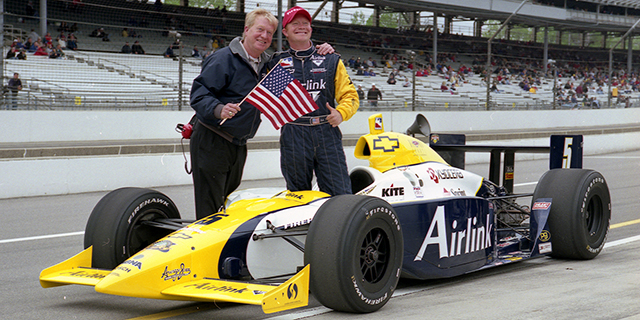
.Indiana native Treadway, the son of 1997 Indianapolis 500-winning team owner Fred Treadway, started 17th and placed 29th in “The Greatest Spectacle in Racing” in the No. 5 Sprint/Kyocera Wireless/Airlink Enterprises G Force/Chevrolet fielded by his father’s team and as a teammate to two-time Indy 500 winner Arie Luyendyk. Treadway and Tony Kanaan were eliminated from the race in an accident in Turn 3 on Lap 90.
The Indy 500 start was the highlight of Treadway’s INDYCAR SERIES career, which consisted of 11 races in the 2001 and 2002 seasons for his father’s teams Treadway-Hubbard Racing and Treadway Racing.
He made his INDYCAR SERIES debut in 2001 at Kentucky Speedway and his final start in 2002 at the season finale at Texas Motor Speedway. His best finish was fifth at the 2001 season finale at Texas.
Before joining the INDYCAR SERIES, Treadway competed in Formula 2000 junior formula racing and in various short-track open-wheel series, including the USAC Silver Crown and National Midget Series. He also raced in SCCA competition.
Treadway, a graduate of Indiana State University, worked in business development and as a commercial pilot for his charter air service. He also served as an Federal Aviation Administration-certified flight instructor.

Indianapolis 500 Purse Payout

1. Felix Rosenqvist $4,340,500

2. David Malukas $1,682,500

3. Scott McLaughlin $1,414,500

4. Pato O’Ward $1,279,000

5. Marcus Armstrong $1,206,500

6. Rinus VeeKay $1,178,500

7. Alex Palou $1,399,000

8. Santino Ferrucci $1,164,000

9. Romain Grosjean $1,150,000

10. Takuma Sato $137,000

11. Nolan Siegel $1,132,000

12. Conor Daly $138,000

13. Marcus Ericsson $1,125,500

14. Kyffin Simpson $1,183,500

15. Scott Dixon $1,218,500

16. Kyle Kirkwood $1,102,000

17. Christian Lundgaard $1,105,500

18. Mick Schumacher $218,800

19. Dennis Hauger $159,800

20. Graham Rahal $1,105,500

21. Louis Foster $1,105,500

22. Jack Harvey $102,000

23. Sting Ray Robb $155,300

24. Jacob Abel $103,000

25. Helio Castroneves $102,000

26. Caio Collet $1,126,500

27. Christian Rasmussen $1,110,000

28. Josef Newgarden $1,105,500

29. Will Power $1,105,500

30. Alexander Rossi $1,141,000

31. Ed Carpenter $102,000

32. Ryan Hunter-Reay $105,500

33. Katherine Legge $102,000

Indianapolis 500 Purse Soars to New Increases by More than 50 Percent

 
 INDIANAPOLIS (Monday, May 25, 2026) – The Indianapolis 500 purse record was broken for the fifth consecutive year for the 110th Indianapolis 500 presented by Gainbridge, with first-time winner Felix Rosenqvist of Meyer Shank Racing w/Curb Agajanian earning a record-high $4.34 million from a total purse of $30,906,400.This is the largest purse in the history of “The Greatest Spectacle in Racing” on the heels of four consecutive record-breaking years.
This year’s average payout for NTT INDYCAR SERIES drivers was $936,500, which also exceeds last year’s average of $596,500.In 2025, the Indianapolis 500 purse was $20,283,000, and the year’s winner payout was $3.8 million.
In 2024, the Indianapolis 500 purse was $18,456,000 and the winner earned $4.3 million, which included a $440,000 roll-over bonus from BorgWarner for earning back-to-back wins.
In 2023, the Indianapolis 500 purse was $17,021,500, and the winner earned $3.7 million. In 2022, the Indianapolis 500 purse was $16,000,200, and the winner earned $3.1 million.
Prior to 2022, the largest Indianapolis 500 purse was $14.4 million for the 2008 Indianapolis 500.
“The Indianapolis 500 continues to make history, in more ways than one,” INDYCAR and IMS President J. Douglas Boles said.
“The Month of May featured a back-to-back grandstand sellout crowd – our largest crowd since the 100th Running in 2016 – and intense on track action with the most lead changes ever in the Indy 500. Felix Rosenqvist added his name to the history books in stellar fashion, with the closest finish in Indy 500 history and now the largest purse. There’s no better end to a memorable month.”
Mick Schumacher of Rahal Letterman Lanigan Racing earned Indianapolis 500 Rookie of the Year honors for his performance during the Month of May. Schumacher earned a $50,000 bonus for being named Rookie of the Year, adding to a total take-home prize of $218,800.
The Indianapolis 500 purse consists of Indianapolis Motor Speedway and NTT INDYCAR SERIES awards, plus other designated and special awards.
Purse awards are presented annually at the Victory Celebration, held this year at the Indiana Convention Center in downtown Indianapolis Monday night.
The next NTT INDYCAR SERIES race is the Chevrolet Detroit Grand Prix presented by Lear on Sunday, May 31 on the streets of Downtown Detroit. The race will be broadcast live on FOX, FOX One and INDYCAR Radio powered by OnlyBulls at 12:30 p.m. ET.

110th Indianapolis 500 Wrap Up

The Indianapolis 500 ending people dream of, followed by the victor’s unbridled joy, and the runner-up’s dejection, was the perfect ending to a compelling race. It was a day tha many thought would not happen on this particular Sunday, with storm clouds looming and pessimistic forecasts even from the most optimistic of forecasters.

Here are the highlights from my perspective from the back of the media center.

The Agony of Defeat

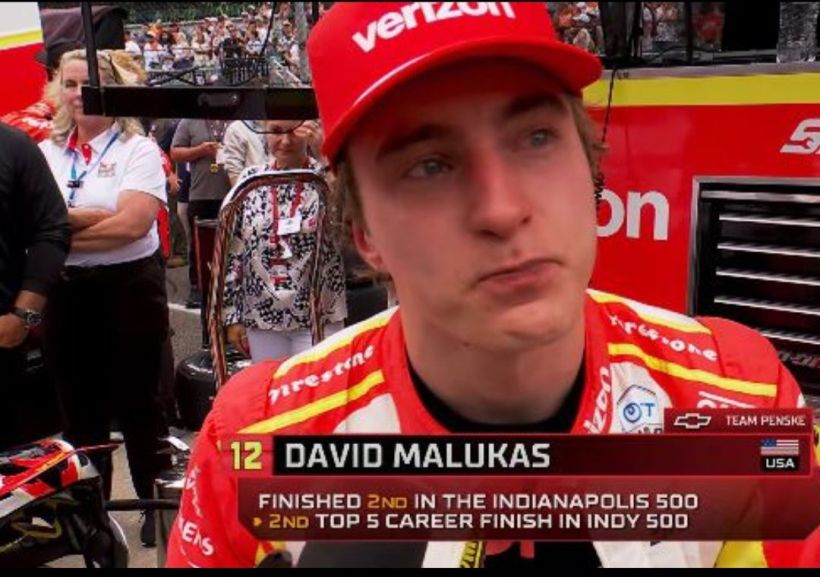
David Malukas’s heart rending post-race interview with FOX was tough to watch, but I admire his outpouring of what he was going through at the time. We rarely get such a heartfelt interview with the second place driver anymore. David’s time to win is coming, perhaps as soon as June 7 at Gateway.

The Fall of 500 Favorites

Things tend to run in cycles, but the drop-off in results from ECR and Andretti Global is painful to watch.

ECR used to be a qualifying powerhouse, with two poles and a consistent top nine presence. While Alexander Rosswi grabbed the middle of the front row and led a few laps, his car, the same one he drove in last year’s race. caught fire as did in 2025.

His teammates also watched the end of the race from the pits. Ed Carpenter was knocked out after being squeezed by Takuma Sato in turn 1 on a restart, and Christian Rasmussen leaving the fray with mechanical issues.

Andretti Global started the practice week strong, but lost speed every day, and were relegated to the back of the starti9ng grid. Will Power lost5 an engine before t5he halfway point, and Marcus Ericsson and Kyle Kirkwood soldiered on all day, improving their positions. Ericsson finished 13th, and Kirkwood 16th.

I hope both teams can find some answers for next May. The race will be even more fun with these two teams mounting a challenge.

The Other Photo Finish

I did not see whether FOX covered the race for third or not- I’m guessing they didn’t because of the incredible finish, but Scott Mclaughlin, O Pato O’Ward, and Marcus Armstrong crossed the line in a near photo finish for third, fourth, and fifth. McLaughlin beat O’Ward by0.0066 seconds for third, and O’Ward nipped Armstrong by another 0.0089 seconds. The difference from third to fifth- 0.0155 seconds.

The Race

Many years ago (around the time Joe Dawson won) I created my guidelines for a good race- No driver leads more than a third of the laps, and caution periods consume no more than 25% of the day. Yesterday fit those criteria.

The yellows came at just the right times to trigger multiple fuel strategies, and they were spaced just right to allow teams to fine tune their plans. When the early leaders fade because of pit strategies, we are going to see a great race.

besides the record 70 lead changes, many of which I dismiss as merely a fuel saving tactic by the leader, not real competition passing, there was close racing throughout the field.

Yesterday’s 500 was one of my favorite all time races. It did not change my top three of 1986, 2024, and 2014- but it will definitely be in the top 10, perhaps as high as fifth.

The Pre Race and Pace Laps

Maybe it’s the old man who lives inside me talking, but the opening ceremonies seemed overly long this year. The speech by the army officer was much longer than necessary and devolved into propaganda and jingoism. I think this part of the program can be eliminated.

While I was disappointed to see the helicopters ruining the pace laps again, I was glad that there were only two instead of four and that they left after just a couple of laps. The speedway should continue to eliminate two helicopters each year.

369 More Days- UGH

Now we wait a very long 369 more days until the 111th Indianapolis 500, w2hen the race runs on its proper date. I always feel gypped when the race is on the 24th.

Thanks to everyone who followed along during the fortnight of May.