Grosjean Update: Hospital Release Tuesday; Pietro Fittipaldi to Sub at Bahrain Race 2

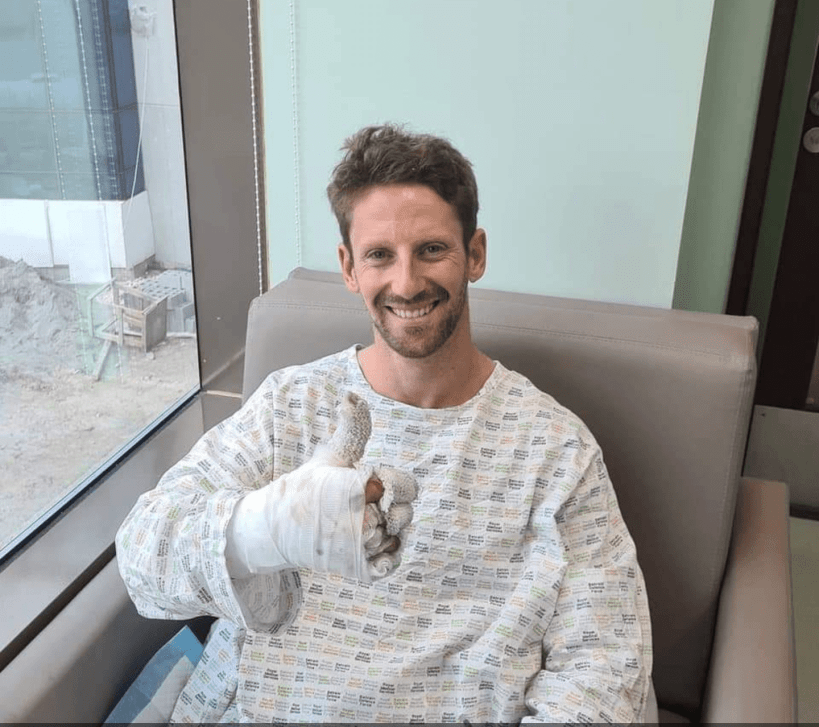
Photo from Romain Grosjean’s Twitter account

Romain Grosjean, injured in a fiery crash in yesterday’s Gand Prix in Bahrain, is expected to be released from the hospital tomorrow. He is responding well to treatment of the burns on the back of his hands. Grosjean posted a video last night to reassure fans that he was okay, and posted another one this morning to thank everyone involkved in his rescue.

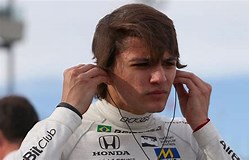
Pietro Fittipaldi, who is the Haas team reserve and test driver, will replace Grosjean for next weekend’s second Grand Prix in Bahrain. The course for the December 6 race is different from the one used Sunday. It has long straightaways and just four braking points. Fittipaldi, grandson of two time Indianapolis 500 winner Emerson Fittipaldi, drove in six Indycar races in 2018. His best finish was ninth at Portland.

Haas has not made a decision about who will drive in the final race of the year at Abu Dabi on December 13.

Pietro Fittipaldi

There is speculation that both Grosjean and Fittipaldi are under consideration for the open seat at A. J. Foyt Racing. It is not known whether Sunday’s incident has changed anything in that regard.

Safety Innovations Star at Bahrain as Grosjean Escapes Fiery Crash

I had a flashback to May 30, 1964, this morning during the Bahrain Grand Prix. The fireball that erupted from Romain Grosjean’s car reminded me of that horrible day at the Indianapolis 500. I saw the entire fiery crash that day from my Tower Terrace seat. Eddie Sachs and Dave McDonald died in that crash. Fortunately, thanks to safety innovations, there was a more positive outcome today.

Romain Grosjean (behind guardrail) escapes his burning car. F1 photo

This column is the third iteration of what i had planned to write today. originally, i was going to discuss Romain Grosjean’s possible move to A. J. Foyt Racing in Indycar. When the crash happened, I thought I would be writing a very different story about Grosjean. Now I am happy to be writing about how the halo, maligned for its looks and with doubts of its worth still in some people’s minds, has quieted all the doubters.

The halo did its job. Grosjean encountered three of the things most drivers fear in an accident- a sudden stop, the car going underneath something, and fire. Yet, Grosjean escaped. I am eager to hear his version of the events later this week. Even more miraculous is that his only apparent injuries are burns on his hands.

The safety cell, which surrounds the cockpit, also played a role in keeping Grosjean alive. It remained intact, allowing him the chance to escape.

The remains of the front part of Grosjean’s car. F1 photo

Despite the many advances in driver safety like the halo and the new Indycar aeroscreen, which prevented a more serious outcome in Iowa this summer, racing is still dangerous ans can still have fatal results.John Andretti in Racer, his autobiography, said,”I like that racing is safer. The safety improvements have been good and we need to keep going. But, the perception of the dangers in racing has changed. “Yes, it is safer, but it’s not SAFE. Drivers crash, then thank everyone on Earth for making the sport safe. The media fuels that idea as well. [The fans] believe racing is safer than driving to the grocery store. Let me tell you: it’s not. It’s still very dangerous.”

We may not like the looks of some safety additions to the cars. I still don’t care for the appearance of the Indycar aeroscreen, and at first I thought the F1 halo took away from the sleek look of an F1 machine. I’ve become accustomed to the halo, and I will in time get used to the aeroscreen, which will look better when it is fully integrated onto the new chassis. I am for anything that can save lives and make racing safer. Sometimes function takes precedence over form.

An incident such as we had today doesn’t mean it’s time to relax, or that we have gone as far as we can. There is still room for improvement. I have never seen a car split in half like Grosjean’s car did. It has been quite a while since i have seen an F1 car burst into flames like that . There are still questions to answer.

Racing can take a deep breath that today turned out better than it appeared it was going to, but the sport also needs to keep up its guard to prevent worse incidents.

The Tires They Are A-Changin’- New Procedures for Texas

The NTT Indycar Series has added two tweaks to the June 6 schedule at Texas Motor Speedway. We have already seen the event shortened to 200 laps/300 miles from its traditional 248 laps/360 miles. This isn’t the first time we have seen the Texas race run a bit differently. Remember the twin races where the drivers spun a tire to determine Race 2’s starting position? That was fun. For this race, it’s nothing that drastic. One change I like, the other I’m not excited about, but I feel is necessary for the season opener.

The day of the Genesys 300 will begin with a 30 minute test session for  rookies Alex Palou, Rinus VeeKay, and Oliver Askew. The 80 minute practice session begins immediately at the conclusion of the rookie test period. With testing cancelled due to the coronavirus pandemic, Indycar felt the rookies should get extra time on the 1.5 mile oval.  This is a great and necessary move by Indycar. It doesn’t completely erase my concerns for the event, but it does help lower them a bit.

The second change is a 35 lap maximum stint for tires during the race. Several factors led to this decision. First, the divers haven’t been on track in nearly nine months except for testing almost three months ago. Second, tire supplies are down because of the changes in work time caused by the pandemic pandemic. And the new aeroscreen creates a change in the center of gravity which will affect tire wear.

I don’t like mandated stints. Indycar did this at Texas a couple years ago when tire wear became an issue. The decision came after the race had started. At least the rule is clear for the entire race. The tire rule takes fuel strategy out of the race but when the yellows come could dictate tire strategy. Teams get nine sets of Firestone tires for the entire day. The team that manages their tires the best should do very well.

Fangio- A Life of Speed

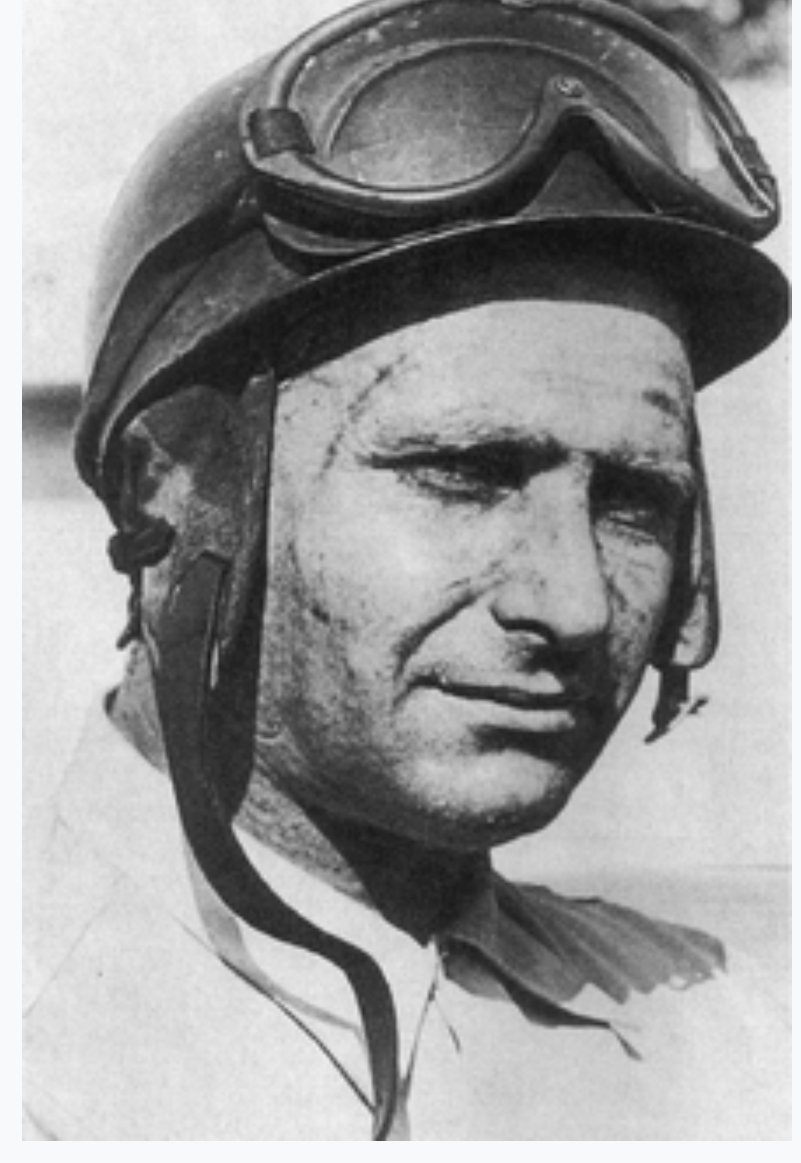
He didn’t start racing until he was 27 years old. His first Formula 1 race was at age 39. Not the way a career would begin today, but in 1950 the racing world was different. Juan Manuel Fangio would go on to win five world championships in a span of eight years. A new documentary, A Life of Speed – The Juan Manuel Fangio Story, is currently showing on Netflix.

I found the film fascinating mainly because I love watching racing films from long ago. There is a lot of  footage of Grand Prix races from 1950- 1958. The black and white film adds an air of romance to the contests. I’m always shocked to see the three wide standing starts F1 used at that time. The first turn wasn’t the calamity you would expect.

The film proceeds in a chronological fashion, following Fangio from his childhood in Balcarce, Argentina, all the way to the European racing scene. He began his Formula 1 career the same year what we know as Formula 1 began, 1950. His first victory came at Monaco that year, driving for Alfa Romeo. The Alfas won all 11 races that year. Fangio’s teammate Nino Farina won the championship.

Fangio won the title the following year, then won four straight titles from 1954-1957. He is the only driver to win championships in four different cars- Alfa Romeo, Mercedes, Ferrari, and Maserati. The title was  up for grabs in the final race of 1957. Fangio needed to finish third or fourth to win. His car developed handling problems. The team asked driver Luigi Musso to step out of his car so Fangio could win the title. Musso refused, but his other teammate, Peter Collins, gave his car to Fangio, who finished second. Collins was also in contention for the championship.

The film has interviews with retired drivers including Jackie Stewart and Nico Rosberg. There are also interviews with former employees of the car factories for which Fangio drove. I was impressed with Rosberg’s appreciation for the drivers of the past and the history of the sport in general. When he spoke of Collins lending Fangio his car, Rosberg asked, “You think Lewis Hamilton would do that for me?”

I was disappointed that there were no words from Sir Stirling Moss, although he was mentioned. I have been a Moss fan since I first heard about him.

Was Fangio the greatest driver of all time? Andrew Bell of Sheffield University in England did a study to find out. He used several metrics and concluded that Fangio indeed was the greatest driver. I’m not sure how one compares eras because of how different the cars are today. But a very strong case supports his findings in favor of Fangio.

Two other segments of the film need to be mentioned. The first is footage I had never seen before of the fatal accident at LeMans in 1955 which killed 82 spectators. If you’ve seen film of the Sachs-McDonald accident at Indianapolis in 1964, you have an idea of what it looked like. It is frightening to watch.

The other feature I liked was the end of  season television graphic of the year’s standings . I enjoyed seeing the names of the Formula 1 drivers of that era like Mike Hawthorn, Alberto Ascari, Jean Behra, and Hans Hermann. Hermann also is one of the interviewees.

Each year nestled somewhere between fifth and seventh place was that year’s Indianapolis 500 winner. From 1950-1960 the Indianapolis 500 results counted toward the world championship. The nine points earned for the win was good enough for the top ten in Formula 1. Some years just 34 points was enough for a world title.

A Life of Speed is a great film for fans who love the history of Formula 1 and racing in general. It is a comprehensive glimpse of one the sports greatest drivers.