Le Mans Journal Day 5- Down the Rabbit Hole of History

Photo The winner of the inaugural Le Mans 24 Hour race, the Chenard-Walcker.

Auto racing honors the ghosts of their past in a way few sports can. Cars endure, unlike uniforms or equipment. Winning cars are a select class of memorabilia. The ghosts of Le Mans past are alive and well in the Musee Des 24 Heures, the museum located at the north main entrance to the track.

Getting to the museum was a bit of a hike from the closest bus stop, but it was well worth the time. Admission is free during race week for fans with event tickets. The rest of the year it is 12 Euros, about the same amount that IMS charged when the museum was open. The admission price I saved easily became moot during the post museum visit to the gift shop.

As happens each time I visit my beloved IMS Museum, goosebumps sprouted on my arms at the first steps inside. I liked the presentation, and I hope IMS will use some of these concepts when they reopen next April.

The journey into the past begins in what is essentially a Hall of Fame of sorts. Race founders, owners, and drivers greet vistors from banners on both side of the corridor. Biographical plaques are in French and English.

Georges Durand was one of the founders of what become Automobile Club l’Ouest, and was an early supporter of the 24 hour race.
Ferrari won nine times between 1949 and 1965, and again in 2023. The plaque mentions the feud with Henry Ford. Enzo never attended the race at Le Mans.
Collette Siko and Marguerite Mareuse teamed up in 1930 as the first all woman team in the race. She finished fourth in 1932. Collette is one of two women in the hall. Christine Beckers also has a banner.

After the Heroes’ walk, the next room is one ofr the most amazing displays i have ever seen. The room contains a detailed diorama of the circuit in its center. Against the walls of this circular space are display cases of diecast cars-virtually one of every car to race at Le Mans. The models are arranged by years, withe podium finishers on a stand.

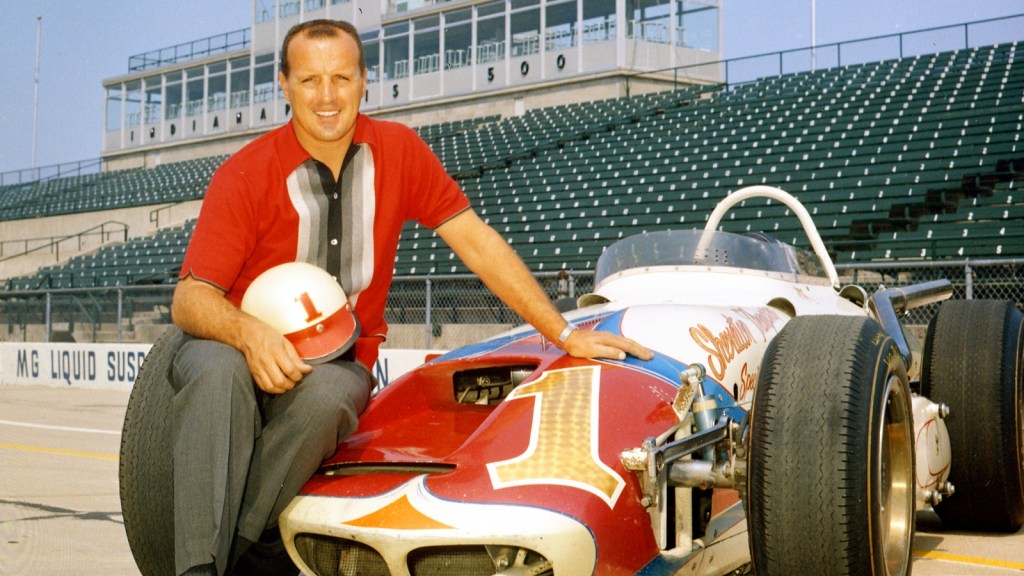
The Dan Gurney/A. J. Foyt winning car from 1967. The other 90 + races are represented as well.

I noticed a familiar name on the diorama

Cars by Decades

Of course the machines are the heart of the place. The museum has the race cars grouped by decades. I loved this concept. It is easy to see the development of aerodynamics and safety improvements. I have a better understanding of how the modern car evolved. The 1950s seems to be th era when aerodynamic ideas fully took shape.

This is just my opinion, but the cars of the 1980s are some of the most unattractive cars as a group I have ever seen. They are bulky and overly wide. Some of the collection.

1950 Ferrari
1970 Porsche. One of my all time favorites.
Shelby American Cobra.

Chills

The names on this 1994 car gave me chills. This car finished second in the race.

Ratzenberger was killed at Imola that same year. Krosnoff died in an accident at an Indycar race in Toronto two years later.

My journey through the museum brought me back to being that 12-year-old kid, reading tales of a romantic all day and night race half a world away, wondering what it was like to race at this track. It is hard to imagine racing 24 hours in a roofless car, or even racing as part of only a two driver team. I also wondered if I could ever come see this race in person. Can my dreams of seeing F1 at Spa or Monaco be far behind?

Le Mans Journal Day 4-The Track at Last

Dreams can come true. Sometimes it just takes 65 years. I stood staring at the entry gate to Circuit de le Sarthe for several minutes before I walked through Porte Est, the gate at the end of the tram line. The problem with dreams sometimes is that when they become real, they don’t live up to what you imagined. Le Mans, however, exceeded what I imagined.

Like Indianapolis Motor Speedway, I got the immediate sense that this is hallowed ground. The century of history grabbed me the moment I saw the Dunlop bridge and saw directional signs for the corners I have heard about all my life- Tetre Rouge, Arnage, Mulsanne- no longer just places in my imagination.

As I expected, an 8.467 mile track requires a huge footprint. Road America is probably the largest track footprint I have seen. Le Mans is twice the size of the Wisconsin venue. I thought I had covered a lot of it yesterday, but the track map contradicted my thoughts. I made it to just about a quarter mile past the Dunlop bridge

The fan village is massive. Full blown restaurants and bars, not just food stands and kiosks dot the area leading to paddock in all directions. One stand makes crepes to order. There is a stand to charge electronics at no cost.

Across the bridge in the infield is another large complex of food stands. I have never seen such a variety of food at a track, or so many vegetarian options.

I have never seen a cleaner race track. Given the size of the place, management does an impressive job of keeping trash picked up and the grounds clean. Le Mans has recycling containers in may places.

The middle bun is just for containers and recyclable packaging

The track surface itself is in excellent shape. It appears to have been repaved recently. The front stretch has grid markings for motorcycles.

.

Monday’s adventures include a trip to the track museum and a tour of the old city of Le Mans. Last night was the best night’s sleep I have had since I arrived, a restful night of fulfilled dreams. Don’t give up on your dreams.

Le Mans Journal- Day 3 Ferrari Fans Take Over; Old City Parade

Silly me. I thought Day Two of Scrutineering would be a repeat of Day One. I was wrong. It was even better.

The crowd grew to twice the size of the Friday gathering, and Ferrari fans were everywhere, caped in Ferrari flags, wigs adorning their heads, a sea of red no matter which direction I turned. Saturday belonged to Ferrari.

Scrutineering ended at 3 pm. The prototypes staged a parade, not down the streets near Place de Republique, but through the oldest part of the city. Old as in Roman and Middle Ages.

My friend and fellow journalist Michael Duforest, who lives in Le Mans, took me on a tour of what is called the old city. We walked across what looked to the remnants of a Roman aqueduct to cobblestone streets and ancient stone and wood buildings, now the home of artisans and niche enterprises.

I felt a sense of calm and peace here, in contrast to the hectic pre race activity just two blocks away.

A very old cathedral, one of the oldest in Europe, anchors the area. is quite peaceful there.

The cars drove slowly, one at a time, down the street that divides the aqueduct, and lined up under the bridge. The final car was a replica of the 1924 winning Bentley. The two photos below show how much progress in race design there has been in just more than 100 years.

T

I don’t like this car’s chances in this year’s race.

Today (Sunday) I get my first look at the Circuit de la Sarthe, the official name of the Le Mans track. Practice begins at 10:00 am local time. I would say I am excited, but that would be a gross understatement. Look for more photos on The Pit Window Facebook page. Thanks for following along and sharing my journey.

Le Mans Journal- Day 2: Everyone’s Day in the Sun

Friday was the official start of Le Mans week as Scrutineering began. The event is essentially technical inspection, but it is much more than that. Scrutineering is a two day celebration of the cars, drivers, and teams entered in the 2024 24 Hours of Le Mans. It is unlike any racing related event I have ever seen. I loved it.

In a nutshell, it works this way.

The team rolls the car down a barricaded lane to the first if two inspection tents. Each tent has a set of tasks to run through. The car is out on a lift in the first tent. While the car goes through its paces for the technical staff, the drivers appear on a stage for a panel interview. Multicar teams have both sets of drivers together on stage.

When the car is approved, it moves to a large open area for photos of the drivers and crew. Sometimes an entire team’s cars pose as a group. This can take some time. When the photm session concludes, the crew rolls the car arouns the other side of the complex set up on a town square, The Place de Republique. The drivers follow, stopping to sign autographs and take selfies with fans. This takes a while. I did not see one driver refuse any fan. Speaking of fans, there were a lot of them.

If someone had not found a place by the barricade very early, they were out of luck for a prime viewing spot. Is a fan was waiting for someone to leave for a snack or a break, they would be disappointed. Some people stood in the same spot all day.

The race organizers have set up some viewing stands for people to watch from, one by the stage, and the other by the after phot area.

I loved this because it gave each entire team recognition. At most races only the podium finishers and the pole sitter, if different, get any time. Here every car and team member was honored just for being a part of the 24 Hours of Le Mans.

I wonder if IMS could something like this for the Indianapolis 500. It wouldn’t need to be on this scale. Scrutineering is such a huge PR boost for each team. They get video to take to sponsors, they get incredible live exposure, and the fan interaction is invaluable.

See more photos on The Pit Window Facebook.page.

Malukas to Meyer Shank for Rest of Season

Editor’s note: Come on Indycar. I’m supposed to be on vacation. Anyway here is some good Indycar news from MSR.

David Malukas Joins Meyer Shank Racing 

Set to race the No. 66 AutoNation / Arctic Wolf Honda for remainder of INDYCAR Season

Pataskala, Ohio (XX June 2024) – David Malukas will race in the Meyer Shank Racing (MSR) No. 66 AutoNation / Arctic Wolf Honda for for the remainder of the NTT INDYCAR SERIES season starting with the Firestone Grand Prix of Monterey on June 23. Ahead of his debut race with the team, Malukas will gain experience with MSR at the test at Milwaukee Speedway on June 11th.

Meyer Shank Racing will look to build momentum with the No. 66 AutoNation / Arctic Wolf Honda entry, which will be driven in this weekend’s Xpel Grand Prix at Road America by Helio Castroneves.

“This whole process has been extremely difficult on myself and (team co-owner) Jim Meyer,” said Mike Shank. “There were so many things for us to consider as we need to do everything we can to make up ground in the championship and Leader Circle standings. We are pleased to have David (Malukas) join us as he has both experience and potential and we are looking forward to having him join us starting in Milwaukee for the test and then going racing with him at Laguna.”

Malukas had his 2024 plans change following a pre-season training injury, and the young American-Lithuanian racer is eager to open the next chapter in his INDYCAR career with MSR.

“I am extremely grateful to Jim Meyer, Mike Shank and the entire Meyer Shank Racing team for the opportunity to finish out the 2024 NTT INDYCAR SERIES season,” said Malukas. “Despite setbacks earlier this year, I have been diligently focusing on my recovery, putting in the necessary effort and dedication to get back to peak condition. I am ready and excited to be back in the car, aiming to make the most of this chance and deliver strong performances for the team and our supporters. This opportunity means a great deal to me, and I am determined to repay the faith shown in me with my best efforts on the track.”

Meyer Shank Racing thanks Tom Blomqvist for his efforts through the first six INDYCAR events and the Brit remains a part of the MSR family. 

Meyer Shank Racing heads to Road America this weekend with Felix Rosenqvist (No. 60 AutoNation / SiriusXM Honda) currently ninth in the championship points standings. Castroneves will sub one again in the No. 66 AutoNation / Arctic Wolf Honda for the Road America weekend.