Setting the Pace: IMS Museum Brings Out Pace Cars of the Past

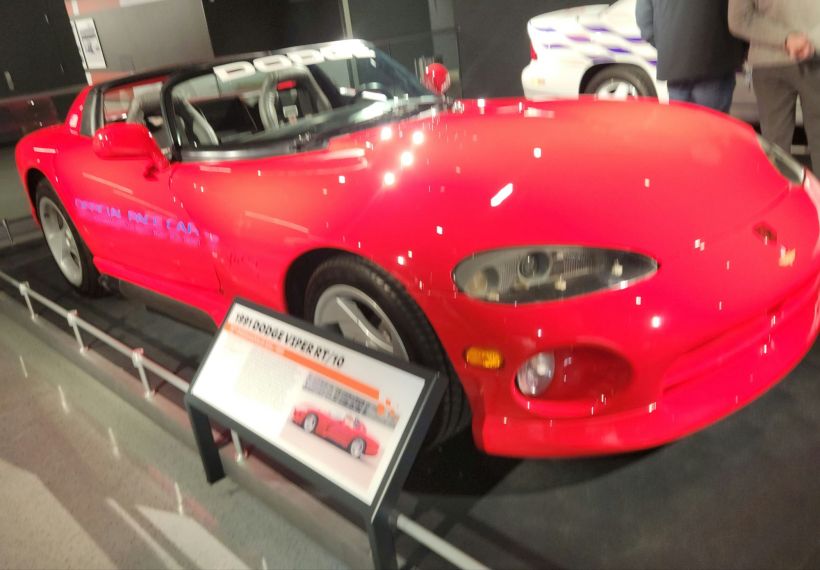
Old Indianapolis 500 pace cars are fun to see. Most vintage car shows will have a replica of at least one from a random year. The IMS Museum currently has eight pace cars on display in an exhibit called Setting the Pace.

It is not a profound exhibit, nor does it break new ground. It was fun to recall the races the cars on the floor led to the green flag. At the same time, the memories were bittersweet when I thought of how all three major car companies i9n the United States would rotate each year to provide the official pace car.

I don’t see a return to that practice anytime soon, given Chevrolet’ ties to Roger Penske and the company’s involvement in the IndyCar series.

The cars in the display:

2025 Corvette

1996 Dodge Viper

1977 Oldsmobile

1967 Mercury
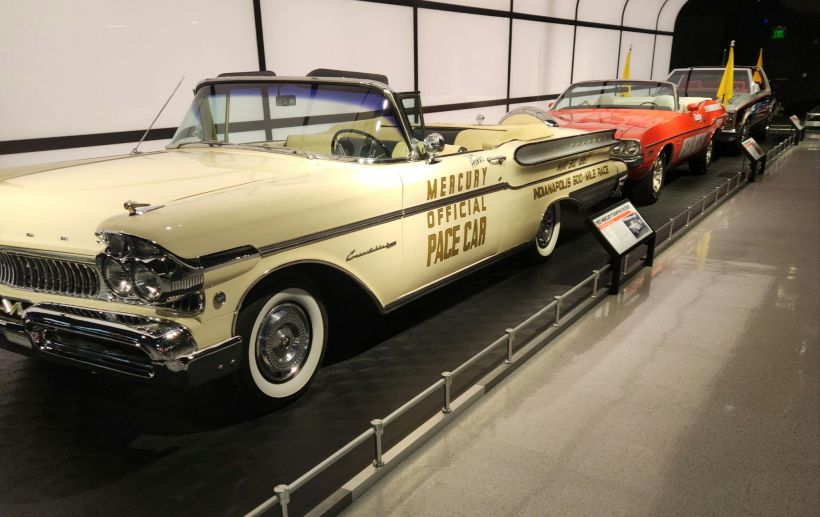
The 1977 Olds is behind the Mercury

1991 Dodge Viper

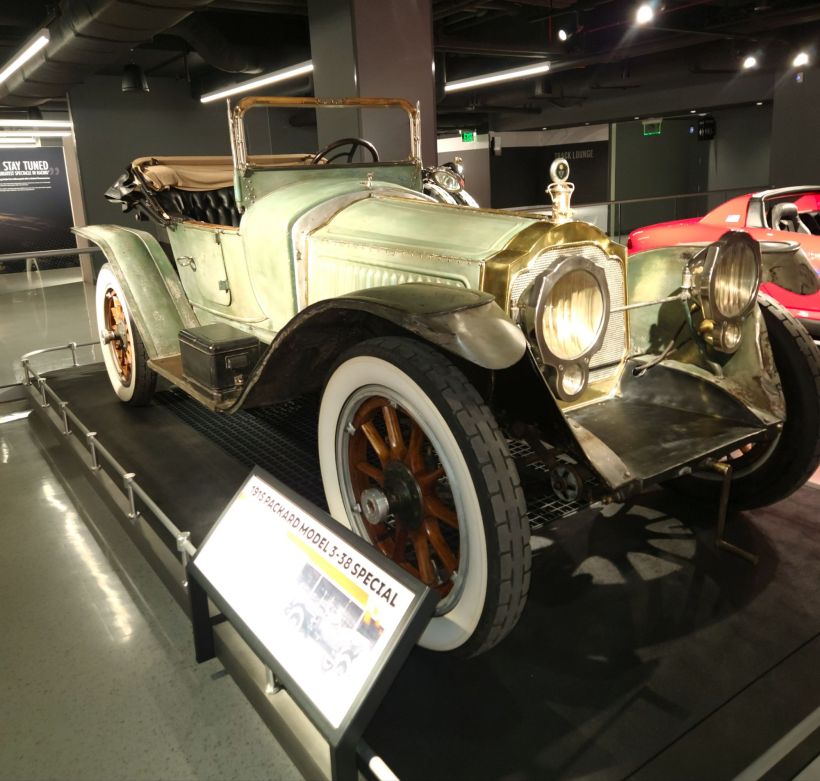
1915 Packard (cover photo)

1971 Dodge Charger

1997 Monte Carlo (Brickyard 400)

The 1967 pace car was driven by 1957 winner Sam Hanks. Carl Fisher drover the Packard.

The 1996 Dodge Viper is my favorite of this group. My favorite pace car of all time is the 1969 Chevrolet Camaro, followed closely by the 1961 gold Ford Thunderbird.

The Museum at Eight Months

Monday was my first visit to the museum since May, and there were some minor changes. The Starting Line Experience is the same, and still a thrilling thing to witness.

From Tuesday: https://thepitwindow.blog/2025/12/09/now-stay-tuned-ims-museum-honors-broadcasters/

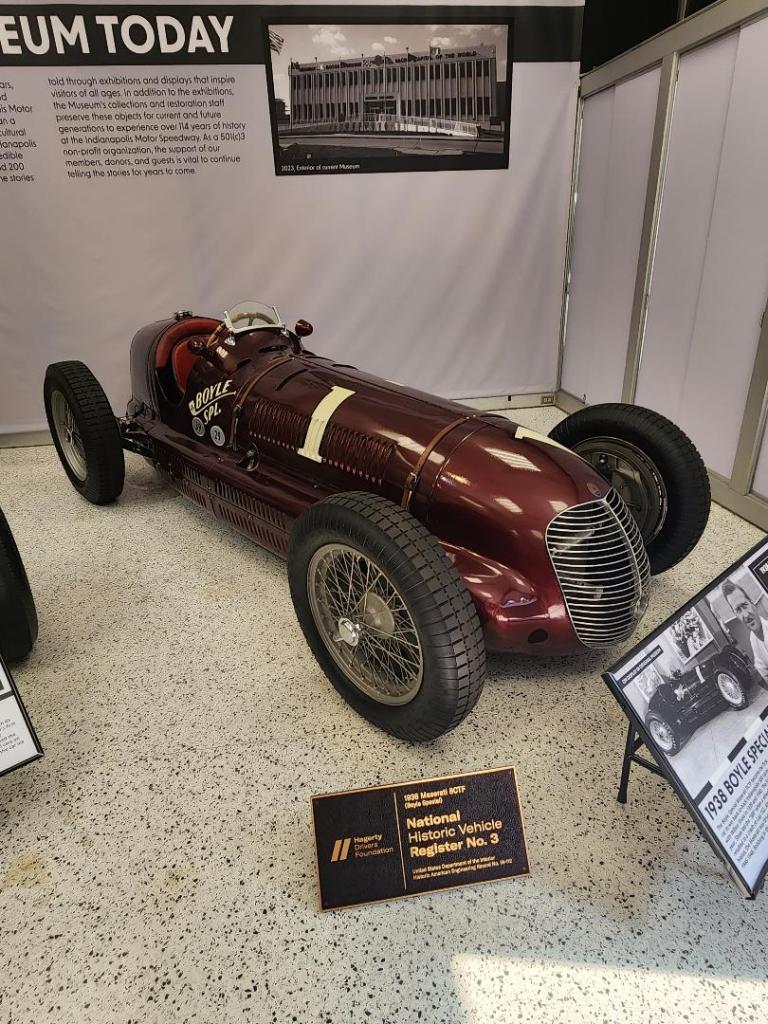
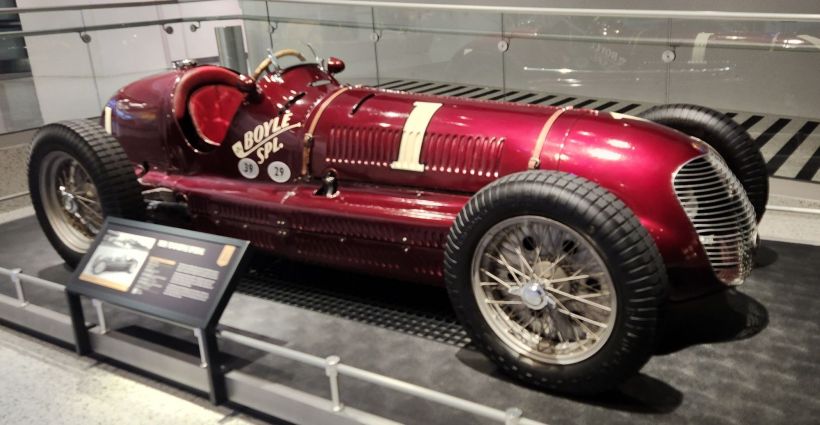
The cars in the Winners’ Gallery have been rearranged, and I think some cars moved downstairs and others up to the main floor. As I said after my initial visit, it is a minor quibble as to which car belongs where in which gallery. There are only three sacred cars which must stay in the main section at all times- the Boyle Maserati, the Fuel Injection special, and the Rislone Special.

The Maserati has assumed a rightful spot alone at the entry to the main gallery. This is the greatest car in Indianapolis 500 history, with top five performances, including two victories, from 1939 through the end of the 1940s.
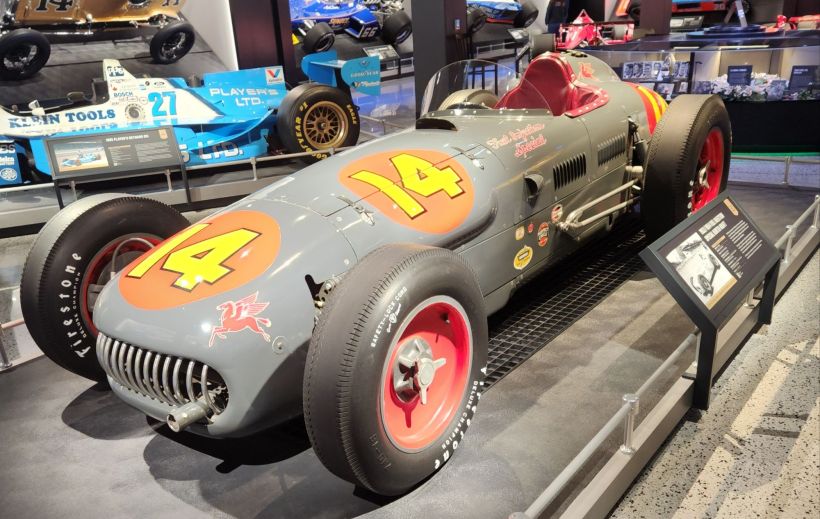
While I never saw the Fuel Injection Special race, the car driven by Bill Vukovich won the first race I listened to on the radio in 1953, and won again the following year.

It is a shame that this car cannot take a lap on race morning.
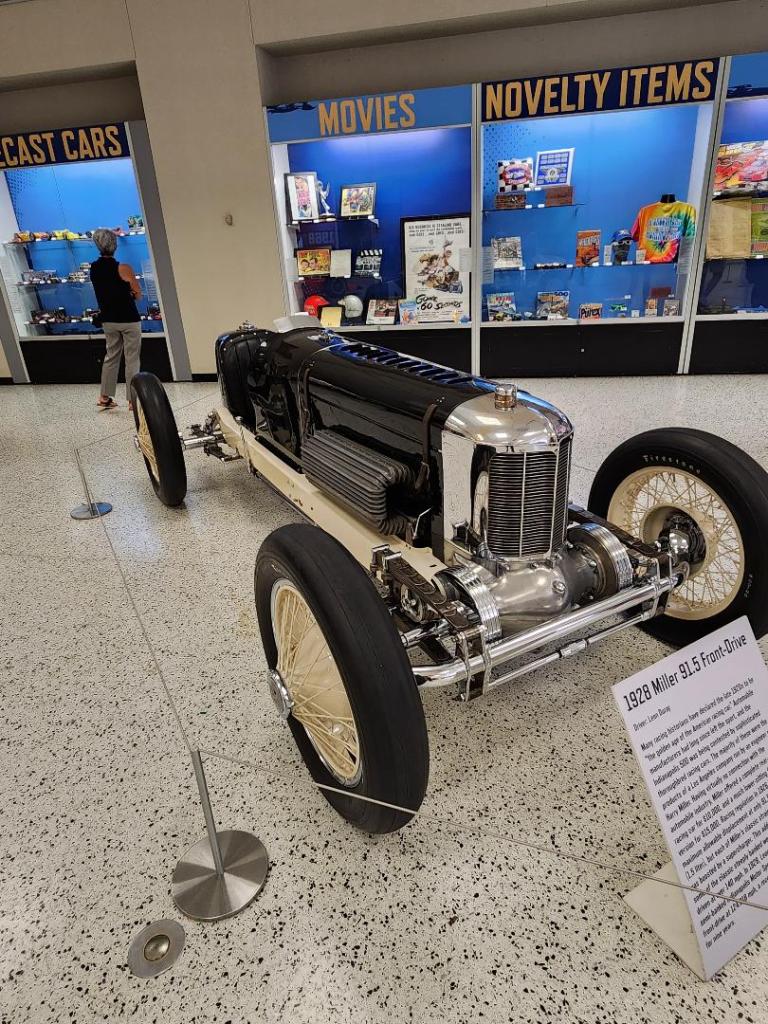
One other car of note is the Miller Special of 1928. The Miller cars of the lat 1920s and early 1930s were some of the most beautiful cars ever to run at 16th and Georgetown. Louis Meyer drove this gorgeous machine to victory for his first of three 500 wins.

Thanks for following along on my two part museum excursion. There is some IndyCar news to talk about, which I will get to in a day or two,
“Now Stay Tuned”- IMS Museum Honors Broadcasters

As a kid growing up in Indiana, May 30 meant turning on the radio and listening to the Indianapolis 500 Mile Race. I was unaware at the time that the 1953 race, the first one that I listened to, was the first flag to flag coverage from the Indianapolis Motor Speedway network.

“Now Stay Tuned” presents the story of broadcasting the race is on display in the exhibit gallery at the IMS Museum. I found the display fascinating. I learned much about the pre-IMS network days, which date back to 1922, the first year that there was radio coverage of the event. Local station WOH carried the race, and in 1923, station WLK added coverage.

In 1929 WFBM radio in Indianapolis covered the entire race. the entire race. Sportscaster Graham McNamee was the lead announcer from 1928-1931.

Oddly there was no radio coverage in 1932, as the speedway felt the radio station weren’t contributing their fair share of compensation. There was a national conflict between radio stations and newspapers at the time, and the newspapers who covered the race probably complained as well.

From 1934 to 1950 the mutual Broadcasting network went live for the start of the race, then throughout the afternoon had periodic updates before returning to cover the finish. A track reporter was stationed in turns 1 and 2, and another reported was in turns 3 and 4. Bill Slater anchored the broadcasts. In 1951 Mutual dropped out when their sponsor decided to spend their dollars elsewhere.

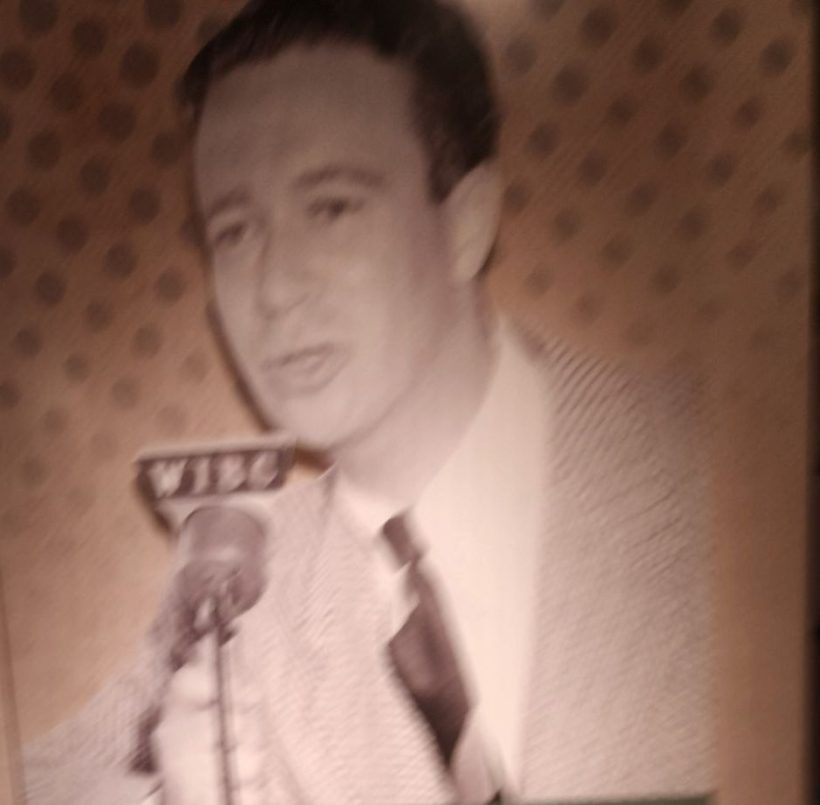
Local station WIBC took over the broadcasts. Sid Collins, who had been a turn reporter for Mutual in 1948 and co-anchored the race in 1950, became the lead announcer. The format for1951 and 1952 was the same as the mutual program, but in 1953 the full race coverage that we know today began.

Sid Collins deserves a permanent spot in the museum.

Collins was the lead announcer through the 1976 race. He died in early May of 1977. Paul Page assumed the anchor role.

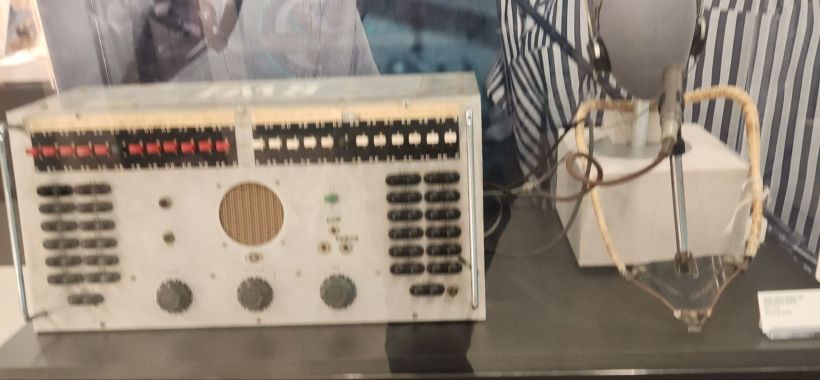
Radio board used in the early days of IMS Radio Network

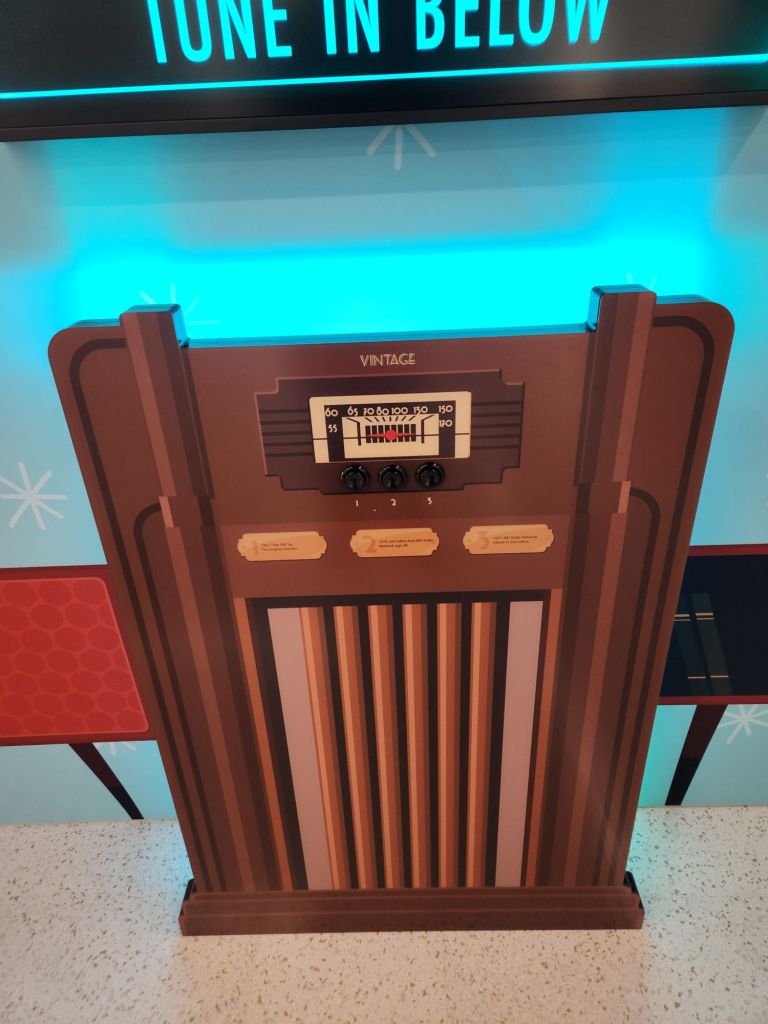
One of my favorite parts of the exhibit was the old-fashioned radio, similar to the one on which I heard that first broadcast. It is one of two interactive components in the display.

The set has three buttons. The first button plays “The 500 Song.”

Button number two presents Sid Collins’ sign off of the 1976 race, his final one. As he closed the broadcast of each 500, Collins had an inspirational quote, which he applied to the race winner, then he bade his audience farewell with the promise to meet again the following May. This recording gave me goosebumps.

The third button takes the listener to the next May where turn 3 reporter Jim Shelton gives a touching tribute to Collins, asking for a moment of silence. More goosebumps were detected.

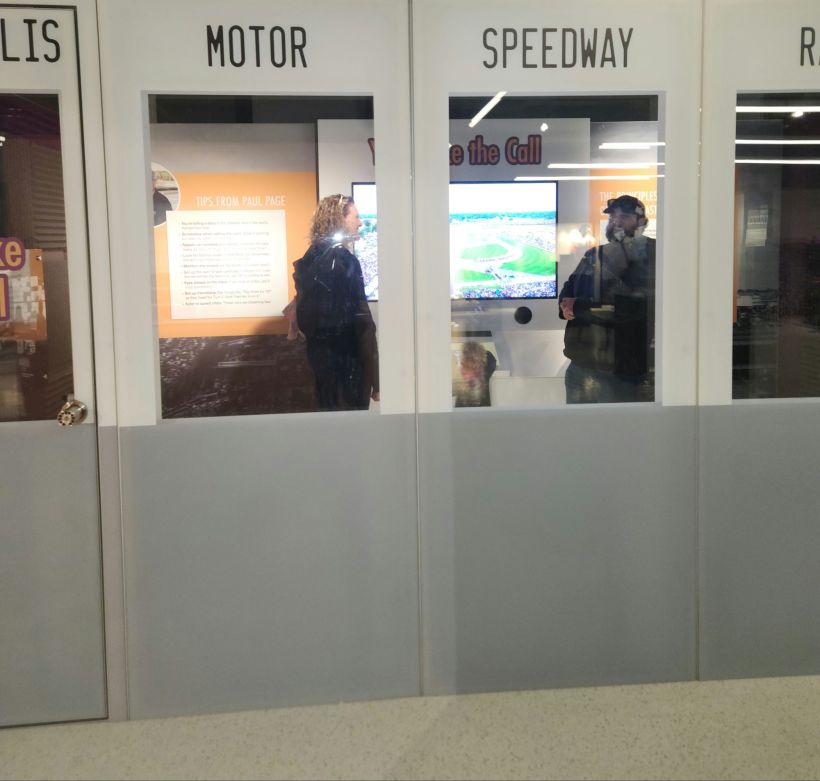
The other interactive section is a broadcast booth where visitors can call a segment of one of four races of their choosing. The call is recorded and can be played back. I chose the finish to the 2011 race. Don’t look for it on Sports Center.

While radio makes up the bulk of the exhibit, television also has a decent share of the area. The first broadcast was in 1949 as WFBM (now WRTV channel 6) launched the first television station in Indianapolis. The 500 was their first program. Coverage had three cameras on the front stretch.

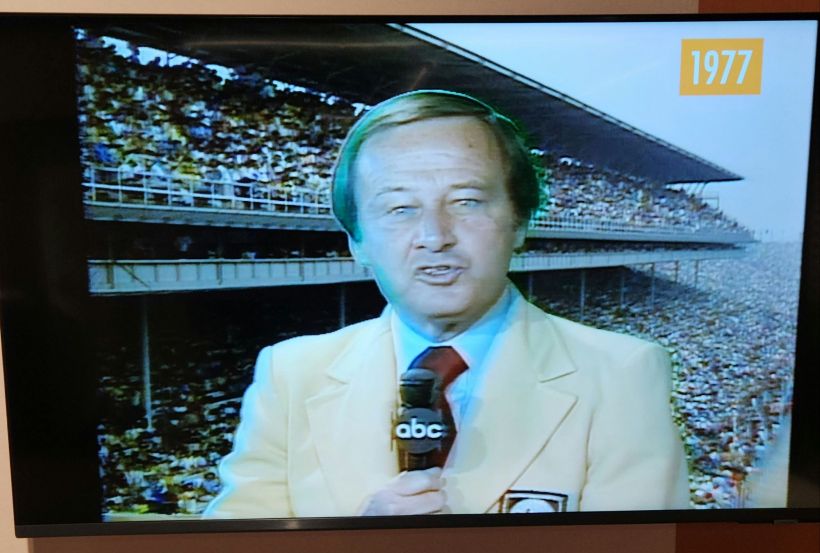
I have heard stories about track president Wilbur Shaw not wanting television at all, and that he had cameras moved from other areas. After the television coverage of the rain shortened 1950 race, Tony Hulman decided no more TV, The ban lasted 20 years until ABC began showing a two hour tape delayed showing in prime time in 1971.

From 1964-1970, the race was shown on closed circuit television in theaters around the country. Charlie Brockman anchored the closed circuit telecasts.

ABC began its live broadcasts in 1986, but they had to wait a week to present the twice rained out event.

The exhibit is a great trip down memory Lane for anyone who began following the race in the 50s, and it is very educational for younger fans. I will have more photos from the exhibit on The Pit Window Facebook page in a day or two.

News and Notes- Cindric Steps Back; Museum Sells Cars

Tim Cindric will remain as President of Team Penske’s IndyCar operations, but he is relinquishing his duties overseeing the other Penske racing efforts.

In a statement released a couple days ago, Cindric said,

“I have lived my dream job for the past 25 years as the overall leader of the Penske Racing organization. I’ve had the opportunity to work with some of the best people in the business while achieving many milestones together. I’ve decided I need to make a change that provides me with the flexibility I need at this stage of my career. I appreciate the understanding Roger has provided throughout our conversations and I’m confident this team will continue to succeed as we have a proven leadership team in all areas.”

Managing a racing team in one category is hard work. I can’t imagine being responsible for several different motorsports entities. It’s nice to see someone realize what their needs are and make those needs a priority. I also couldn’t imagine Penske IndyCar without Cindric. I’m glad it is what he chose to stay with.

IMS Museum Auction

The IMS Museum is auctioning cars not related to the Speedway or the Indianapolis 500. Their goal is to raise $100 million for their endowment fund. The Museum will use the funds to buy more Indy related cars and restore their current collection.

The cars going to auction throught R M Sotheby Auctioin House:

  • 1954 Mercedes-Benz W196 R Streamliner Formula 1 car
  • 1964 Le Mans-winning Ferrari 250 LM
  • 1966 Ford GT40 Mk II
  • 1957 Chevrolet Corvette SS Project XP-64
  • 1908 Mercedes 17.3-Liter 150 HP ‘Brookland’ Semmering Rennwagen
  • 1907 Itala 120 HP Works Racing Car
  • 1930 Bugatti Type 35B Grand Prix
  • 1991 Benetton B191 Formula 1
  • 1965 Spirit of America Sonic I
  • 1911 Mercedes 22/40 HP ‘Colonial’ Double Phaeton
  • 1911 Laurin & Klement Type S2 Sportswagen

The 1954 Mercedes is the star of the lot expected to go for more than $52 million.

UPDATE– The 1954 Mercedes has sold for $ 51.15 million

The cars made rare appearances on the display floor. I was fortunate enough to see them all when I took the basement tours which was offered a few years ago.

I understand the Museum’s reasons for selling these cars, but I didn’t think it hurt to have a car or two in their collection that wasn’t an Indy car.

Getting Closer

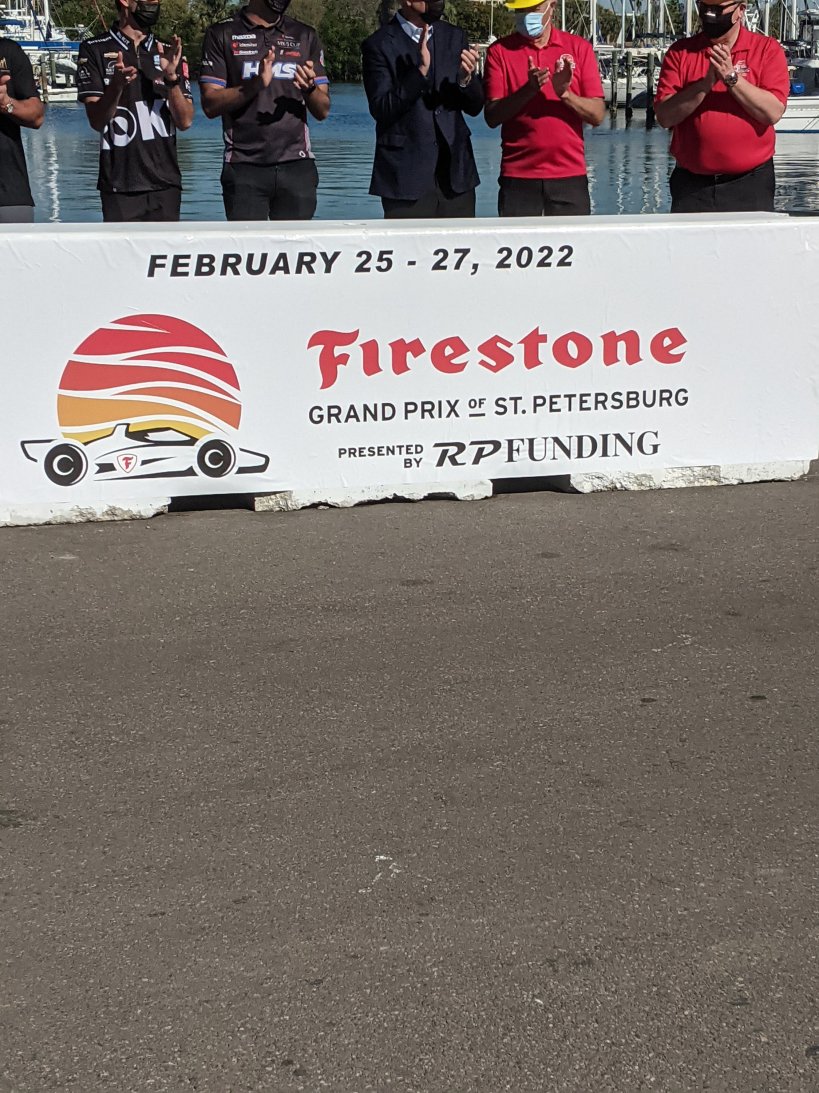
The Firestone Grand prix of St, Petersburg is just 28 days away. This Thursday, February 6, the event will hold its “First Block ceremony, where the first section of wall is put in place on the back stretch. Andretti driver Kyle Kirkwood is expected to attend along with drivers from he other series who will race that weekend.

IMS Museum Begins to Take Shape

In a Behind the Bricks episode released today, IMS President Doug Boles takes us inside the renovations of the museum reconstruction. I was excited to see the display areas start to have a tangible form. It looks like fans will have a bit of an immersive experience in parts of the new museum.

I’m still not sure I am going to like the area with the winning cars. Many of them appear to be in display windows where fans cannot walk all the way around them, while just a few will in full view on platforms. I hope they plan to rotate these cars in and out the wall windows.

I am glad to have a better idea of what the place will look like. To watch the video, right click and open it in a new tab or window.

The Storyteller’s Story- IMS Museum Looks Back As it Moves Forward

It is rare that we learn the story behind the storyteller. The teller of tales does not usually reveal his or her background. The Indianapolis Motor Speedway Museum is giving fans a lokk at its origins before it begins a new chapter in its life.

The IMS Museum has told the story of the Indianapolis Motor Speedway and the Indianapolis 500 for 67 years. In November the museum will close for a massive upgrade to bring the archives and collection intothe 21st century.

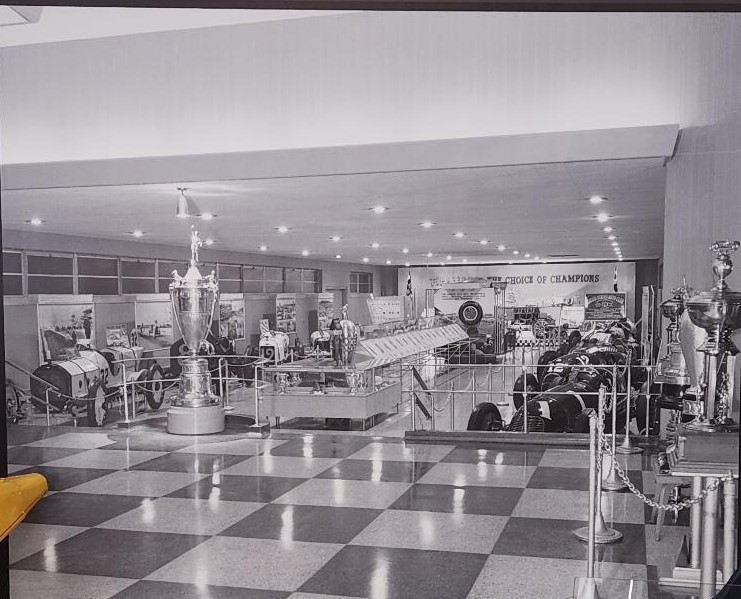
I vaguely remember the original museum. The six cars were displayed in the ticket office. I went to the building to pick up tickets, and I noticed the cars. They were fun to look at, but the museum was kind of an afterthought to getting the tickets. When the mnuseum moved to the current location in 1976, it became more impressive. The IMS Musuem always seemed a step behind other museums. That situation wioll change in 2025.

Fans coming to pick up tickets saw this display

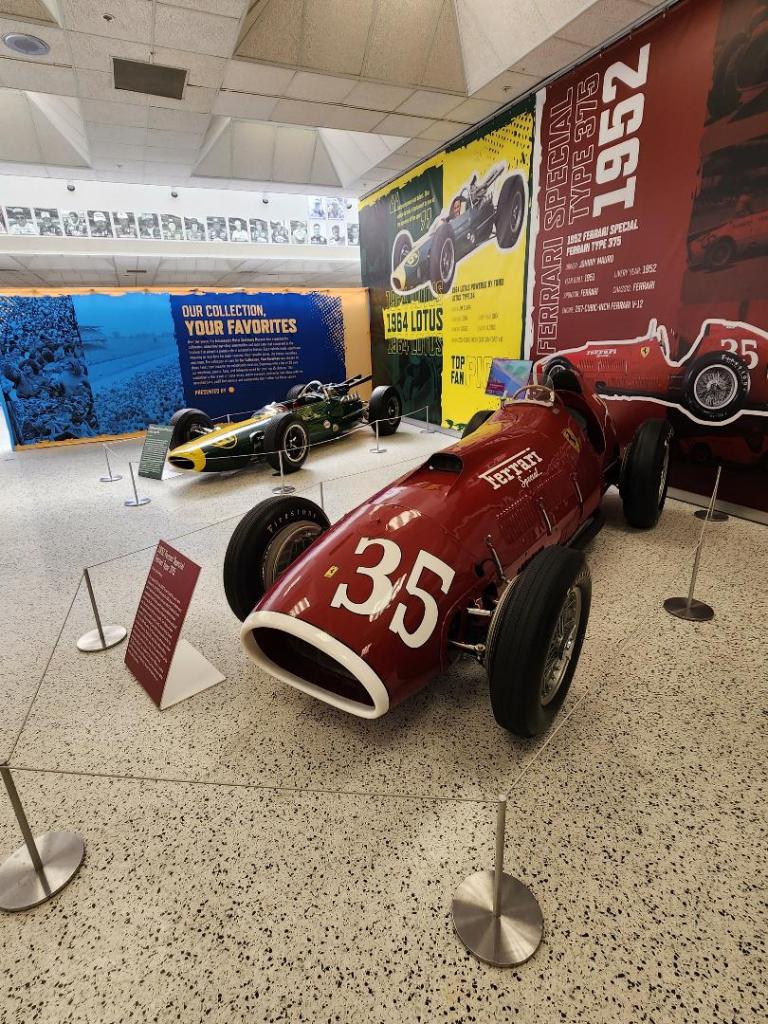
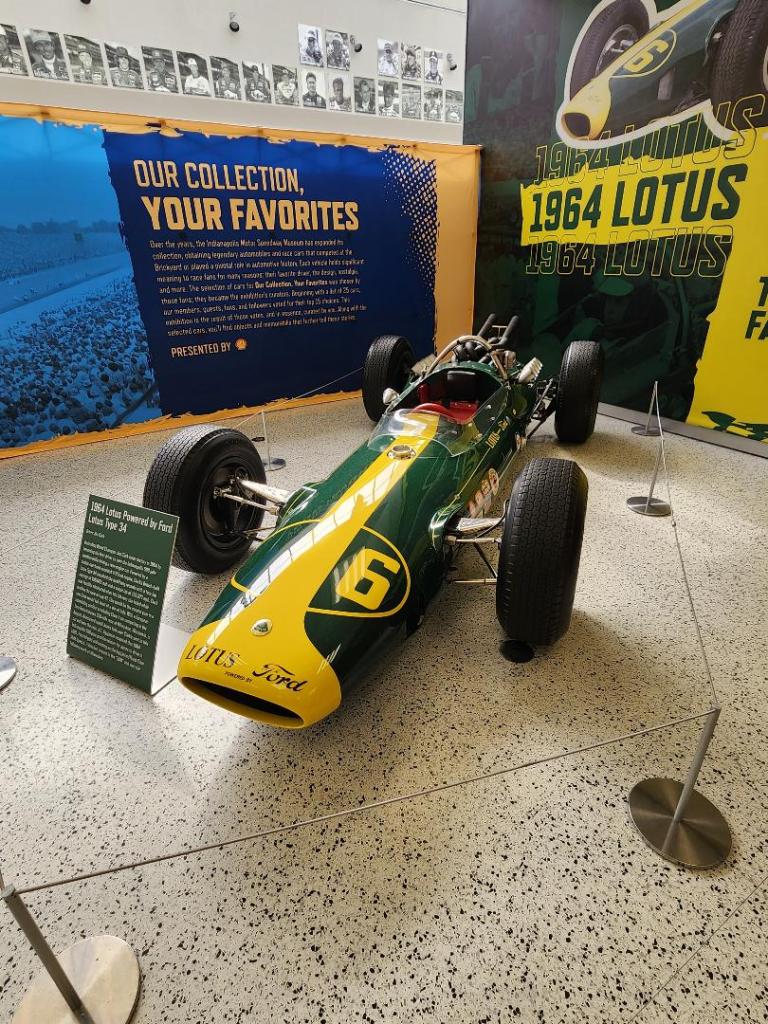
Their current pair of exhibits, 1956 and Our Collection, Your Favorites, tells the story of the museum’s rather humble beginnings and brings to the floor many of the gems that are seldom on display.

1956

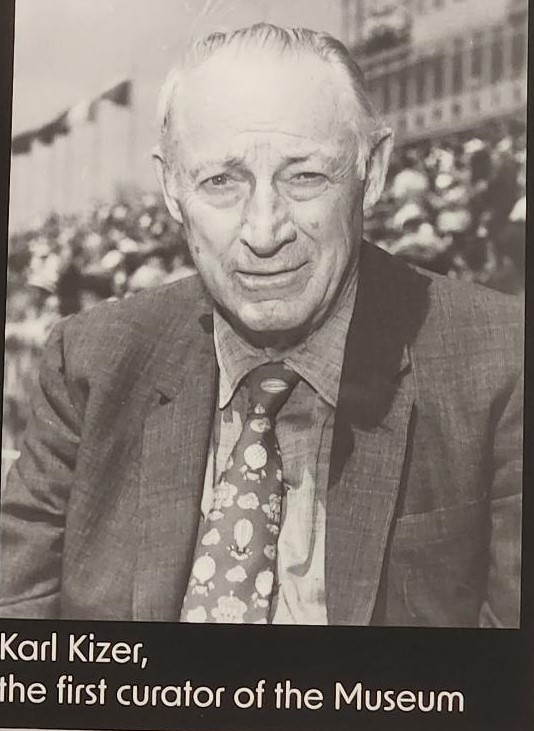
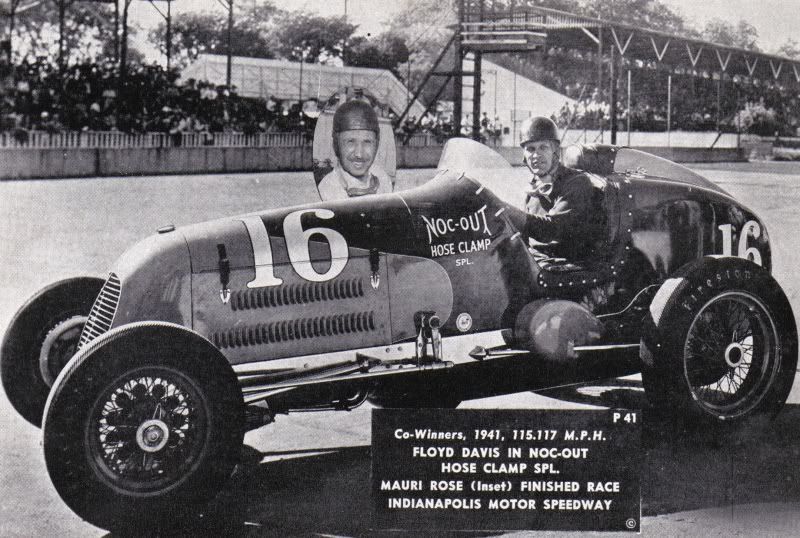
The cars that made up the original collection make up the bulk of this exhibit. The Marmon Wasp, of course is there, and Wilbur Shaw’s Boyle Maserati. The Maserati was purchased by Karl Kizer, the museum’s first curator.

It is arguably one of the greatest cars to ever run at the speedway With Shaw drivinbg, it won twice, and the car was leading in 1941 when a wheel collapsed. After World war Two, Ted Horn drove the Maserati to three top five finishes. Mauri Rose drove it in and Bill Vukovich took his rookie test in the car.

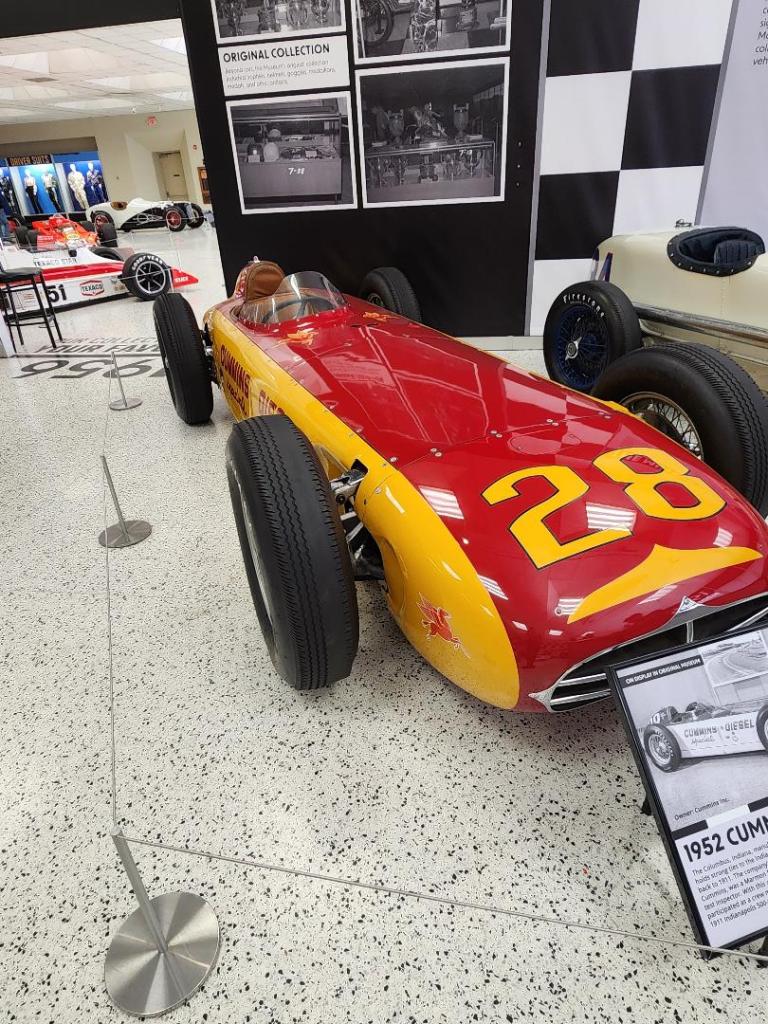
The most recent addition to the original museum was the Cummins Diese, which ran in1951.

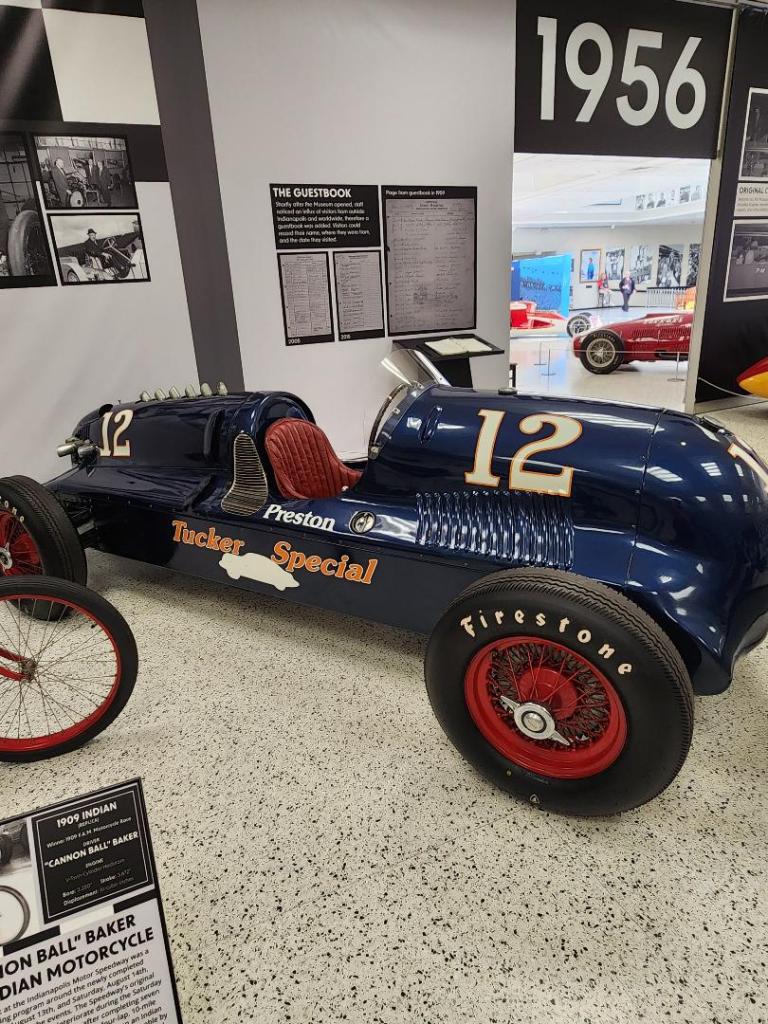
Another addition wasthe Tucker tordpedo, the first rear engine car to qualify for the 500

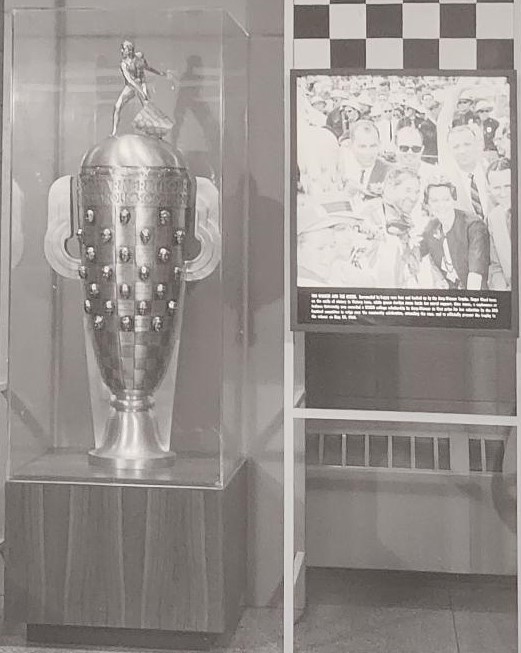
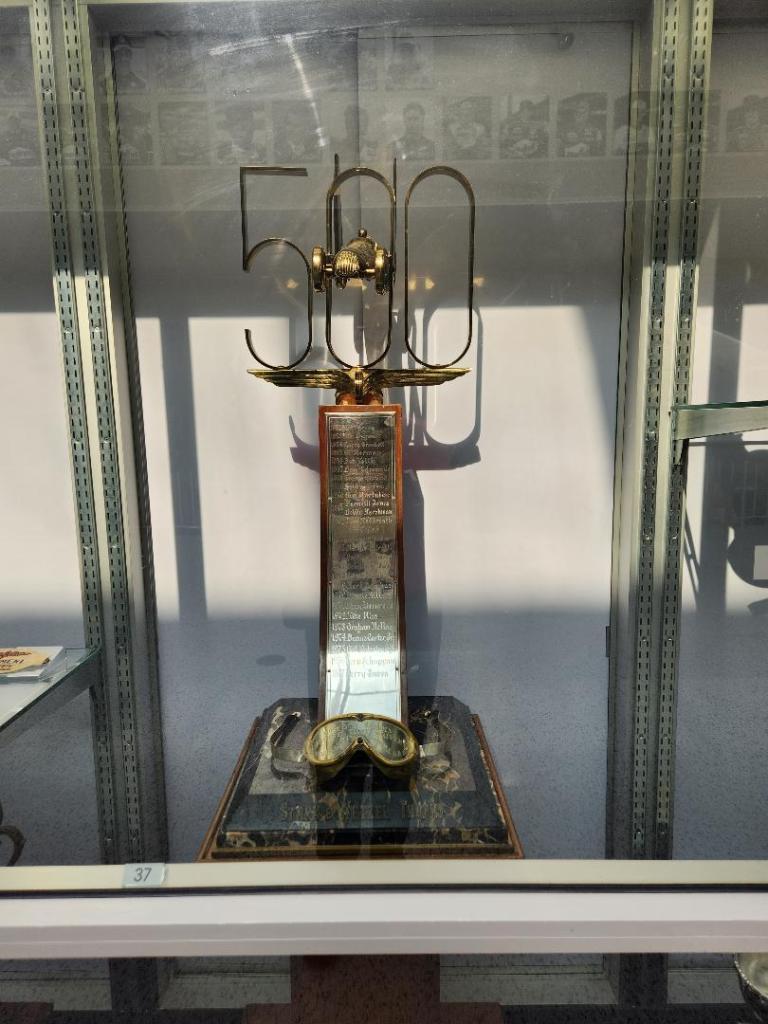
In addition to cars, the museum also housed the Borg Warner Trophy and the Stark &Weyzel original Rookie of the Year Award.

The Borg warner trophy as a young man
Only three Rookie of the Year winners on this trophy went on to win the 500- Parnelli Jones, Mario Andretti, and Mark Donohue. This trophy was discontinued after 1977.

Our Collection, Your Favorites

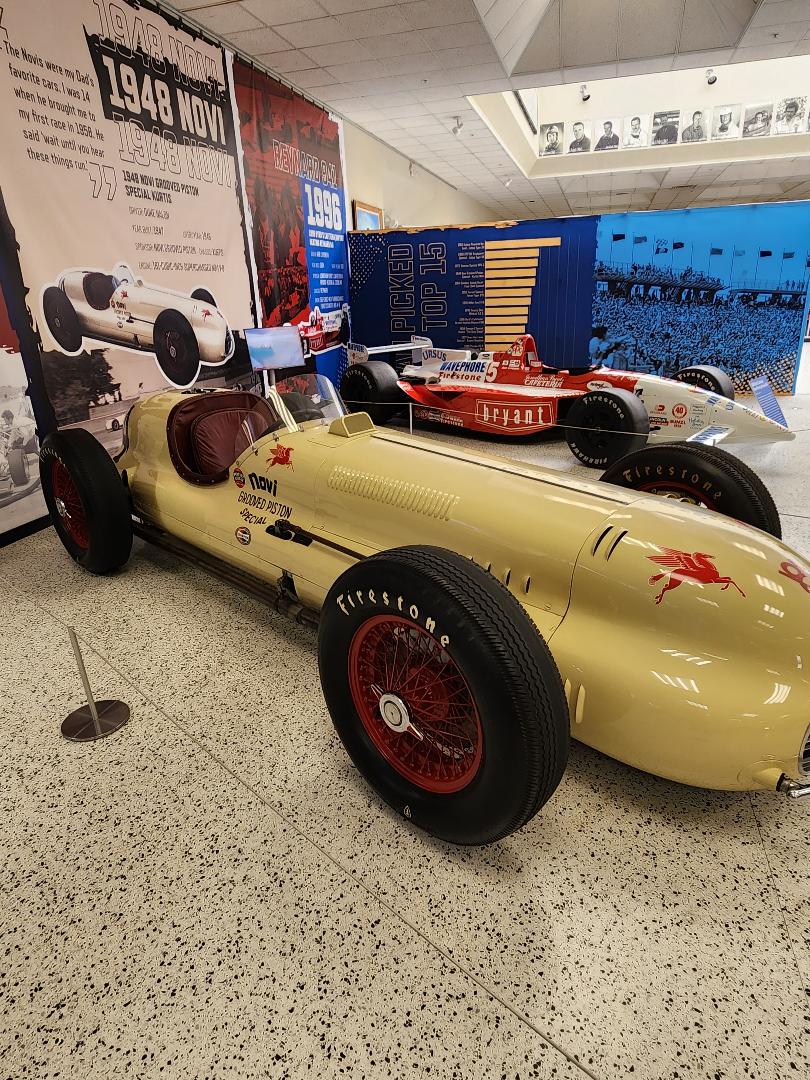
Next door to the 1956 exhibit is the fan favorites display. A chart on one wall shows the voting for the 15 cars in the room. I am shocked that the Fuel Injection Special and the Belond Exhaust Special didn’t make the cut, but I wonder if the choices were limite to cars not regularly in the showroom.

A car I have only seen on display one opther time is the Ferrari from 1952, driven by alberto Ascari

The car used wire wheels, one of which collapsed during the race, ending the italian make’s only 500 appearance.

Jim Clark’s 1964 Lotus, the car that started the switch to rear engine cars, makes a rare showing

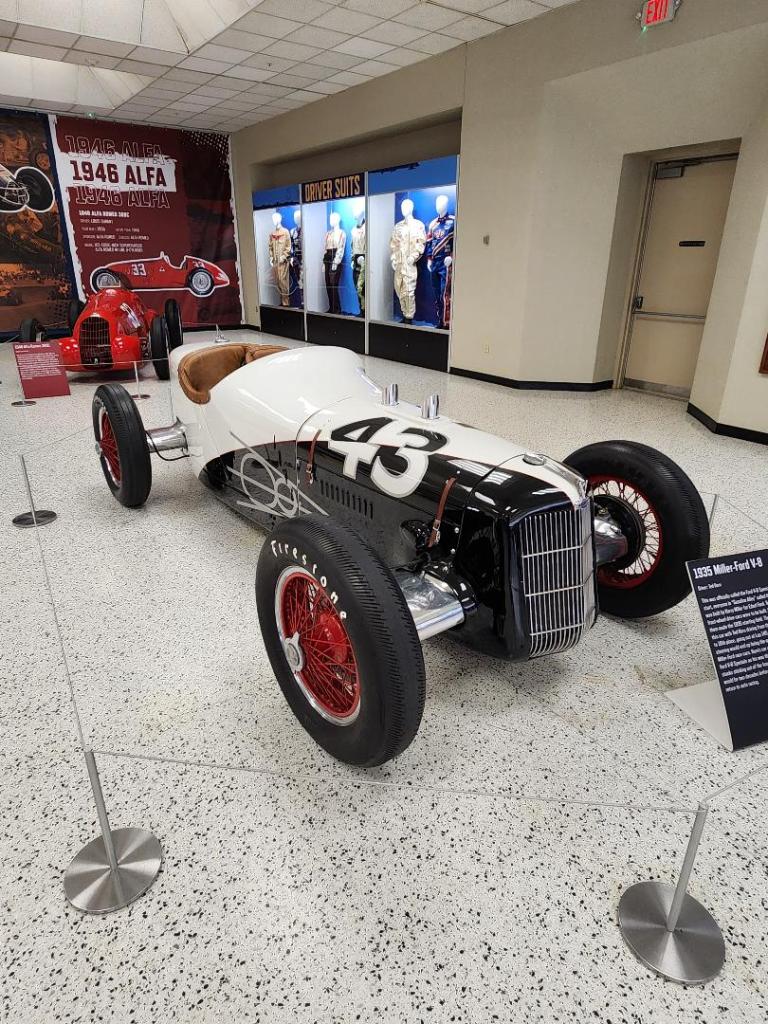
A fan favorite collection would not be complete withou a Miller entry. Two made it out of the basement.

1935 Miller V8
1928 Miller front drive 1.5 cubic inch engine

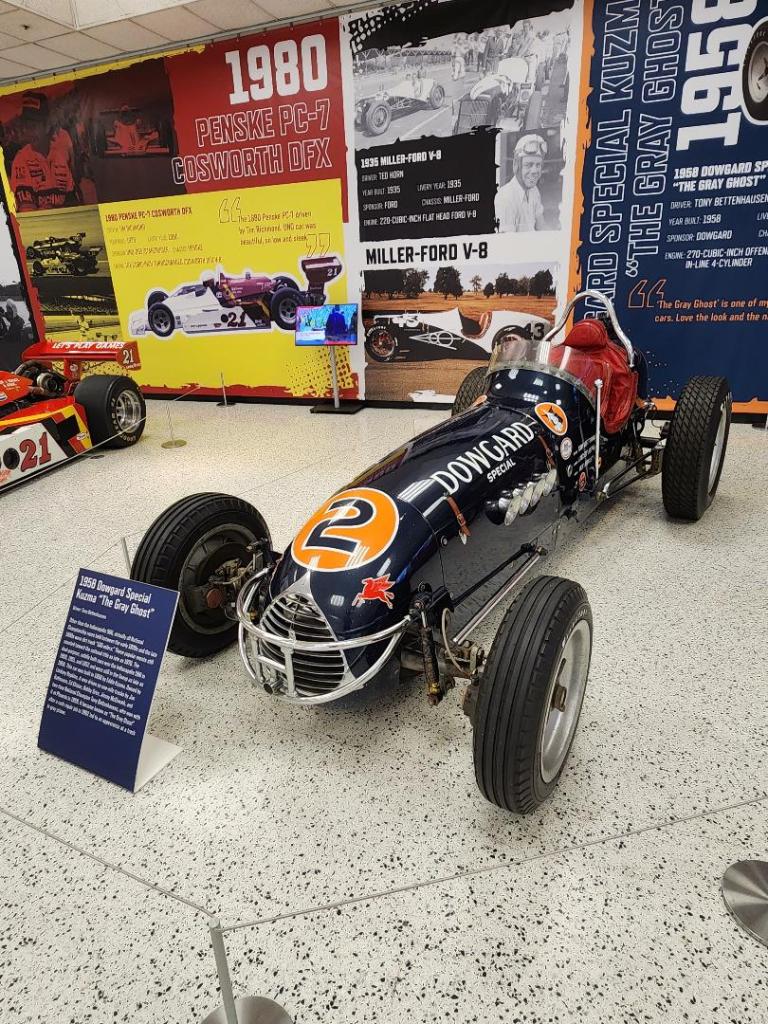
One of my favorites, the Dowgard driven by Tony Bettenhausen in 1958.

I had a nice morning remembering the time when the Speedway and I were just getting to know each other. It was fun seeing cars I had never seen race, as has been the case in recent exhibits. I don’t feel so old now.

As the museum prepares for its transition, I think this exhibit is important in the process. In 10 years visitors will probably have no idea of how the collection began. I think at the reopening of the new iteration of the the iMS Museum, the 1956 display should be repeated and maybe expanded.

I have some photos wihich I will post on The Pit Window later today.

Seconds from SECOND

A few moe photos from the IMS Museum’s new exhibit, SECOND

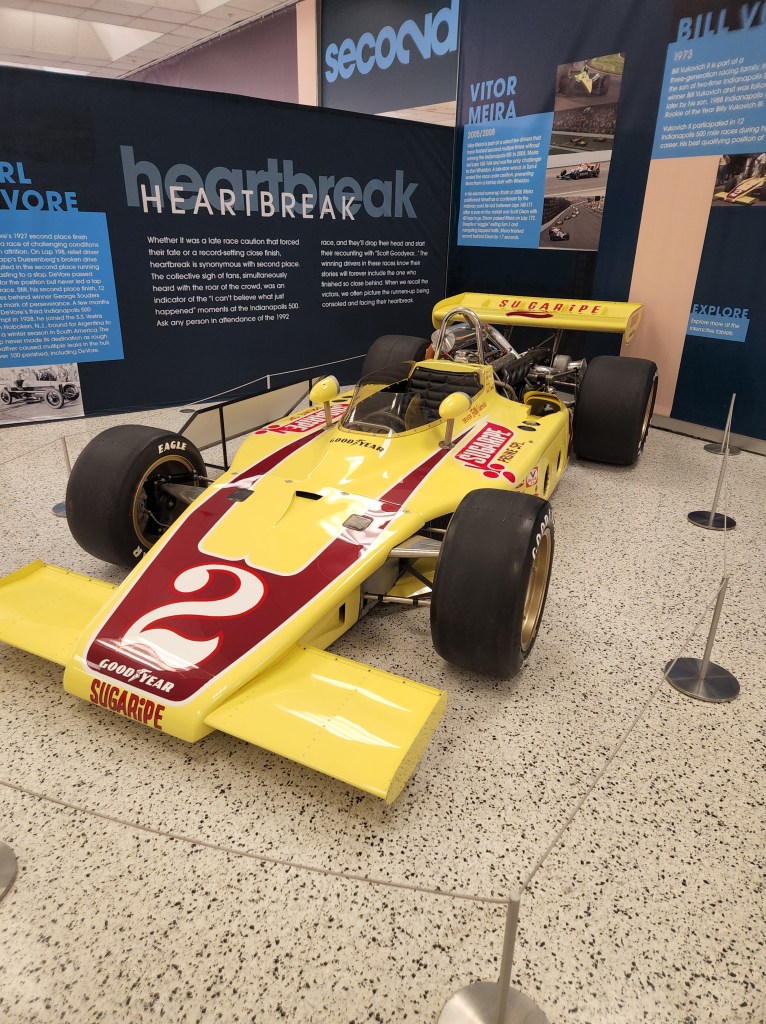
Bill Vukovich II was chasing Gordon Johncock in 1973 when rain halted the race. Could he have caught Johncock?
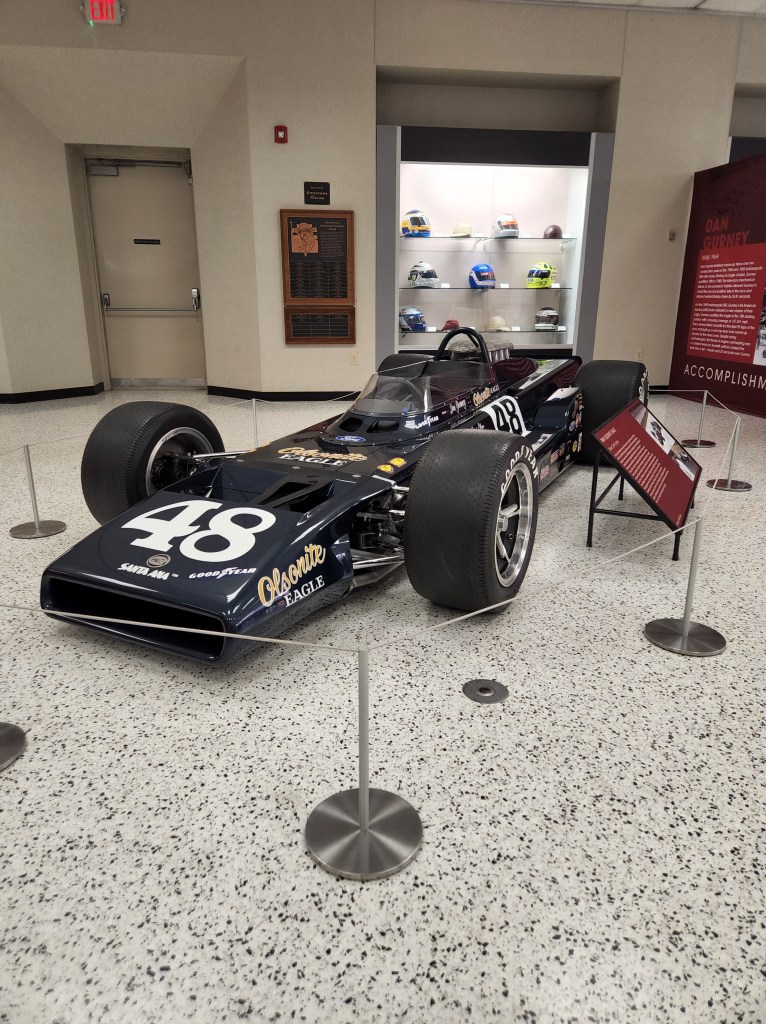
Dan Gurney finished second in 1968 and 1969. His Eagle chassis would win the 500.
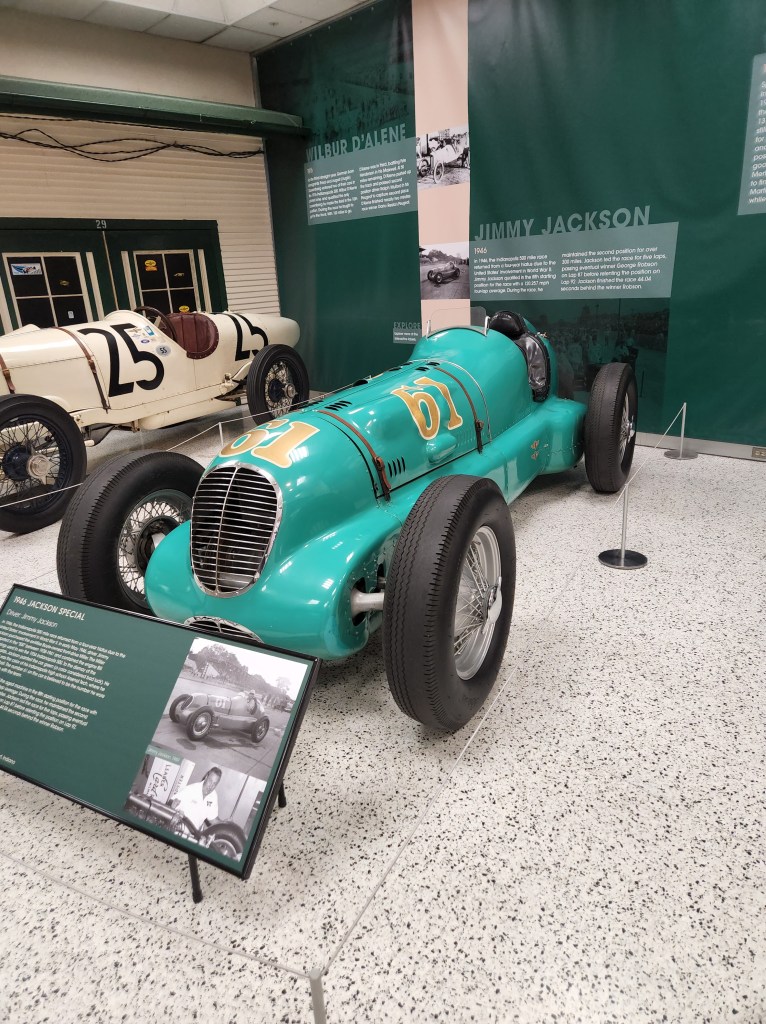
Jimmy Jackson drove to second place in 1946. Had he won, Jackson would have been the last Indian born driver to win the 500. Wilbur Shaw still holds that honor.
Ted Horn ran second in 1936, starting a string of nine straight top 4 finishes. It was his only second place finish.
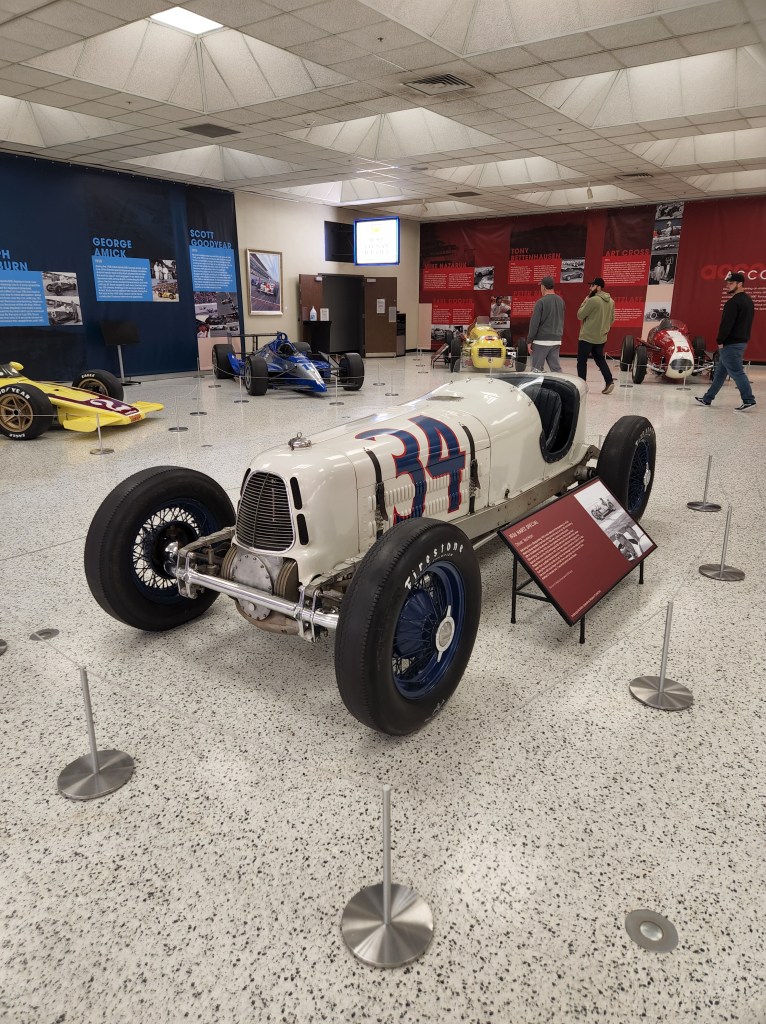
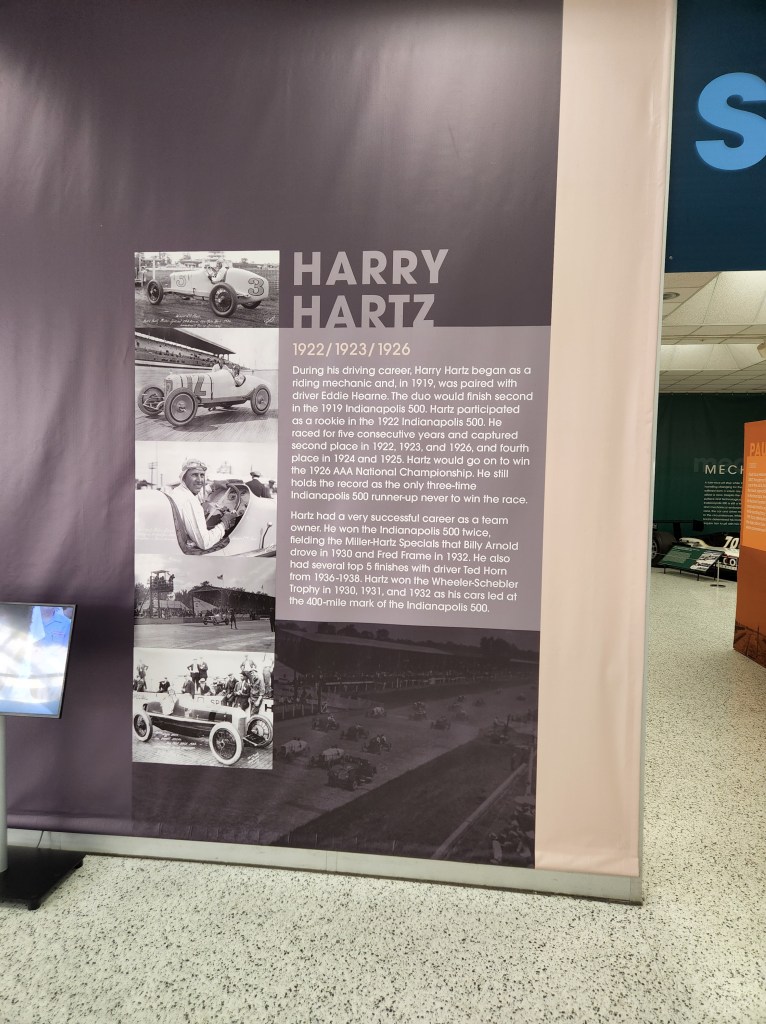
The story about second place finishers is complete without Harry Hartz. Hartz has the most second place finishes without ever winning the 500. He did get to Victory lane as a car owner.

SECOND- Drivers Who Almost Drank the Milk

Photo-Sam Hornish edges Marco Andretti for the win in 2006

“No one remembers who finished second except the guy who finished second.” Bobby Unser

Twists of fate kept several drivers from winning the Indianapolis 500. Some went on to win later on, but for many, second place was their best finish at the Indianapolis Motor Speedway Some had many more chances, while some never returned to the race.

Second place at Indianapolis mostly goes unnoticed Unlike other races on the schedule, there is no podium; only the winner receives recognition.

The IMS Museum gives the spotlight to these drivers, many of whom I believe are remembered for finishing second. While the display focuses on runners-up who never won, tribute is paid to those who eventually drank the milk or owned the winning car.

Here are some of the stories on display.

Whether due to controversial scoring, rain, car damage, or a late yellow, fans and drivers have to wonder what might have been. Controversy reigned in the first 500 in 1911. Ray Harroun was awarded the victory, and Ralph Mulford finished second. Or is that really how the race ended. Mulford maintained for a long time that he won he first 500.

Is this the actual winner of the first 500? Car on display is a replica

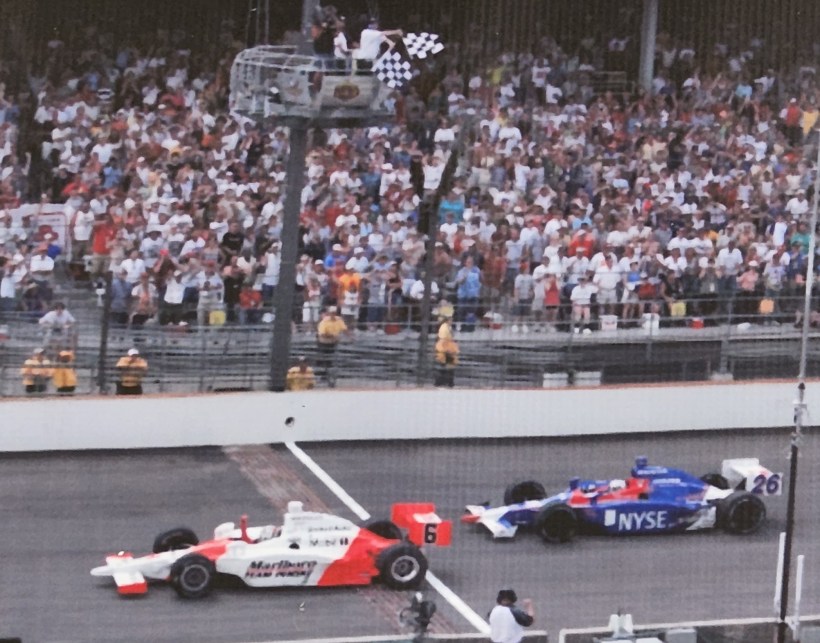
Perhaps the most controversial finish since 1911 occurred in 2002. Paul Tracy pulled ahead of leader Helio Castroneves on lap 198 just as the yellow flag came out. Did Tracy pass Castroneves before or after the flag was thrown? Officials ruled that the yellow was out when the pass was made. Castroneves got first place back and won his second straight 500,

Oh, So Close!

While most races ended with the winner easily ahead, there have been some very close finishes since 1982. When Gordon Johncock beat Ric Mears to the line that year, the two drivers broke a record that had stood since 1937. Wilbur Shaw beat Ralph Hepburn by 2.16 seconds in winning his first of three 500s.

Scott Goodyear nearly went from last to first in1 992

Al Unser, Jr. nipped Scott Goodyear in 1992 by 0.43 seconds. Sam Hornish edged Marco Andretti in 2006 by 0.635 seconds.

Late Trouble

Roberto Guerrero looked to have the 1987 race in habd when he tangled with tony bettenhausen between turns 3 and 4. A tire from bettenhausen’s car flew into the stands, fatally injuring a spectator. Guerrero continued, but there was internal damage. On his last pit stop, the car stalled with a clutch problem, and Al Unser, Sr. took the lead and held on for his fourth win.

Eddies Sachs had the 1961 race in his grasp.

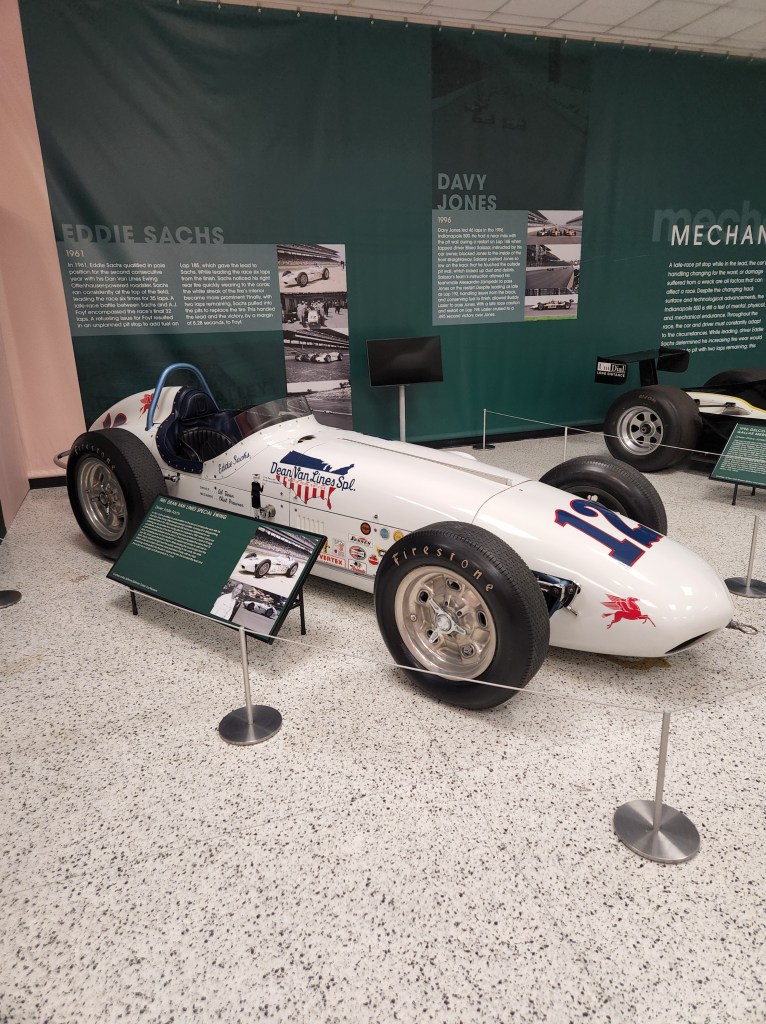
In 1961 Eddie Sachs appeared to have the upper after a spirited duel with A. J. Foyt, who had to make an extra stop for fuel. But with just three laps left, Sachs suddenly pulled into the pits, concerned that his right front tire wouldn’t last. Foyt took the lead and his first of four checkered flags at the speedway.

J. R. Hildebrand couldn’t complete the 800th turn in 2011

In 2011 J. R. Hildebrand ended up leading after a furious flurry of late fuel stops. He went wide to avoid a lapped car at the exit to turn 4 on the final lap and hit the wall. Dan Wheldon went past for his second Indianapolis 500.

Andretti Heartbreak

Rick Mears passed Michael Andretti on a late restart in 1991 to join the four-time winners club. Andretti had dominated the race, but once Mears took the lead, Andretti could not catch him. It was Andretti’s only second place finish among his five top five finishes.

Winners as Owners

Harry Hartz finished second three times, in 1922, 1923, and 1926, but won twice as a car owner in 1930 and 1932. Hartz holds the dubious honor of having the most second place finishes without winning the race.

The 1941 winning car owned by Lou Moore

Lou Moore, second place finisher in 1928, owned five winning cars- 1938, 1941, and 1947-49. His five wins as a car owner stood as the record until Roger Penske began fielding winning cars in 1972.

Michael Andretti’s team has also had success, with 500 wins in 2005,2007, 2016, and 2017.

There are fascinating stories in this display- heartbreaking, poignant tales of lost opportunities, sometimes with no second chances. I hope you can get out to see this exhibit. It is one of the best the IMS Musuem has offered.

I will have some more photos up tomorrow.

New Engine Gets Some Running; Testing Cancelled; Notes

Weather was the big story at IMS last week, as the test planned for Thursday and postponed until Friday never happened. There were cars on track earlier int he week, however, as the new 2.4 liter engines from Honda and Chevy got its first track test.

Both OEMs said they were pleased with the test despite the limited test time. I lijke the sound of the new engine. It is a very deep tone. The video is of the Chevy.

Andretti Autosport and Team Penske will test at barber tomorrow before heading to Long Beach.

I understand a test on the IMS road course is scheduled for June.

Harvey Cleared to Drive

Jack Harvey is now clear to drive at the Acura Grand prix of Long Beach. The Rahal Letterman Lanigan Racing driver had a hard crash during final practice for the EXPEL 375 at Texas Motor Speedway last month and was held out of the race.

Santino Ferrucci replaced Harvey in the race. Ferrucci started last and finished ninth.

Music City Presale

The Music City Presale begins at noon tomorrow for last year’s ticket holders. General public sales can’t be too far away.

I’m interested in seeing what improvements, if any the event has made after its first year. I hope they have made tickets easier to access and have employed a more fan friendly security company.

500 Festival Cars Debut

Tomorrow morning the 500 festival event cars will appear on the front stretch of IMS as we will be just 55 days away from the 106th running of the Indianapolis 500.

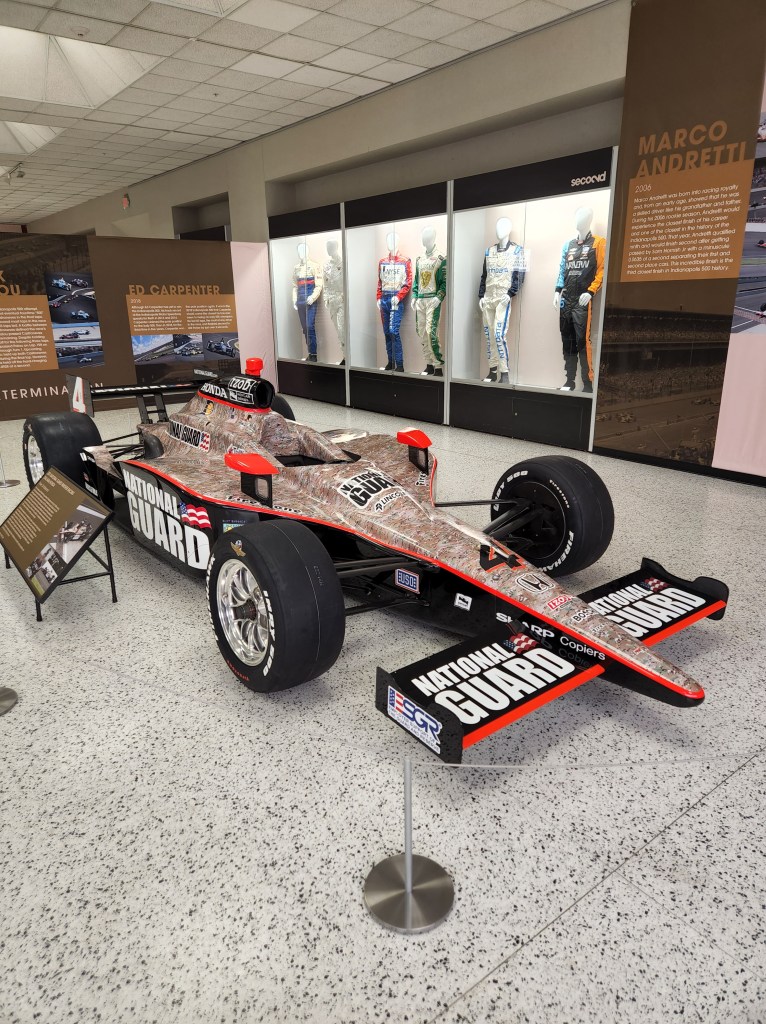
While I am at the track tomorrow I will check out the new exhibit at the IMS Museum, Roadsters 2 Records, 1960-1972. The display covers the transition from front engine cars to rear engine machines and the golden age of driving talent and technology in the time period.

IMS Museum Open During Test Days, But…

The Indianapolis Motor Speedway Museum announced today that it will remain open Thursday and Friday during the Indycar test on the 21/2 mile oval. However, there is a catch. Vehicles will not be allowed entrance to the museum parking lot. Instead visitors will park in the lot across from Gate 2 on Polco Street. Free shuttles will transport people to the museum and return them to their cars when they are ready to leave. The turn 2 mounds are closed. Shuttles will run from 9 am until 5 pm or until all visitors have left. I believe the museum limits the number of guests in the building at one time.

The release from the museum:

Track action available via NBC’s Peacock streaming service

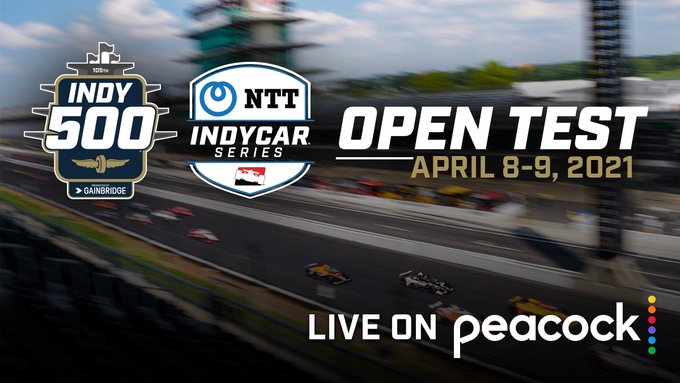
The Indianapolis Motor Speedway Museum will remain open to the public during the Thursday, April 8 and Friday, April 9 Indy 500 testing at the legendary 2.5-mile Indianapolis Motor Speedway oval.

IMS announced April 5 that the test will be closed to the public as it prioritizes planning and preparations for the Month of May. Fans will have access to both days of NTT INDYCAR SERIES track action via NBC’s new Peacock streaming service.

All visitors to the IMS Museum on April 8-9 will be directed to park in the IMS-owned gravel parking lot located on the east side of Polco Street and south of 16th Street. (See accompanying map for illustration.)

IMS Museum parking for all April 8-9 guests is in the red area. Free shuttles to/from the Museum will run continuously! (Click HERE for larger file.)

Museum guests should plan to use the lot entrance located on Polco just a few feet south of 16th Street, and IMS Museum owned tour busses will serve as free shuttles to and from the Museum main entrance. Shuttles will run continuously during regular Museum hours, 9 a.m.-5 p.m. (ET), and until the last visitor is delivered to the designated parking area. The Turn 2 viewing mounds will not be open on Thursday or Friday while the test is taking place.

“The IMS team is laser-focused on preparations for the Month of May, and we know everyone is excited about the prospect of coming ‘Back Home Again,’” said IMS Museum President Joe Hale. “In the meantime, we’re glad we’ve been able to work together with IMS to keep the museum open and available to visitors later this week, and we can’t wait to see people coming through our doors.”

IMS and INDYCAR officials are working closely with NBC Sports to provide live, in-depth coverage of  testing on NBC’s Peacock streaming platform, featuring NBC’s regular NTT INDYCAR SERIES broadcast team. Fans can take advantage of Peacock’s seven-day free trial to watch the test – and then sign up for Peacock Premium for just $4.99/month to access coverage of the entire 17-race INDYCAR schedule, including practices, qualifying and races.

To learn more about Peacock, click here.

Public access to the IMS Museum parking inside the oval via Gate 2 (the four-lane tunnel on 16th Street) is scheduled resume Saturday, April 10.

***

About the IMS Museum: The Indianapolis Motor Speedway Museum is home to one of the world’s premier motorsports and automobile collections, with interpretive emphasis on the Indianapolis 500 and its role as an American icon of sporting tradition and innovation.

Located inside the famed 2.5-mile Indianapolis Motor Speedway oval, the IMS Museum is a nonprofit 501(c)(3) organization which relies on the support of visitors, members, donors and corporate partners, who make possible our daily operations, exhibits, educational programming, and restoration and preservation initiatives.

For more information on the IMS Museum, please visit www.indyracingmuseum.org, contact the Museum at 317-492-6784, or find us on Facebook, Twitter, Instagram, YouTube and LinkedIn.

Testing Schedule

Thursday’s session has three segments:

11-1 Veterans

1-3 Rookie Orientation and refreshers

4-6 All cars.

Friday’s session runs from 10-4.