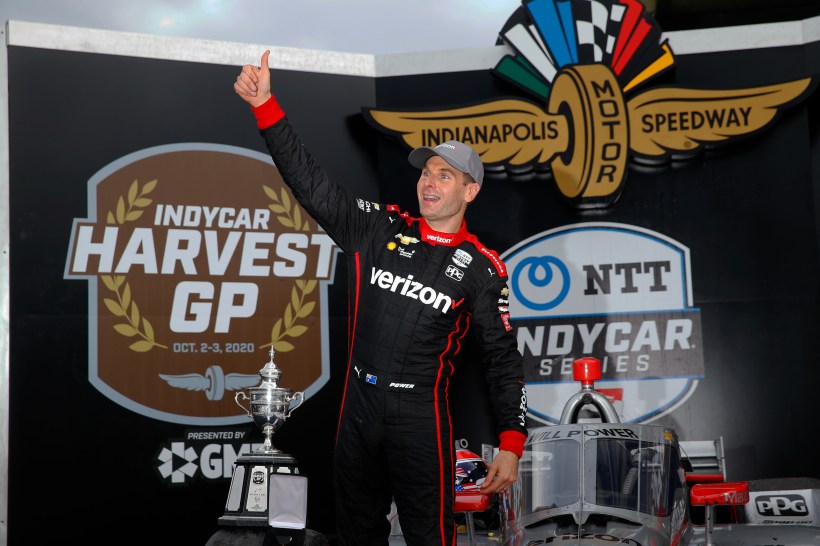
The sale of IMS and Indycar is now complete
The Roar Before the 24 began today with a totally different look for the IMSA Weather Tech field. Several full time drivers are with new teams. As a result, some of the Indycar regulars who serve as the extra drivers needed for the endurance races are also in new situations. The most notable Indycar drivers to switch are Scott Dixon, who will drive for Wayne Taylor Racing this year after Chip Ganassi’s Ford GTLM program ended after 2019.
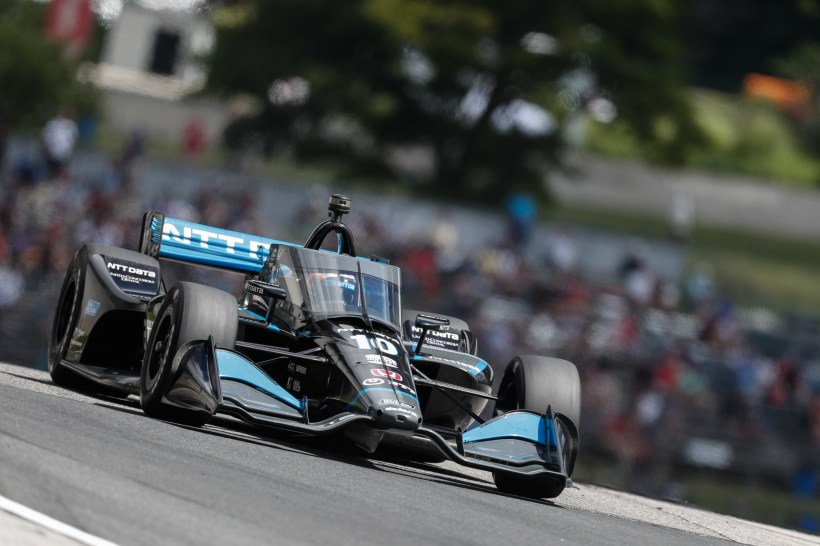
The majority of drivers who participated in the NTT Indycar Series in 2019 are in the DPi class. Alexander Rossi and Simon Pagenaud are in Team Penske Acuras. Rossi is in car number 6 and Pagenaud in car 7. Dixon will drive in the 10 car. Ryan Hunter-Reay is with the number 55 Mazda. Matheus Leist, who at present does not a ride in Indycar for this year, is driving the endurance races for JDC-Miller in car 85.
Colton Herta returns to defend his GTLM win in the 2019 Rolex 24 with Rahal Letterman Lanigan in the number 25 BMW.
Part time Indycar drivers running this weekend at Ben Hanley with Dragonspeed in the 81 LMP2 entry and James Davison the number 2 Multimatic Riley, also in LMP2.
Katherine Legge returns on an all female team, but not with Henricher/MSR. She will drive the 19 GTD car for GEAR Racing powered by GRT Grasser. The Lamboghini Hurracan will be very competitive.
Go to the link to view the full entry list:
Click to access 2020_iwsc_roar_official_entrylist.pdf
There are things about the Roar that will look strange. Wayne Taylor Racing will not have a driver named Taylor. It was hard enough last year getting used to Ricky Taylor in the Penske Acura. Now we also need to adjust to his brother Jordan in a Corvette GTLM.
I will miss the Ganassi Ford GTLMs. I loved the look of the car and its distinctive sound. I’m glad that their regular drivers have found other rides.
Normally watching Sebastien Bourdais in the endurance races is no big deal, but it’s difficult to realize that the number 5 Cadillac will be his home for the season. I hope he can find something for the Indianapolis 500.
I hope the smaller field, just 40 cars this year, can see more entries starting next season. I understand it’s economics, but sad to see the numbers going down. Some of the shorter races may see even smaller grids.
Saturday, January 4
The NTT Indycar Series will change its rule concerning work done on a car during a red flag period. The new rule calls for exclusion from the race if the crew attempts to make repairs while the race is stopped. The previous rule provided for a minimum two lap penalty for unapproved work while the race is under a red flag.
The revision is likely in response to Pocono last year. After the five car accident in turn 1 of the opening lap, the cars of Alexander Rossi, Ryan Hunter-Reay, and James Hinchcliffe were repaired while the race was stopped. All three were assessed a 10 lap penalty when they rejoined the race. Rossi was in a battle for the season championship and needed every point he could get. The accident and his 18th place finish still dealt a huge blow to his title chances.
I like this rule. It takes away any possible advantage a car could gain under a red flag. Part of the need to get a car back on track is the current points system. I’ve never liked the idea of every position earning points. If a team knows they are not going to get points for a race, there is not a need to work on the car under a red flag.
Three time Indianapolis 500 winner Helio Castroneves will again drive for Team Penske in the 104th Running of the Indianapolis 500. It will be his 20th time in the race. Castroneves will also drive in the GMR Grand Prix on the Speedway’s road course on May 9.
Castroneves has been driving full time in IMSA for Penske’s Acura DPi team since 2018. It is believed he had a three year agreement with Penske to drive at Indianapolis. 2020 is the third year of this agreement
The 44 year old Brazilian has finished 11th or better 15 times in his 19 previous races. He finished 27th in 2018 and 18th last year. He has a great career at IMS. In addition to his three wins, Castroneves has finished second twice and has a third place and a fourth place finish.
I’ll be back later today with a preview of the Roar Before the 24.
Happy New Year! I’m ready for another great year of sharing my racing thoughts with you. Thank you all again for a wonderful 2019. I just published a new piece on Wildfire Sports about some procedural changes at certain tracks. I’ll be reporting from Daytona this weekend about the Roar. Here is the link for Wildfire Sports:
http://wildfireradiosports.com/index.php/2020/01/02/indycar-tweaks-race-procedures/
“They called me uppity, uppity n*****, and I loved it,” Willy T. Ribbs says as his story opens. The documentary, Uppity- The Willy T. Ribbs Story, tells the story of a driver who not only faces the usual obstacles of no money and few contacts, but also the additional hurdle of prejudice because of his skin color as he tried to succeed in a mostly white man’s sport. It is produced by Chassy Media, Adam Corolla’s production company, which also produced Winning -The Racing Life of Paul Newman.
He was the first African American to test a Formula 1 car and the first to drive in the Indianapolis 500. When Ribbs decided he wanted to be a racing driver, his goals were to drive Indycar and Formula 1. He reached one goal and had a chance at the other one.
I came to realize while watching the film that Ribbs was a darn good driver. I had only been familiar with his Indycar career. While he didn’t have much success in his brief time in the series, Ribbs won races in Trans Am and IMSA. He is tied for eighth all time in IMSA with 17 career wins. Ribbs would drive whatever an opportunity came along, including NASCAR and Trucks at the end of his career.
The documentary is nicely structured into segments by seasons and the series Ribbs drove in. The film has some great racing footage including some of Ribbs in Formula Ford in England. He clinched the Formula Ford championship with three races left in the season. He returned to the United States hoping to get a ride in a professional series.
Marshall Pruett of Racer Magazine provides technical and inside commentary throughout the film. He explains the money aspect of racing as well as the difference between the cars in various series. In addition to the main interviews with Ribbs, we also get viewpoints from Al Unser, Jr., Bobby Unser, Robby Unser, Wally Dallenbach, Jr., and David Hobbs.
Ribbs raced despite death threats, equipment sabotage, and team orders . Like most drivers, he felt he was better than his competition. Much of the time, he backed it up. He received help from Dan Gurney, Jim Trueman, Paul Newman, Don King, and Bill Cosby. He was friends with Muhammad Ali, who gave him advice early in his career.
Humpy Wheeler, the promoter who put Ribbs in a stock car at Charlotte in 1978, also received a death threat. When Ribbs returned to NASCAR in 1986, he found the same hostility as eight years earlier.
Throughout his career, Ribbs was never far from controversy. He almost refused to race when he was told to let teammate David Hobbs win an event. Ribbs was fined for hitting a driver he felt cut him off on track. Later he was suspended by IMSA after punching Scott Pruett after a race. Ribbs thought Pruettt spun him out and cost him a win late in the race. His Ali Shuffle victory dance on the roof of his car after a win annoyed some people. It was really no different than Helio Castroneves climbing the fence. I found that annoying.
Ribbs was really no different than some white drivers, but his skin color caused many to view him as more outspoken and more aggressive. While he maybe could have handled some situations differently, Ribbs remained faithful to his grandfather’s advice to “Be your own boss.” He lived by those words his entire career.
The final segment of the film is the most dramatic. It records his attempts to qualify for the Indianapolis 500. In 1985 ribs entered in a hastily thrown together car with the help of Don King, who got Miller Brewing Company to sponsor the effort. In pre May testing, it was obvious the chief mechanic didn’t want Ribbs to be in the race. The setups were not good and Willy was uncomfortable. He had enough experience to know that this arrangement wasn’t going to work. He withdrew from the race on April 27.
Ribbs returned to Indianapolis in 1991 with financial help from Bill Cosby. Derrick Walker assembled the team, which ran on a shoestring budget throughout the month. The team blew four engines, including one early on Bump Day. The drama of the day is captured very well and creates some tremendous drama. His triumphant qualifying run is filled with tension even though we know the outcome. This is the best part of the documentary.
I wrote about his 1991 qualification last May.
Willy T. Ribbs is a complicated, controversial figure in auto racing, but he broke through one of the sport’s final barriers in becoming the first African American to drive in the Indianapolis 500.
I wholeheartedly recommend this film. It is an important part of racing history. I liked the vintage film clips, although some of the worst crashes at Indianapolis are among them.
In the final interview segment, Ribbs talks about the 1993 500 when he was running at the finish of the race.
“I won. I didn’t win the Indianapolis 500, but I won.”
Be sure to watch the credits after the movie. The producers pay tribute to black drivers who raced before and after Ribbs. Charlie Wiggins, Joie Ray, Wendell Scott, Bubba Wallace, Chase Austin, and Lewis Hamilton are acknowledged. They also recognize the Black American Racing Association.
Indycar has changed Push to Pass. The new system prevents other teams from knowing when a driver attempting to pass uses the system.
The details are in this article on Racer.com
https://racer.com/2019/12/27/indycar-tweaks-push-to-pass/amp/?__twitter_impression=true
I like this idea. Push to Pass has become Push to Defend more often than not. While I hope the new hybrid technology eliminates the use of this entirely this modification should make more passing possible.
From Alex Palou on Twitter. Story coming later
🔥 Speechless 🔥
I’ll be driving in Indy Car next season for Dale Coyne Racing with Team Goh. Can’t thank enough all humans that made this possible. 🙌
Dreams do come true! 🙈
#IndyCar 🇺🇸 https://t.co/xhS12Sy1Ka
Photo: Indycar
From the NTT Indycar Series:
INDIANAPOLIS (Dec. 18, 2019) — While INDYCAR enjoyed several intriguing stories during this year’s NTT IndyCar Series season, the blockbuster came after the season when Roger Penske announced that Penske Corporation would be acquiring Indianapolis Motor Speedway, INDYCAR and additional Hulman & Company holdings.
The November announcement was no doubt the most captivating story of 2019 for INDYCAR, but it also ranked among the top stories in all of motorsports with its worldwide interest.
Tony Hulman purchased the Speedway in dilapidated condition in November 1945 and turned it into one of the world’s most iconic sporting venues. Over the past 75 years, Hulman and his family have reshaped the facility and hosted Indy cars, NASCAR, Formula One, MotoGP, major golf tournaments and concerts, among other events.
The official sale is scheduled for early January and most expect the impact Penske will have on the sport and the famed track in the future could be even greater than his record 18 Indianapolis 500 victories.
With the Penske acquisition news leading the way, here’s a look at INDYCAR’s top stories of the year:
I have no argument that these afre the top stories. I would have put the Herta story 5th and moved the Pagenaud story to 7th. The others I think are appropriately ranked. Let’s face it. The top story should have been 1, 2,and 3.