INDIANAPOLIS (Monday, May 12, 2025) – Information about 109th Indianapolis 500 presented by Gainbridge practice track activity Tuesday, May 13 at Indianapolis Motor Speedway:
SCHEDULE (All times local):10 a.m.-6 p.m.: Public gates open Noon-2 p.m.: Practice (all cars) 2-4 p.m.: Indianapolis 500 Refresher Tests (Two hours, if needed) 4-6 p.m.: Practice (all cars, session may start earlier depending on Refresher Test status)
TICKETS: General Admission tickets are $25. The General Admission ticket will provide the opportunity to move between the IMS infield viewing mounds and first-come, first-served access to selected grandstands to view racing action from different vantage points.
PARKING: Free public parking is available in Turn 3 and Lot 7 (North 40). Free motorcycle parking in South Carousel Lot. ADA accessible parking is available in the following lots: West Museum Lot, Flag Lot, Tower Lot, Northwest Gravel Lot and Lot 7 (North 40).
CASHLESS OPERATIONS: The Indianapolis Motor Speedway is a cashless facility. Please be prepared to complete your ticket, credentials, parking, concession and merchandise purchases with ease during your event via debit or credit card.Tap-to-pay phone payments will be accepted, as will credit and debit transactions. Cash-to-Card machines, which convert paper money onto a temporary debit card, will be located in the IMS Museum, Pagoda Plaza and outside Turn 1 by concessions stand 7. These funds can be spent inside the venue, outside the venue, online or anywhere in the world where Mastercard/Visa debit cards are accepted.
MUSEUM: The IMS Museum is open from 10 a.m. to 5 p.m. General admission tickets are $25, seniors (55 and over) are $23, and military (former and active) are $18. Tickets can be purchased online at https://imsmuseum.org/tickets/. Gate admission must be purchased as well as Museum admission.
With the Sonsio Grand Prix weekend concluded, it’s time for the big show to begin. Practice starts tomorrow for the 109th running of the Indianapolis 500. But first, here are a few items I didn’t get to Friday or Saturday.
Attendance was decent, but I don’t think it was one of the top three crowds in this event’s history. Still, the race draws more fans than an opening day of practice would have, and some people need to choose between this race and the 500 to attend. If I needed to choose for budgetary reasons, this event would come in a distant second every time.
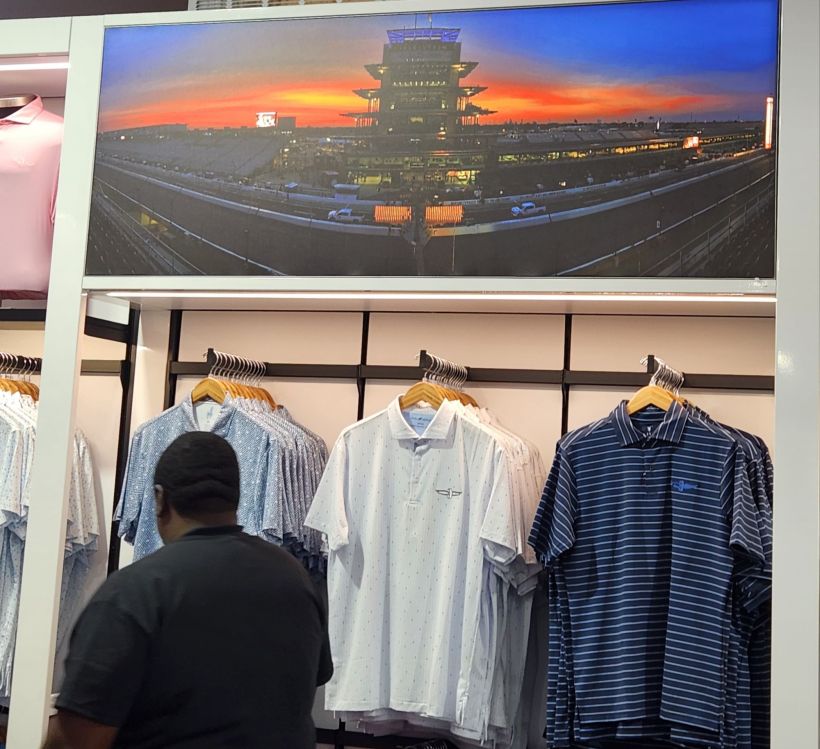
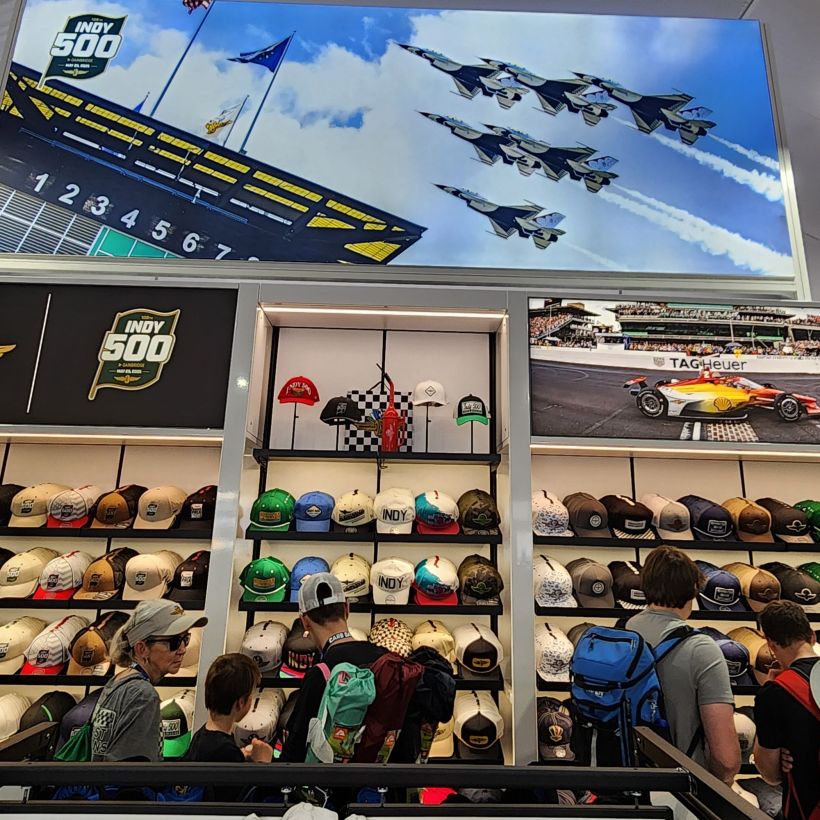
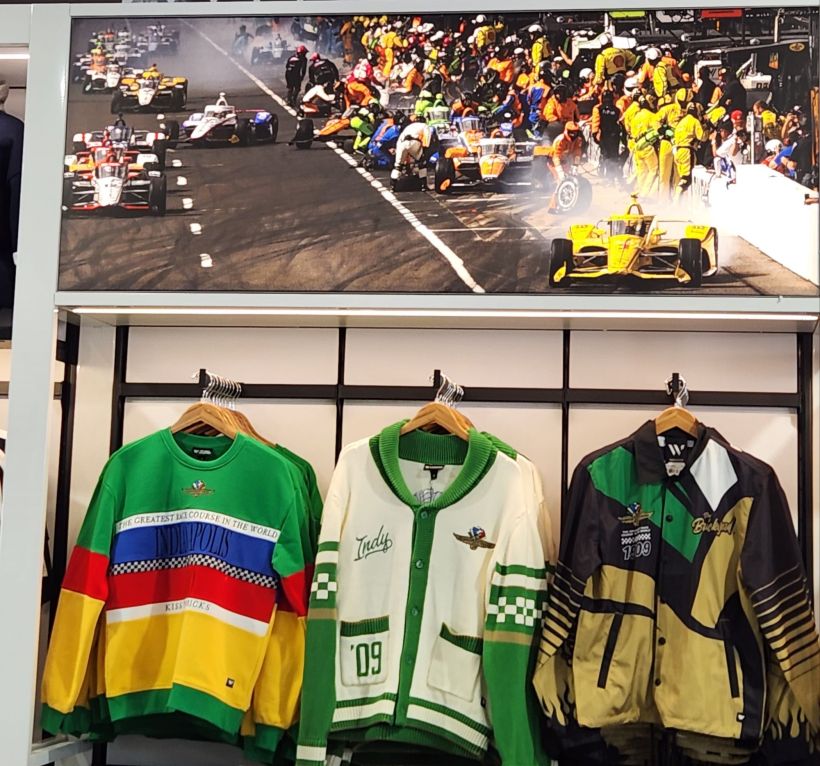
The new midway merchandise shop is a great addition to the various merchandise locations at the track. It does not supplant the other shops of stands but enhances them. There is no team or driver merchandise here, only IMS related gear.
Upscale brands Lululemon and Under Armour are featured. The store ios laid out like a department store with women’s, men’s and kid’s sections clearly marked.
My favorite part of the place, however, was the artwork above the shelves and the lighted panels on the end caps.
This one is my favorite
Team and driver merhandise can be found in the tent just north of the store.
Museum Chat
I had an opportunity Friday to talk with Jason Vansickle, Museum Vice President of Curation and Education, about the origin of the revamped Museum. Jason has been with the Museum since 2011 while he was in college, and he began working full time in 2015.
The revamped exhibition space has 30, 000 additional square feet with the renovation of the basement and the expanded third floor.
What the public sees is the result of visits to other museums both automotive and non-automotive, and the ideas were distilled by the JRA interpretive group out of Cincinnati to develop the display areas.
The goal was to tell the story of the Speedway in an orderly, chronological fashion, honoring its past and looking to its future.
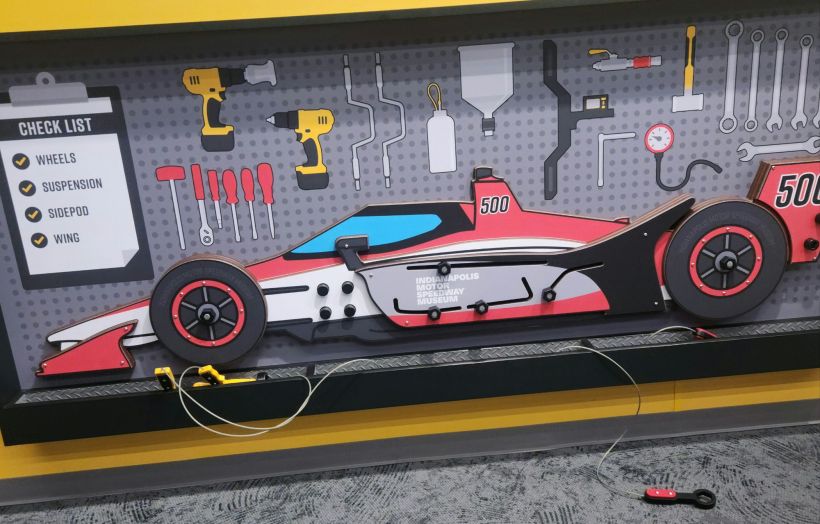
The Qualifying Zone has a driector of education. The area, geared toward kids and kids at heart, is a multi-sensory, hands-on area with STEM components designed to engage new, young fans.
The three rotating exhibits in the basement will change in September and November.
Jason told me that the museum will keep the timed ticket policy, which has allowed for a nice flow of visitors, although walk-ins are welcomed. The busiest days have seen 1,500 visitors.
Time slots for Carb Day are close to being all filled.
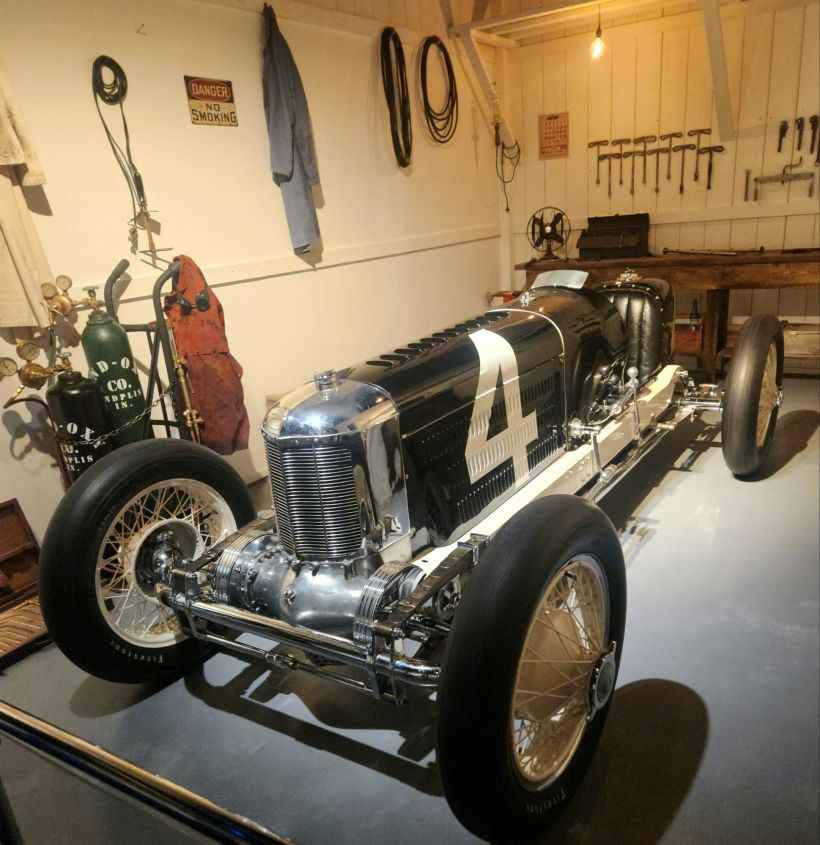
I also learned that as many as 14 historic cars may take a lap on Race Day. The Museum has 150 cars in its collection. Some are on loan, and the ones not on display are in an offsite facility.
I want to thank Jason for being so generous with his time. and thanks to Kelsey Burr, the Museum Communications Manager, for arranging our meeting.
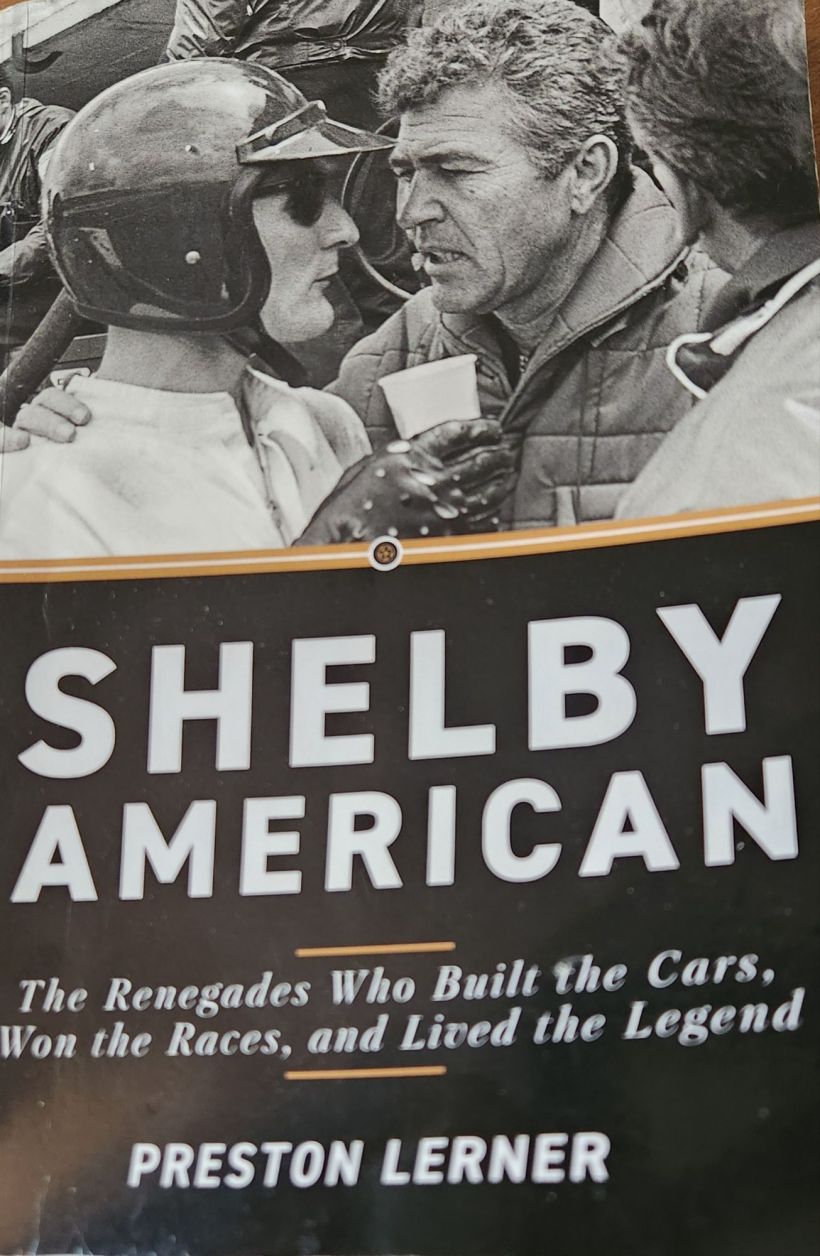
Carroll Shelby did things his way. Even his association with Ford didn’t hinder his independent thinking or methods. Sometimes his ideas worked, other times they failed. Much of the time Shelby was his own worst enemy.
I have always been fascinated by the Cobra and Shelby, and I learned a lot reading this biography.
Shelby American by Preston Lerner chronicles Shelby’s and Shelby American’s time as one of the dominant race cars of the mid 60s. It wasn’t all easy. Parts failures while leading races. engine failures (six in one weekend) were interspersed with podium sweeps and runaway victories.
Shelby was an outstanding sports car driver in the 50s, highlighted by his Le Mans win in 1959. He had a heart condition which he treated by gulping nitro pills while racing, but by the end of 1960, he had to retire. Shelby went out in style, finishing second in his final race at Laguna Seca in a birdcage Maserati and clinching the USAC Road Racing Championship.
Throughout its brief history many top drivers drove for Shelby- among them Dan Gurney, Ken Miles, Dave MacDonald, Lloyd Ruby, Parnelli Jones, and Bob Holbert.
Fourteen months later he tested an AC Ace at Silverstone. The car would become the basis for the Cobra. Shelby had a chassis shipped to Los Angeles and put a 260 cubic inch Ford V8 under the hood, modified the body styling, and the Cobra prototype was born.
Shelby American and the Cobra cars would have years of triumph and years of famine. 1966 was the best year, as the Cobras and the GT cars he helped Ford develop won almost every race they entered. Ford’s victory at Le Mans was vindication for Henry Ford II, who had a feud with Enzo Ferrari.
Winning Le Mans in 1966 came at a cost. In a test at Le Mans Walt Hansgen died in a crash. Ford’s 1-2-3 finish was badly handled by Ford executives, and Ken Miles was denied a win he deserved. Miles died in August while testing the car.
Shelby entered the Indianapolis 500 in 1968 with a turbine powered car. USAC had changed the rules for turbines for the new season, severely cutting their power. Bruce McLaren and Dennis Hulme drove the cars, which were slow in practice. One of Shelby’s mechanics did an illegal modification to boost the output of the engines, but it was discovered, and the cars were quickly withdrawn.
I wonder what the 500 would have been like with Andy Granatelli and Carroll Shelby together on pit lane, two colorful characters grabbing most of the attention .
In 1969 Shelby American closed its doors. Ford did not renew their deal with Shelby and took this part of their program back to Michigan.
The biography is well written, but the author gets into a lot of jargon and technical details at times. His best writing is when he is describing the races, especially Le Mans.
For those interested in racing history, it is a fascinating look at United States sports car racing in the 1960s. Shelby American is available frrom Octane Press
CINDIANAPOLIS (Tuesday, April 29, 2025) – The 2025 Chevrolet Corvette ZR1 – capable of 233 mph, the highest top speed of any car ever made in America by an auto manufacturer – will lead the field to the green flag for the 109th Indianapolis 500 presented by Gainbridge on Sunday, May 25 at Indianapolis Motor Speedway. Designed for speed and performance, the Corvette ZR1 is up for any challenge, and the exterior and interior of the Corvette ZR1 will be on full display as the car fulfills responsibilities on and off the track. Michael Strahan, a Pro Football Hall of Fame member, two-time Daytime Emmy Award winner, longtime “FOX NFL Sunday” analyst and “Good Morning America” co-host, has been named honorary Pace Car driver and will pace the field of 33 drivers in the Corvette ZR1 to start “The Greatest Spectacle in Racing.” “Chevrolet is proud that the 2025 Corvette ZR1, our fastest Corvette ever, will be the Official Pace Car for the 109th Running of the Indianapolis 500,” said Scott Bell, global Chevrolet vice president. “With a top speed of 233 mph, the Corvette ZR1 is the perfect fit to lead the Indy 500 field to green.” The Corvette ZR1 delivers 1,064 horsepower at 7,000 rpm from a 5.5L twin-turbo V8, which is the most power ever from a factory Corvette and the most powerful V8 ever produced in America from an auto manufacturer. For Pace Car duty, the ZR1 is equipped with the Carbon Aero package, including dive planes on the front bumper, underbody aero strakes and the rear wing, which creates more than 1,200 pounds of downforce at top speeds.The Corvette ZR1 achieves incredible acceleration – capable of zero to 60 mph in 2.3 seconds before rushing through the quarter-mile in 9.6 seconds at 150 mph, making it the quickest Corvette ever. Arctic White exterior paint and Jet Black interior accents pair nicely with the Indianapolis 500 logos on the Pace Car. The jewel tone, emerald green and gold of the logo are highlighted in racing stripes and additional exterior design elements. Carbon fiber wheels complete the car’s iconic, race-ready look. “As we anticipate another iconic Indianapolis 500, we are once again excited to have the incredible American sports car Corvette pacing the field,” IMS and INDYCAR President J. Douglas Boles said. “The race car-like performance of the Corvette ZR1 makes it the perfect car to pace the Indianapolis 500, and the distinctive sound of the Chevrolet V8 engine will echo brilliantly inside the walls of IMS.”Corvette is the longest-running car nameplate in automotive industry history, so it’s no surprise Corvette has paced “The Greatest Spectacle in Racing” more times than any car. The 2025 race marks the 36th time for Chevrolet to pace dating back to 1948 and the 22nd time overall, all since 1978, for America’s favorite sports car. Visit IMS.com for tickets and more information on all Month of May events and activities at IMS. Founded in 1911 in Detroit, Chevrolet is now one of the world’s largest car brands, available in 80 countries. Chevrolet models include electric and fuel-efficient vehicles that feature engaging performance, design that makes the heart beat, passive and active safety features and easy-to-use technology, all at a value. More information on Chevrolet models can be found at www.chevrolet.com.
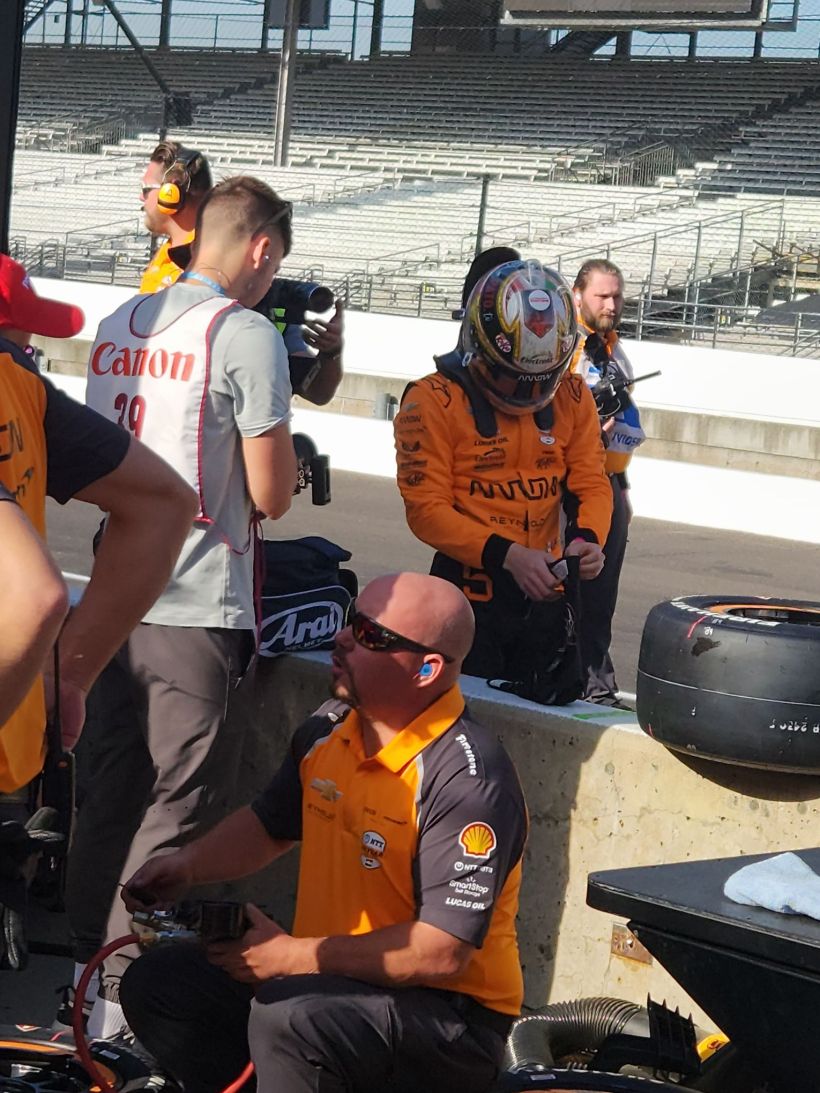
Pato O’Ward set to go out for high boost practice.
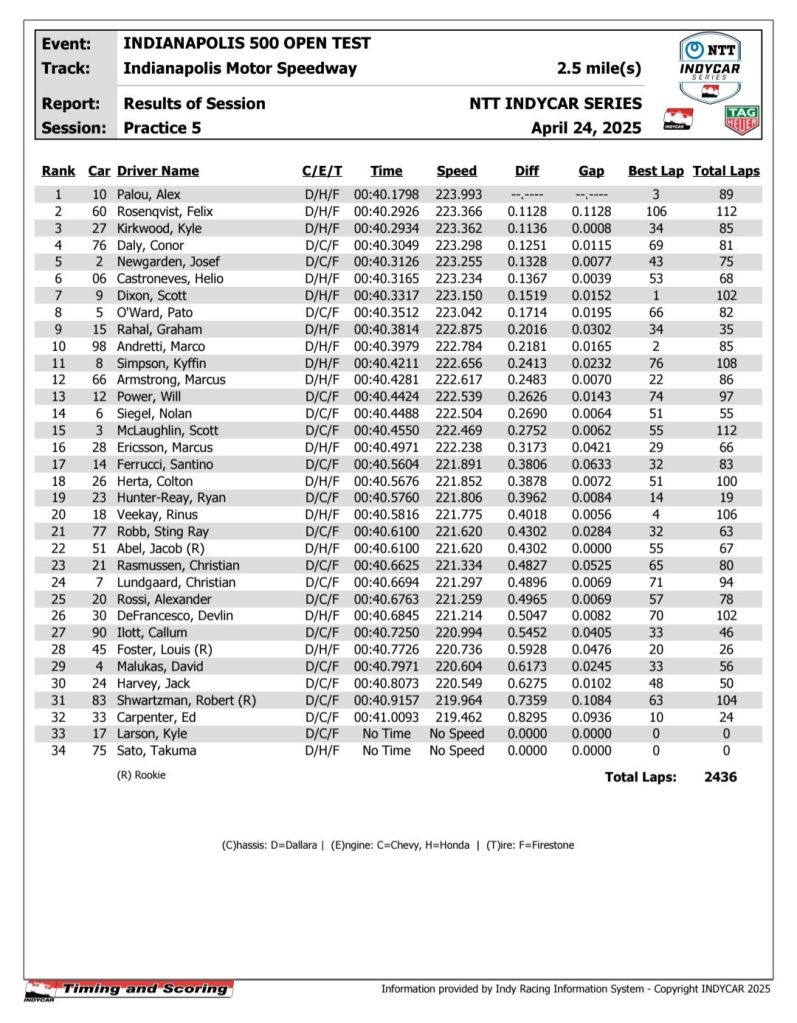
IndyCar testing concluded with a smooth, on time schedule Thursday afternoon. Weather conditions were ideal, although the wind picked up in the second half of the afternoon.
Some observations:
The two day test was good for the teams, drivers, and fans. The days had an atmosphere resembling a prequalifying practice day. Fan turnout was amazing considering the test took place in the middle of the week.
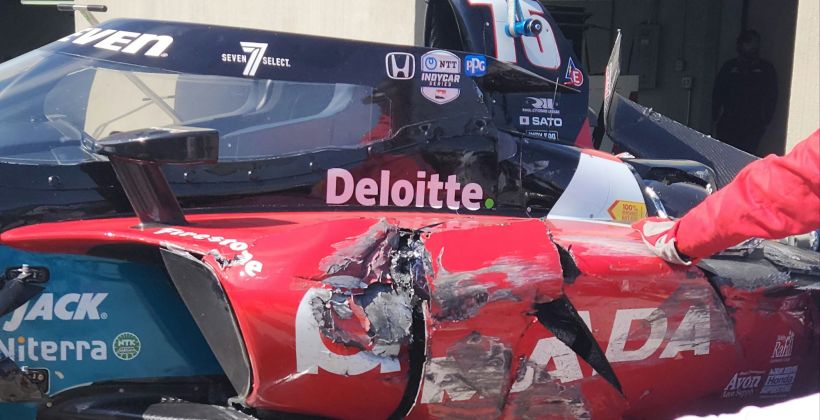
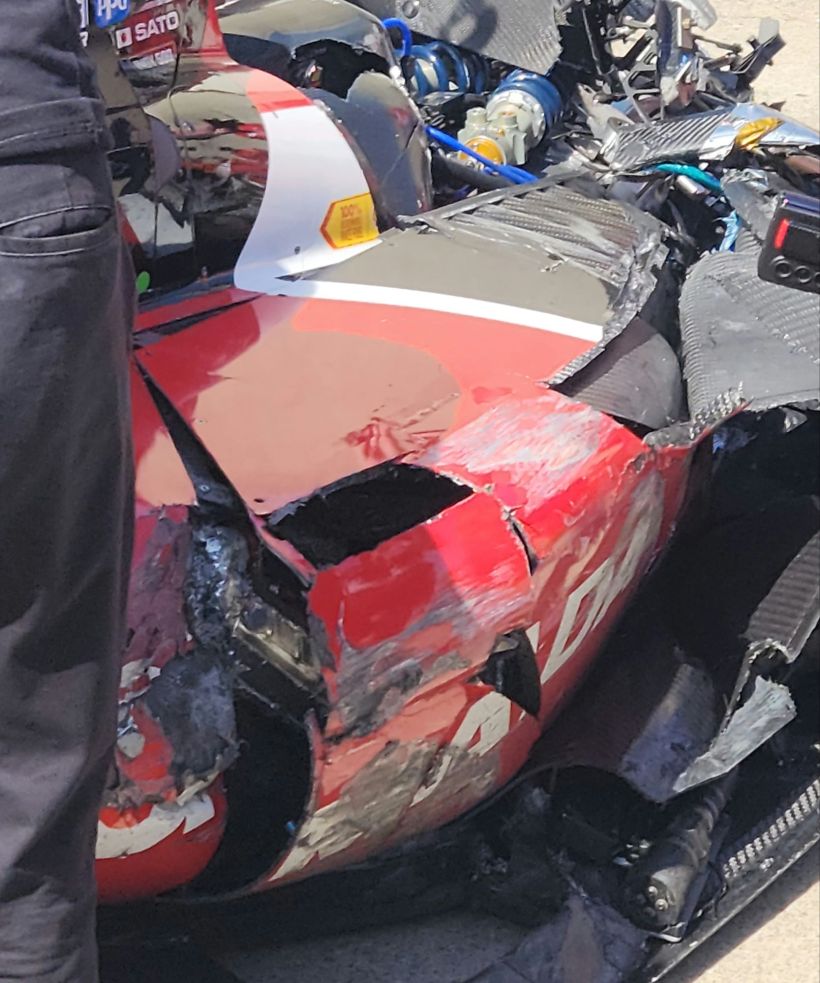
There were laps at more than 230 mph and even some qualification day type drama when Takuma Sato, one of the quickest this morning, crashed.
This section filled up when the afternoon session began
Hondas dominated the top half of the speed chart with only a Team Penske Chevy spoiling the party. Josef Newgarden and Scott McLaughlin have traded turns in the top five.
Kyle Kirkwood has shown hints of being very quick, and he could become a contender when the series returns for 500 practice. Kirkwood currently heads the non-tow chart. It appears that Andretti may have a stronger presence in May than they have had the last few years.
Scott Dixon and Helio Castroneves have also shown speed.
Of course, this all could change when practice officially begins May 13.
IMS Acquires 14 Cars from Ganassi
Thge IMS Museum today received 14 cars from Chip Ganassi Racing. It is the museum’s largest acquisition. Included are five Indianapolis 500 winning cars:
Juan Pablo Montoya’s winning car from 2000
Juan Pablo Montoya’s 2000 Indianapolis 500 Winner,
Scott Dixon’s 2008 Indianapolis 500 Winner,
Dario Franchitti’s 2010 Indianapolis 500 Winner,
Dario Franchitti’s 2012 Indianapolis 500 Winner,
Marcus Ericsson’s 2022 Indianapolis 500 Winner, Huski Chocolate
The remainder of the collection includes Scott Dixon’s championship winning car from 2015.
The 500 winning caes will be on display in the museum in thew future.
Thanks for following along these past two days. Next weekend the series moves to Barber for the last race before three glorious weeks at IMS.
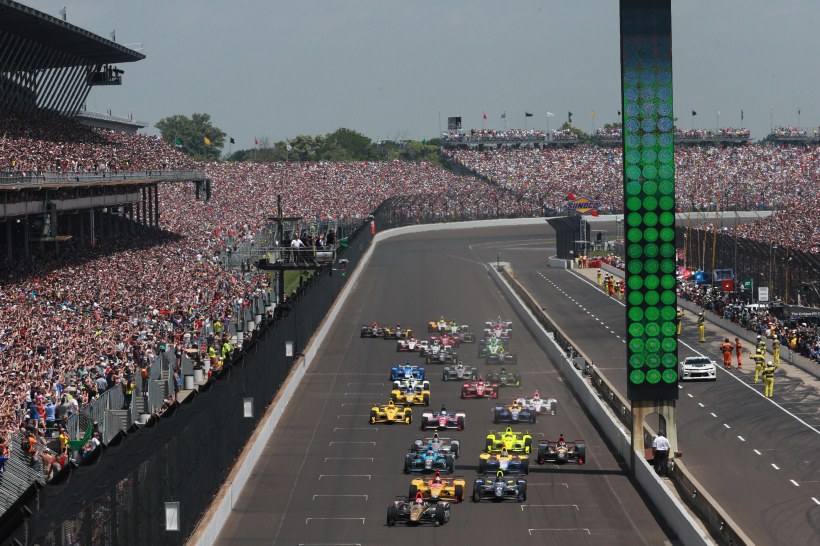
It took no time at all for drivers to reach 230 miles per hour as IndyCar allowed qualifying boost for the first time in an IMS practice session. Two crashes 11 minutes apart interrupted the otherwise clean running time.
Just past the halfway mark of the two and one half hour session Kyle Larson made contact with the wall in turn 1, then e slid to the inside of track. The damage looked slight, and Larson was cleared by the medical staff.
Practice resumed, but only for a moment before Takuma Sato made hard contact in turn 1, slid into turn 2 and hit the wall again. Sato had turned the second fastest lap of the day and was atop the no tow chart at the time of his accident. The car looks like a total loss.
Sato mwas treaqted and released from the infield care center.
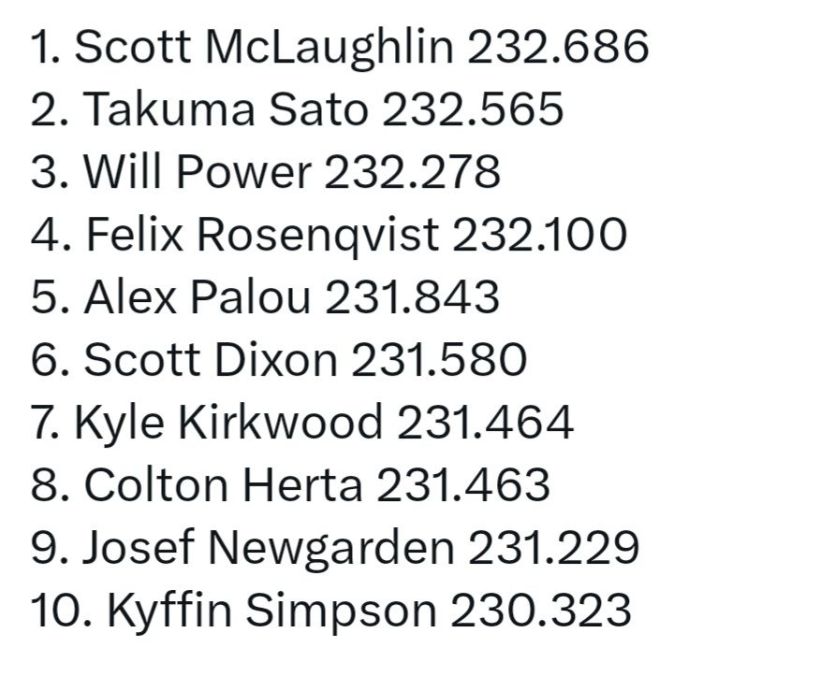
Scott McLaughlin had the fastest single lap at 232.686. 12 drivers topped 230 mph.
Kyle Kirkwood had the best four lap average and the second best no tow speed behind Sato.
If this were Fast Friday, the pattern heading into qualifying would look familiar- Penske Chevys vs. the Honda teams. Andretti and Ganassi cars look to be near equal in speed. The pole could be one heck of a battle.






 The Pit Window by Mike Silver