Indianapolis 500 Veteran Krueger Dies at 74

From IMS:

  INDIANAPOLIS (Wednesday, Feb. 11, 2026) – Phil Krueger, a veteran of two Indianapolis 500 starts, died Feb. 9 in Indianapolis. He was 74.
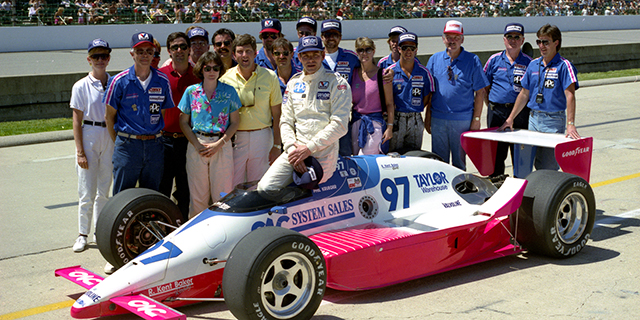
Krueger, a native of Milwaukee, competed in “The Greatest Spectacle in Racing” in 1986 and 1988. His best finish was eighth in 1988, completing 196 laps in the No. 97 CNC Systems Sales March-Cosworth fielded by R. Kent Baker Racing. He also qualified a “500” career-best 15th that year.
The performance in 1988 also earned talented mechanic and fabricator Krueger the Clint Brawner Mechanical Excellence Award for his work tuning the 2-year-old car into a solid qualifying spot and top-10 finish and guiding an all-new crew for the team.
Krueger was a regular competitor in May at Indianapolis Motor Speedway throughout the 1980s, turning laps every year from 1981-89 with small, low-budget teams with older equipment.
He failed to qualify from 1983-85 and in 1989, and he didn’t attempt to qualify in his first attempt at the race in 1981 or in 1982 and 1987 due to crashes in practice
.His Month of May in 1987 symbolized his hard luck and perseverance at the Speedway. Krueger started the month as the chief mechanic for the Raynor Motorsports entry for Dennis Firestone. Krueger climbed into the team’s backup car as a driver after Firestone crashed and suffered a broken foot in the team’s primary car.
Krueger clipped the wall between Turns 1 and 2 in practice, damaging the rear suspension. He led repairs to the car and attempted to qualify on Bump Day. His opening lap of 203.920 mph was on pace to make the field, but he crashed in Turn 1 on his second lap and didn’t qualify. Still, Krueger earned the Jigger Award that year for his determination amid hard luck during May.
A model of perseverance and courage, Krueger suffered multiple fractures in the No. 89 Joe Hunt Magneto Eagle-Chevrolet – a 7-year-old car that he rebuilt during the previous offseason – in the 1981 crash at Indy and was seriously injured in crashes during CART races in 1984 and 1989 at Michigan Speedway but returned to race each time.
That determination also was displayed by Krueger as he climbed to the elite level of North American open-wheel racing. He started his career in endurance karts in his teens. In 1977, with a $200 budget in his pocket, he began competing in the USAC Mini-Indy Series.
Krueger then competed in Super Vee and Formula Ford while also learning how to build and fabricate Indy cars when not racing. His driving and mechanical skill helped him climb to CART in 1981, and he made 23 career INDYCAR SERIES starts between 1981-91. His best finish was fifth in the 1988 Michigan 500 among his seven career top-12 finishes.
After his driving career, Krueger worked as an engine builder, mechanic and crew chief. He also was a licensed airframe and powerplant mechanic whose passion for aviation included maintaining his cherished 1941 Luscombe and building a World War I-S.E.5a biplane from Royal Aircraft blueprints.Krueger also volunteered for many military causes, including working with the USO at Camp Atterbury in Indiana. 

Five Central Indiana Artists Selected to Welcome Race Fans in May

From IMS::


INDIANAPOLIS (Wednesday, Feb. 4, 2026) – The five artists selected to create the 2026 Welcome Race Fans artworks, a culmination of the Hoosier hospitality that welcomes visitors to Indianapolis throughout the Month of May, were announced Feb. 4 by Indianapolis Motor Speedway and the Indy Arts Council.
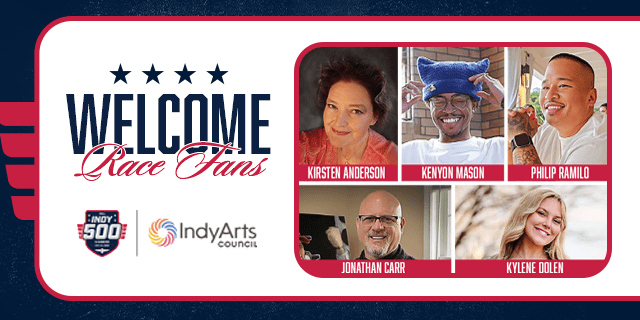
Selected from a record-breaking pool of 120 applicants, the five artists who will create this year’s welcoming artwork are Kirsten Anderson, Jonathan E. Carr, Kylene Dolen, Kenyon Mason and Philip Ramilo.
Celebrating its 10th anniversary in 2026, Welcome Race Fans exemplifies what May means to Indianapolis, both on and off track. Each year, Central Indiana artists are challenged to bring to life what “The Greatest Spectacle in Racing” means to the Racing Capital of the World.
While some artists work in rich color palettes and others use computer coding as their medium, all Welcome Race Fans artists have drawn on personal connections to share uniquely meaningful stories about Indianapolis and its culture.
“Since the 100th Running of the Indianapolis 500 in 2016, Welcome Race Fans art has been one of the first things thousands of visitors see when they come to the city of Indianapolis and IMS for the Month of May,” INDYCAR and IMS President J. Douglas Boles said.
“As we showcase the more than 80 artists who have contributed to the program over the last decade and welcome five new artists in 2026, we’re reminded of the many reasons the Month of May is so special to so many.”
This year’s artists will create a piece of original artwork, to be placed throughout the city, using their unique processes and styles to showcase the intersection of art and motorsports. Both two- and three-dimensional pieces of art – like sculptures, carvings and papercraft – were considered and may be created for the program.
Kirsten Anderson is a passionate stained-glass artist who uses the copper foil method to take any picture and transform it into a unique, handcrafted glass design. She strives to select the perfect glass for every artwork, considering color, texture and pattern to ensure each piece tells a beautiful story that resonates, comforts and inspires.
Jonathan E. Carr is a digital illustrator with a career rooted in the expansive character of natural landscapes. Through a deeply immersive creative process, he is guided by principles of balance, beauty and intention to capture the authentic references that fuel his work and capture the dynamic energy of sport and auto racing.
Kylene Dolen is an acrylic painter whose pop-art style layers images and bold color schemes to curate vibrant art collages. Drawing inspiration from nostalgic memories and everyday life, she hand-draws on canvas before layering the art with acrylic paints and finishing them with a crisp black outline.
Kenyon Mason is a 2D mixed media artist inspired by graffiti, portraiture and bold use of color. He combines both dry and wet mediums and experiments with sustainable materials to create expressive, dynamic portraits reflecting the raw energy of contemporary street-style art and his refined traditional skills.P
hilip Ramilo is a mixed media artist whose work is influenced by his life experiences and cultural heritage. Through a blend of traditional and contemporary techniques, his art tells compelling stories that explore themes of identity, memory and transformation.
The five Welcome Race Fans artworks will be unveiled May 1.To explore the full list of Indy 500 community initiatives and programs, visit IMS.com/Community.
To see an up-to-date calendar of IMS events, click here

Commemorative Milk Bottles, Cartons Return for 2026 Indy 500

 INDIANAPOLIS (Tuesday, Feb. 3, 2026) – Indianapolis Motor Speedway, American Dairy Association Indiana and the Prairie Farms Family of Companies once again are collaborating to bring Indianapolis 500-branded single-serve milk bottles and cartons to fans across 20 states
.More than 25,000 retailers across North Dakota, South Dakota, Nebraska, Kansas, Oklahoma, Texas, Minnesota, Iowa, Missouri, Arkansas, Louisiana, Wisconsin, Illinois, Michigan, Indiana, Ohio, Kentucky, Tennessee, Mississippi and Alabama will be stocked with single-serve milk bottles celebrating five winners of “The Greatest Spectacle in Racing.”
The commemorative bottles will be available in both the Prairie Farms and Hiland brands in their respective markets. Bottle styles may vary by region
.“Much like racing, dairy farming is built on early mornings, precision and resilience – values rooted in a shared pursuit of excellence that make the Indianapolis 500 and its iconic milk celebration a natural fit,” said Jenni Browning, CEO of the American Dairy Association Indiana, which represents Indiana dairy farmers.
Each milk type will feature a different Indy 500 winner, allowing fans to collect them all. Fans who collected bottles last year will notice all-new designs and featured drivers:2% reduced-fat milk features back-to-back winner Josef Newgarden (2023, 2024)
Whole vitamin D milk features defending winner Alex Palou (2025)
Premium chocolate milk features 2016 Indy winner Alexander Rossi1% low fat chocolate milk features 2008 Indy winner Scott Dixon
Premium strawberry milk features four-time Indy 500 winner Helio Castroneves (2001, 2002, 2009, 2021)
These single-serve bottles will be in retail locations beginning March 1.In addition to the collectable single-serve bottles, approximately 200 million half-pint cartons decorated with a graphic in celebration of Winners Drink Milk are being distributed to schools throughout the same states now.
“The Prairie Farms Family of Companies is proud to partner with IMS and ADAI again this year,” said Matt McClelland, CEO and executive vice president of Prairie Farms Dairy.
“Not only does this partnership allow us to celebrate this iconic tradition in retail stores and schools, but it also gives us the opportunity to recognize the commitment and dedication of our farmer owners.”
“Fans loved the commemorative milk bottles last year, and many attempted to collect all five,” said INDYCAR and IMS President J. Douglas Boles.
“These milk bottles and cartons allow our fans to be a part of the Race Day excitement and celebrate like an Indy 500 winner – with a cold drink of milk.”
An ice-cold bottle of milk after 500 miles of racing is one of the most iconic celebrations in all sports. The tradition of drinking milk after winning the Indianapolis 500 dates back to 1936, when Louis Meyer, an avid drinker of buttermilk, requested a bottle after winning his third Indy 500. As the story goes, a dairy industry executive saw the newsreel footage of the iconic moment and requested milk be made available to the winner of each Indianapolis 500 thereafter.
These days, buttermilk is no longer offered as an option. All 33 drivers entered in the Indianapolis 500 presented by Gainbridge submit their milk preference to the Dairy Association in advance. They can choose between whole milk, 2% reduced fat milk or skim milk. Whole milk is the most popular choice, but there are some drivers that still request buttermilk in honor of Meyer.
The 110th Indianapolis 500 presented by Gainbridge is scheduled for Sunday, May 24. Tickets are on sale at IMS.com or by calling or visiting the IMS Ticket Office. 

Weine 500 Returns

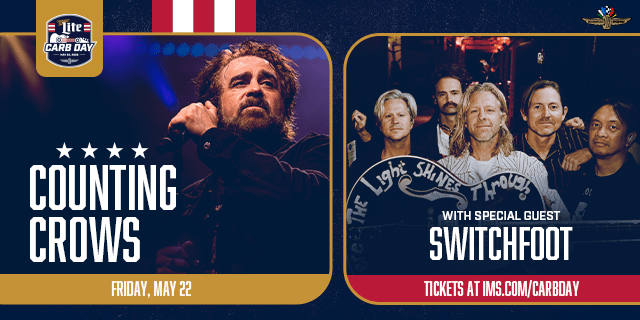
In the biggest racing news of the weekend, IMS announced the return of the Weinie 500. The race will be sandwiched between the Carb Day practice for the 110th running of the Indianapolis 500 and the Pit Stop competition.

The announcement from IMS:

Oscar Mayer Weinie 500 Returns to Miller Lite Carb Day May 22

The meatiest race in motorsports is officially back!

Oscar Mayer announced the second annual Wienie 500 will return to the iconic Indianapolis Motor Speedway on Miller Lite Carb Day, Friday, May 22, leading up to the 110th Running of the Indianapolis 500 presented by Gainbridge Sunday, May 24.

The race returns with a sizzling new twist! Following a disappointing performance in last year’s race, the Sonoran Dog is officially relegated due to not cutting the mustard, leaving a spot open for a new regional dog to enter the competition.

Race lovers can visit @Wienermobile on Instagram to cast their vote in the first-ever ‘Pick Your Dog’ Wienie 500 bracket where they can choose from a fresh lineup of seven new regional hot dogs or opt to give Sonoran Dog another shot at qualifying.

Coca-Cola Consolidated Announces Multiyear Partnership with IMS, Indy 500 Red Carpet 

From IMS:

 INDIANAPOLIS (Wednesday, Jan. 21, 2026) – Coca-Cola Consolidated, the nation’s largest Coca-Cola bottler, today announced a multiyear partnership designating Coca-Cola as the official soft beverage and water sponsor of Indianapolis Motor Speedway. Through the partnership, Coca-Cola Consolidated will serve as the official partner of the Indy 500 Red Carpet and will participate in multiple community activations, including Indy 500 Porch Parties and Bike to the 500.
“Coca-Cola Consolidated has been our neighbor and a part of the community for generations,” INDYCAR and IMS President J. Douglas Boles said. “Sharing a Coke with fellow race fans will once again be a Race Day tradition.”
“As Indianapolis’ local Coca-Cola bottler and the official beverage provider for IMS, we are thrilled to partner as the official soft beverage and water sponsor,” said Heather Hucks, vice president of consumer connections at Coca-Cola Consolidated. “There’s just something special about watching a race with a Coca-Cola in your hand, and we’re excited to be part of creating lasting memories alongside race fans, while taking important steps to positively impact the Indianapolis community.”
Headquartered in Charlotte, North Carolina, Coca-Cola Consolidated is the largest Coca-Cola bottler in the United States. Coca-Cola Consolidated serves more than 13,700 businesses in Indiana and has more than 1,300 teammates working in nine facilities across the state, helping bring economic opportunity to the local community. For over 124 years, Coca-Cola Consolidated has been deeply committed to the consumers, customers and communities it serves.
Tickets for the 110th Indianapolis 500 presented by Gainbridge and all Month of May events at Indianapolis Motor Speedway are on sale at IMS.com.

Setting the Pace: IMS Museum Brings Out Pace Cars of the Past

Old Indianapolis 500 pace cars are fun to see. Most vintage car shows will have a replica of at least one from a random year. The IMS Museum currently has eight pace cars on display in an exhibit called Setting the Pace.

It is not a profound exhibit, nor does it break new ground. It was fun to recall the races the cars on the floor led to the green flag. At the same time, the memories were bittersweet when I thought of how all three major car companies i9n the United States would rotate each year to provide the official pace car.

I don’t see a return to that practice anytime soon, given Chevrolet’ ties to Roger Penske and the company’s involvement in the IndyCar series.

The cars in the display:

2025 Corvette

1996 Dodge Viper

1977 Oldsmobile

1967 Mercury

The 1977 Olds is behind the Mercury

1991 Dodge Viper

1915 Packard (cover photo)

1971 Dodge Charger

1997 Monte Carlo (Brickyard 400)

The 1967 pace car was driven by 1957 winner Sam Hanks. Carl Fisher drover the Packard.

The 1996 Dodge Viper is my favorite of this group. My favorite pace car of all time is the 1969 Chevrolet Camaro, followed closely by the 1961 gold Ford Thunderbird.

The Museum at Eight Months

Monday was my first visit to the museum since May, and there were some minor changes. The Starting Line Experience is the same, and still a thrilling thing to witness.

From Tuesday: https://thepitwindow.blog/2025/12/09/now-stay-tuned-ims-museum-honors-broadcasters/

The cars in the Winners’ Gallery have been rearranged, and I think some cars moved downstairs and others up to the main floor. As I said after my initial visit, it is a minor quibble as to which car belongs where in which gallery. There are only three sacred cars which must stay in the main section at all times- the Boyle Maserati, the Fuel Injection special, and the Rislone Special.

The Maserati has assumed a rightful spot alone at the entry to the main gallery. This is the greatest car in Indianapolis 500 history, with top five performances, including two victories, from 1939 through the end of the 1940s.

While I never saw the Fuel Injection Special race, the car driven by Bill Vukovich won the first race I listened to on the radio in 1953, and won again the following year.

It is a shame that this car cannot take a lap on race morning.

One other car of note is the Miller Special of 1928. The Miller cars of the lat 1920s and early 1930s were some of the most beautiful cars ever to run at 16th and Georgetown. Louis Meyer drove this gorgeous machine to victory for his first of three 500 wins.

Thanks for following along on my two part museum excursion. There is some IndyCar news to talk about, which I will get to in a day or two,

USAC Midget, Sprint Car Dates Announced

From IMS. I’m glad the sprint cars are returning. Great show last year.

Action Returns to The Dirt Track at IMS in 2026 
 
INDIANAPOLIS (Wednesday, Dec. 10, 2025) – The Dirt Track at Indianapolis Motor Speedway will host two events in 2026. One of the most prestigious events in dirt racing – the BC39 Presented by Avanti Windows & Doors – returns for its eighth running on June 30-July 1. Later that month, the United States Auto Club (USAC) AMSOIL Sprint Car National Championship will compete in a points race for the second time at IMS when the opening night of USAC NOS Energy Drink Indiana Sprint Week Presented by K&N takes place July 23.
“USAC Midget and Sprint Cars always deliver edge-of-your-seat excitement and wheel-to-wheel action on The Dirt Track at IMS,” INDYCAR and IMS President J. Douglas Boles said. “These two events are unforgettable experiences for fans and competitors alike.”
The USAC Midgets will once again take center stage as drivers race for victory on the 1/5th-mile dirt oval inside Turn 3 of IMS during the BC39 Presented by Avanti Windows & Doors.
Action among the top Midget racers in the country will open Tuesday, June 30, with the 39-lap feature race set for Wednesday night, July 1. The event honors the memory of Bryan Clauson, a three-time Indianapolis 500 starter and four-time USAC national driving champion.
Cannon McIntosh became the first two-time winner of the BC39 Presented by Avanti Windows & Doors when he repeated as the winner of the 39-lap feature in 2025. He joined a list of BC39 winners that includes NASCAR Cup Series champion and Brickyard 400 presented by PPG winner Kyle Larson and short-track stars Justin Grant, Buddy Kofoid, Zeb Wise and Brady Bacon.
The USAC AMSOIL Sprint Car National Championship again will be featured during the 39th annual Indiana Sprint Week opener Thursday evening, July 23, before Brickyard Weekend opens on the 2.5-mile IMS oval for the NASCAR Cup Series and NASCAR O’Reilly Auto Parts Series.
The event promises a unique spectacle, as the 900-horsepower USAC Sprint Cars take to the dirt track inside Turn 3 of the famous IMS oval.
Grant, who won the BC39 in 2023, captured the opening race of USAC NOS Energy Drink Indiana Sprint Week Presented by Honest Abe Roofing in 2025.
USAC Sprint Cars made their debut at The Dirt Track at IMS in September 2024 in a special invitational event won by C.J. Leary of Greenfield, Indiana.
USAC’s Indiana Sprint Week, a cornerstone of sprint car racing in the Hoosier State since 1988, has captivated fans for decades with its thrilling action and rich legacy.
The 2026 Indiana Sprint Week schedule consists of eight events at eight different racetracks across a 10-night span between July 23-Aug. 1.
Fans can register at IMS.com to receive ticket information for the 2026 BC39 presented by Avanti Windows & Doors and the 2026 USAC Indiana Sprint Week event. 

“Now Stay Tuned”- IMS Museum Honors Broadcasters

As a kid growing up in Indiana, May 30 meant turning on the radio and listening to the Indianapolis 500 Mile Race. I was unaware at the time that the 1953 race, the first one that I listened to, was the first flag to flag coverage from the Indianapolis Motor Speedway network.

“Now Stay Tuned” presents the story of broadcasting the race is on display in the exhibit gallery at the IMS Museum. I found the display fascinating. I learned much about the pre-IMS network days, which date back to 1922, the first year that there was radio coverage of the event. Local station WOH carried the race, and in 1923, station WLK added coverage.

In 1929 WFBM radio in Indianapolis covered the entire race. the entire race. Sportscaster Graham McNamee was the lead announcer from 1928-1931.

Oddly there was no radio coverage in 1932, as the speedway felt the radio station weren’t contributing their fair share of compensation. There was a national conflict between radio stations and newspapers at the time, and the newspapers who covered the race probably complained as well.

From 1934 to 1950 the mutual Broadcasting network went live for the start of the race, then throughout the afternoon had periodic updates before returning to cover the finish. A track reporter was stationed in turns 1 and 2, and another reported was in turns 3 and 4. Bill Slater anchored the broadcasts. In 1951 Mutual dropped out when their sponsor decided to spend their dollars elsewhere.

Local station WIBC took over the broadcasts. Sid Collins, who had been a turn reporter for Mutual in 1948 and co-anchored the race in 1950, became the lead announcer. The format for1951 and 1952 was the same as the mutual program, but in 1953 the full race coverage that we know today began.

Sid Collins deserves a permanent spot in the museum.

Collins was the lead announcer through the 1976 race. He died in early May of 1977. Paul Page assumed the anchor role.

Radio board used in the early days of IMS Radio Network

One of my favorite parts of the exhibit was the old-fashioned radio, similar to the one on which I heard that first broadcast. It is one of two interactive components in the display.

The set has three buttons. The first button plays “The 500 Song.”

Button number two presents Sid Collins’ sign off of the 1976 race, his final one. As he closed the broadcast of each 500, Collins had an inspirational quote, which he applied to the race winner, then he bade his audience farewell with the promise to meet again the following May. This recording gave me goosebumps.

The third button takes the listener to the next May where turn 3 reporter Jim Shelton gives a touching tribute to Collins, asking for a moment of silence. More goosebumps were detected.

The other interactive section is a broadcast booth where visitors can call a segment of one of four races of their choosing. The call is recorded and can be played back. I chose the finish to the 2011 race. Don’t look for it on Sports Center.

While radio makes up the bulk of the exhibit, television also has a decent share of the area. The first broadcast was in 1949 as WFBM (now WRTV channel 6) launched the first television station in Indianapolis. The 500 was their first program. Coverage had three cameras on the front stretch.

I have heard stories about track president Wilbur Shaw not wanting television at all, and that he had cameras moved from other areas. After the television coverage of the rain shortened 1950 race, Tony Hulman decided no more TV, The ban lasted 20 years until ABC began showing a two hour tape delayed showing in prime time in 1971.

From 1964-1970, the race was shown on closed circuit television in theaters around the country. Charlie Brockman anchored the closed circuit telecasts.

ABC began its live broadcasts in 1986, but they had to wait a week to present the twice rained out event.

The exhibit is a great trip down memory Lane for anyone who began following the race in the 50s, and it is very educational for younger fans. I will have more photos from the exhibit on The Pit Window Facebook page in a day or two.

IMS To Release Miniseries Documenting Historic Repave 

From IMS:

 ‘Behind the Bricks’ Special To Air Dec. 8-11

INDIANAPOLIS (Thursday, Dec. 4, 2025) – Indianapolis Motor Speedway captivated the racing world on social media Sept. 23 with a series of viral posts highlighting a historic repave project that uncovered the Speedway’s iconic brick racing surface and the original crushed stone-and-tar track surface.
Now, IMS is releasing a four-part miniseries documenting the project as part of its flagship “Behind the Bricks” program beginning Monday, Dec. 8. A new episode will be released daily through Thursday, Dec. 11. A full-length documentary with additional interviews and footage will be released Friday, Dec. 12. Each episode can be seen on IMS social media channels, including Facebook, Instagram, Threads, TikTok, X and YouTube.
Fittingly, the release coincides with the time when the original brick paving project was completed in 1909.
A trailer teasing the upcoming series was released today on IMS social media channels.
The series features stunning footage not just of the repave project but the uncovering of the brick racing surface and the jaw-dropping discovery of the crushed stone-and-tar surface that takes fans back to the beginning of the Racing Capital of the World in 1909. It includes interviews with project experts and former IMS Historian Donald Davidson.
“It’s not often that we get to really see the full history of the Indianapolis Motor Speedway in front of our eyes,” Indianapolis Motor Speedway and INDYCAR President J. Douglas Boles said. “What started as a project to fix a bump in Turn 2 turned into a historic, and at times, overwhelming exploration that uncovered aspects of his racetrack that have not seen the light of day, literally, in over 116 years. I can’t wait for our fans to see it all unfold on ‘Behind the Bricks.’”
IMS was originally paved in spring 1909 with a surface consisting of crushed stone and tar. Track conditions proved to be treacherous that summer, and in fall 1909 the surface was paved with 3.2 million bricks, giving it the nickname “The Brickyard.” The paving project was completed in early December, and the track surface was dedicated by future United States Vice President, then-Indiana Gov. Thomas Marshall on Dec. 17.
One of the endearing traits of IMS has been the brick surface tucked underneath the modern-day asphalt racing surface. In 1937, all four turns of the 2.5-mile oval were paved before that year’s Indianapolis 500, officially covering the bricks that were uncovered in 2025. Additional track paving projects took place in 1938, 1939, 1961, 1976, 1988, 1995 and 2004, placing the brick surface approximately 7 inches below the current racing surface.
However, the freeze and thaw of Indiana winters allowed the bricks below the surface to move and expand, presenting as bumps in the current racing surface at the exit of Turn 2. IMS grinded the bumps to keep the track surface smooth for years, but a lasting solution was needed. So, in September, IMS milled the racing surface and removed bricks in the areas that were creating the problem. IMS will keep the excavated bricks for preservation.
A block of crushed stone and tar removed during the process is on display at the Indianapolis Motor Speedway Museum.
As “Behind the Bricks” documents, a new layer of asphalt was placed in the 100-foot section of racing surface that spans the width of the track and was diamond-grinded to match the existing track surface texture. Defending Indianapolis 500 presented by Gainbridge winner Alex Palou and two-time race winner Takuma Sato tested the repaved surface Oct. 21. Both drivers gave the new surface positive reviews.
“It’s a little bit smoother, which I think is going to be a huge gain for the race, especially when we’re following cars,” said Palou, the four-time NTT INDYCAR SERIES champion. “It’s great. I cannot wait to go racing.”
Tickets for the 110th Running of the Indianapolis 500 presented by Gainbridge and all Month of May events at Indianapolis Motor Speedway are on sale now at IMS.com