The Soul of the Race

It’s called qualifying. It means you have to meet a standard which in this case means being one of the fastest 33 drivers. That is one tradition that must stay. A chance to win the greatest race in the world should not just be handed to someone.

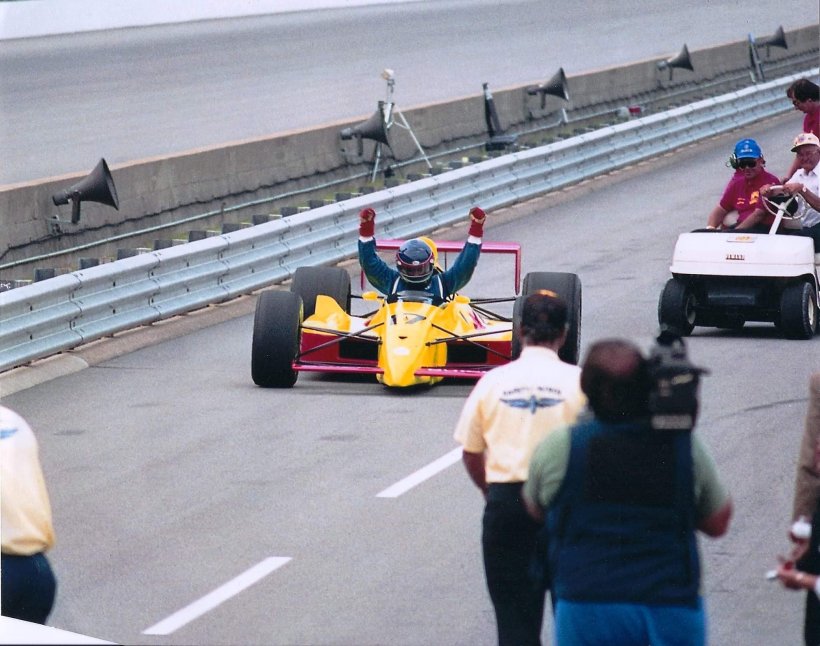
Above: Willy T. Ribbs exultant after finally qualifying for the Indianapolis 500 in 1991.

I am back at The Pit Window summer headquarters after a long two day slog through Georgia traffic jams and torrential rains through four states. The  controversy about guaranteed spots for the Indianapolis 500 began as I was traveling. I wanted to wait until I returned to gather points of view and form my own opinion.  While the Indianapolis 500 is the heart of the racing world, qualifying for the race is the event’s soul.

I agree that many traditions have disappeared and are not returning. I know we will never again have 30 days at the track or four days of qualifying. I’m okay with that. No guaranteed spots in my opinion does not fall in the category of tradition. It’s called qualifying. It means you have to meet a standard which in this case means being one of the fastest 33 drivers. That is one tradition that must stay. A chance to win the greatest race in the world should not just be handed to someone.

The starting lineup gives the race its flavor. Are there drivers starting in the back that will charge to the front? Will a top driver staring near the front fall back quickly? How do the Indycar regulars stack up against drivers fro another series? There just a few of the things we would lose. The 500 would be just another race on the schedule.

On race morning, I take a moment to think of what it took for each driver to get into the race. Some had a fairly easy time, having signed with a top team with the best equipment. Others had to fight for every sponsor dollar just to put a car and team together to get to to the track. Their sponsors are just as important as those of the full time teams. But I appreciate that all had to endure the stress of Indianapolis qualifying, a nerve wracking four lap run. Some of the drama of being on the grid or not race morning could lose its luster if the owners advocating guaranteed spots get their way.  I think it would take  some of the soul from the race. The grid would be less pure.

There would still be some space for one-offs, about ten with the current full time grid. What happens when the full time roster expands? Is this proposed format really fair to a team like Meyer Shank Racing, who is only running ten races this season? Why should a second tier full time team put much effort into qualifying? They just need to post a time, why try too hard?

When qualifying used to be spread over two weekends, I would pick and choose when to attend.  Pole Day was a given. I rarely went to Day 2. Day three was hit and miss. If the field would be filled the second Saturday, I would go later in the day to see the 33rd qualifier and to see if any bumping would take place. Bump day really had no action until the last two hours, so I would head out around 2:30.

With guaranteed spots, I’m not sure I would find Pole Day that interesting.  I would probably just wait for the non guaranteed cars to qualify see who will make it. There will be less drama without a big name near the edge.

Putting full time drivers in the field automatically would lessen the value of the race.  The owners are selling the soul of the Indianapolis 500 for sponsor dollars. I hope this is not the direction we’re going. Please don’t steal the soul of the race.


McLaren Reveals Car for 500; Some News; Barber Photos

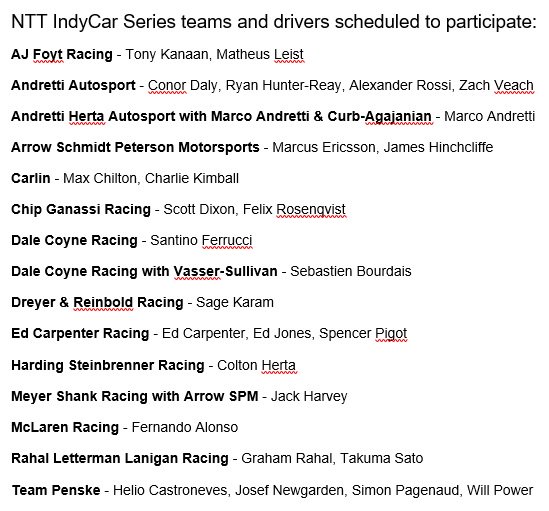
McLaren revealed the car Fernando Alonso will drive in the 103rd running of the Indianapolis 500 next month.  The mainly  papaya orange machine, the traditional McLaren color, has blue accents. While similar to Scott Dixon’s car, I think they are different enough to tell apart. The McLaren has less blue in the middle and is a different shade of orange from the Ganassi PNC Bank entry.

The sidepod sponsor is an e-cigarette company and includes a health warning. Don’t look for tobacco companies to come rushing back to motorsports just because they can add a health warning.  This si the second e cigarette company to be on a car. Blu sponsored Sebastien Bourdais a few years ago.

It’s a great looking car and it always adds to the race to have a former F1 champion in the field.

HSR Adds King Taco for Long Beach

Harding Steinbrenner Racing will carry King Taco sponsorship on Colton Herta’s car at Long Beach this weekend.  King Taco usually sponsors a car in their local race.  GESS, the primary sponsor of the 88 at Barber, is an associate sponsor this coming weekend.

It will be interesting to see if GESS commits further with the program in May.

Rich Energy Sponsors Jordan King

Jordan King, who will drive in the Indianapolis 500 as a third entry for Rahal Letterman Lanigan Racing, yesterday announced Rich Energy is now a personal sponsor. This might help King, who drove the Ed Carpenter Racing number 20 on the road/street courses last year, get more races. Not sure if Rahal wants to do a third car for more than Indianapolis with the momentum the team has built the last two races.

Frye- Third OEM May Become Necessity

In a media availability at Barber Motorsports Park this past weekend, Indycar President Jay Frye said as more teams enter the field, a third engine manufacturer may “become a necessity rather than a luxury.”

It sounds as if he expects some more teams may be planning to enter the series. I agree. Honda and Chevy are getting stretched a bit already, especially in May.

Frye did not give any hints that a third OEM is imminent though rumors persist that a certain German company may have its name mentioned next month.

Last Look at Barber in Photos

Here are some final photos from Barber. The first two are from my friend Kyle McInnes, a photographer aspiring to become an Indycar photographer. Check out his work at kylemcinnesphoto.com.

km3_4826web4058568072401984713.jpg


km3_5094web6312215221796758615.jpg

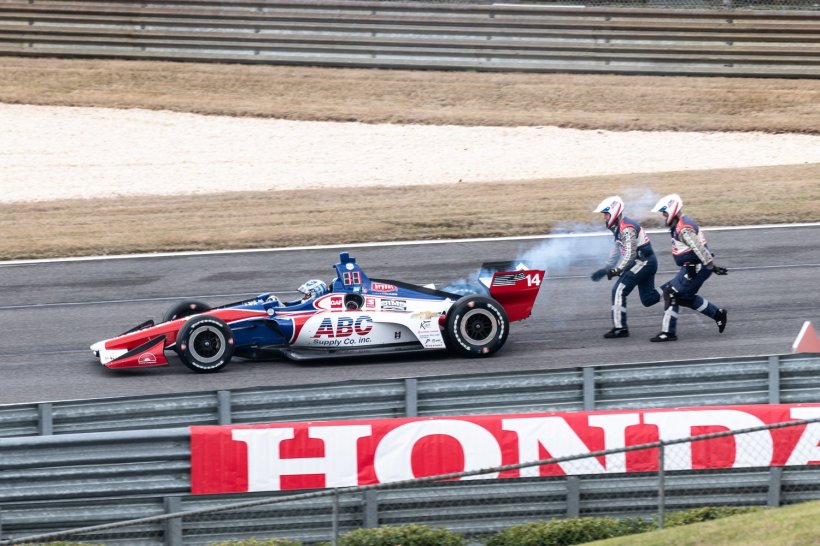
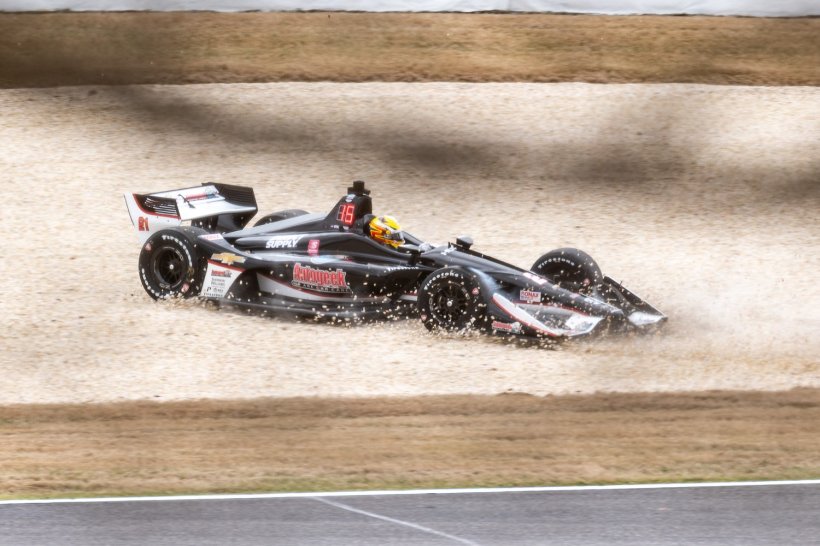
Top: Matheus Leist after spinning in practice.

Bottom: Spencer Pigot brings out another red flag Friday’

Photos by Kyle McInnes

wp-15547555120024557764092081731091.jpg

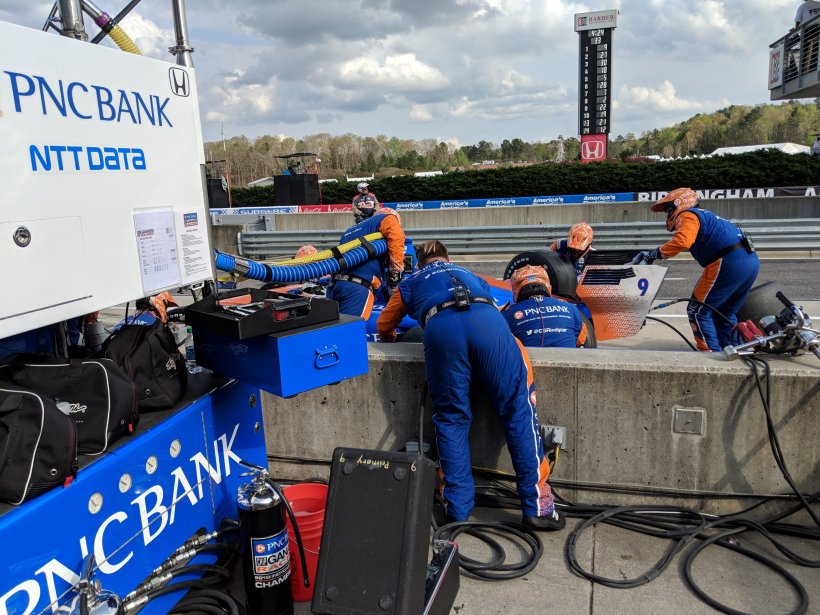
Scott Dixon makes his final pit stop.

wp-15546771468463329167206641669559.jpg

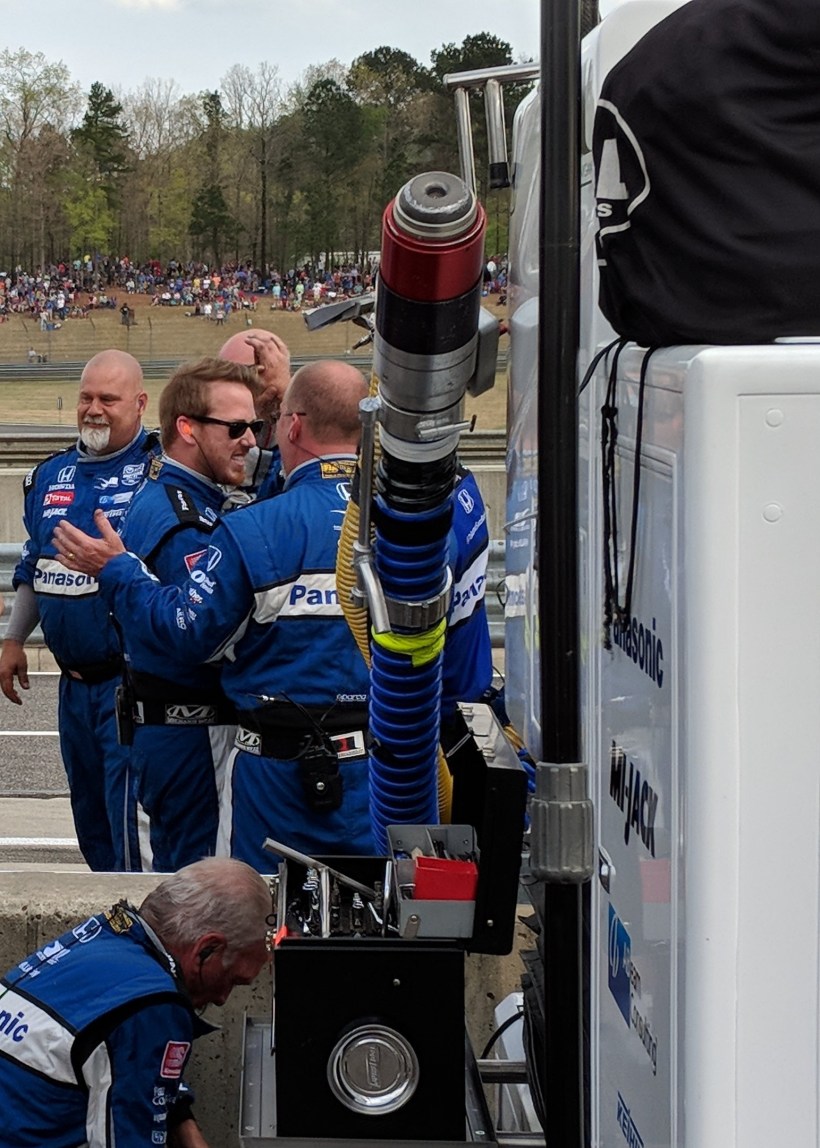
Sato’s crew celebrates after the checkered flag.

wp-15546899700292184837583931198823.jpg

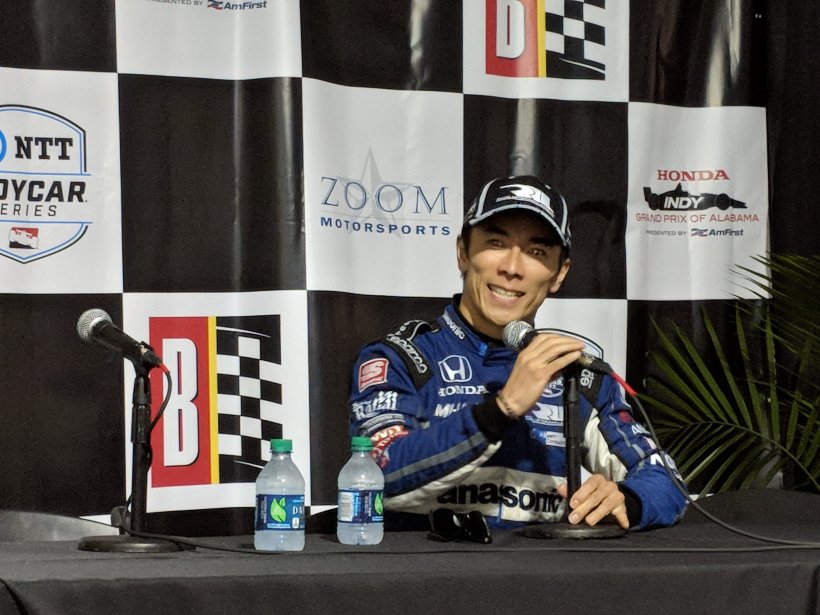
Takuma Sato addresses the media after his convincing victory.

The last three photos are mine.

Back Thursday with a Long Beach preview.

Hoosier Hundred, Once the World’s Richest Dirt Race, to End May 23

Another part of Indycar’s heritage dies at the conclusion of the May 23 Hoosier Hundred. The Indiana State Fairgrounds will convert the famous one mile dirt oval to an all weather track for harness race training year round.

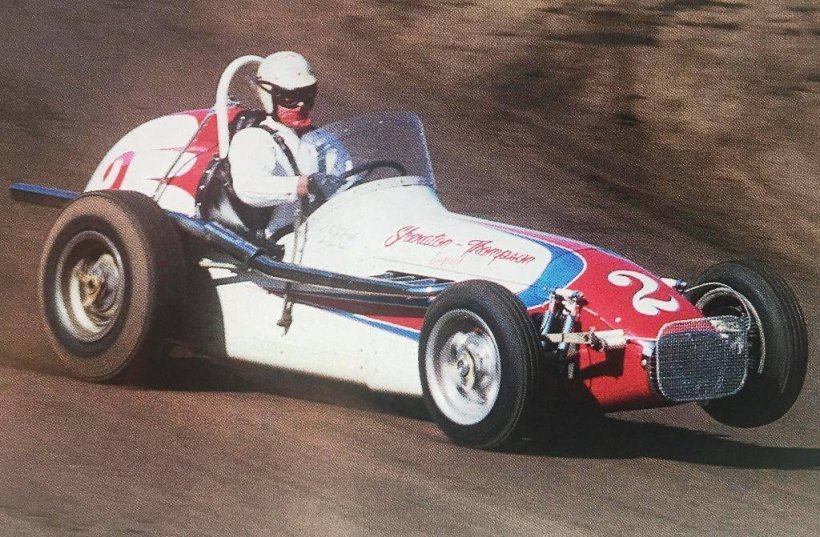
I find sadness in this announcement for many reasons.  The Hoosier Hundred was the first major race I attended in 1958. I loved watching the cars slide through turns 1 and 2 with the dirt flying behind them.  This race was at one time one of the best paying races on the USAC Championship Trail.

The early September date gave me one more day of racing before winter came to Indiana.  It was something to hold onto until the following May. School had started about a week before the race, so it was also one of the last weekends to relax before the homework load got heavy.

Closing this track is another loss of racing heritage as the sport on all levels seems to be divorcing itself from its roots. The dirt tracks are where the eventual stars of the Indianapolis 500 honed their skills.  While there used to be many one milt dirt tracks- the Fairgrounds, Langhorne, Sacramento, Springfield, Duquoin, and some others I’m not remembering right now- I believe only Springfield and Duquoin remain. I have always thought removing dirt tracks from the Indycar championship was a mistake. Today’s news reinforces that view.

The link below contains the release from USAC.  I have been planning a series on the old dirt tracks. My timeline has just moved up.


The Indianapolis 500 Pace Car

Today at the Indianapolis Motor Speedway the pace car for the 103rd running ofm the Indianapolis 500 made its debut.  The Corvette Grand Sport will lead the field to the green flag on May 26th.

I really like the color of this car. I thought they might go with a Camaro resembling the pace car from 1969 to continue the Mario Andretti tribute. This Corvette is a nice alternative.

img_20190401_1243467445079073585576493.jpg

1955: The Year Racing Almost Ended

Before the year began there was an omen. On October 30, 1954, Speedway president Wilbur Shaw was killed in a plane crash while returning from a meeting and a day at a test track in Detroit. Shaw had single handedly saved the Indianapolis Motor Speedway from demolition in 1946 when he persuaded Tony Hulman to purchase it and revive the Memorial Day race.

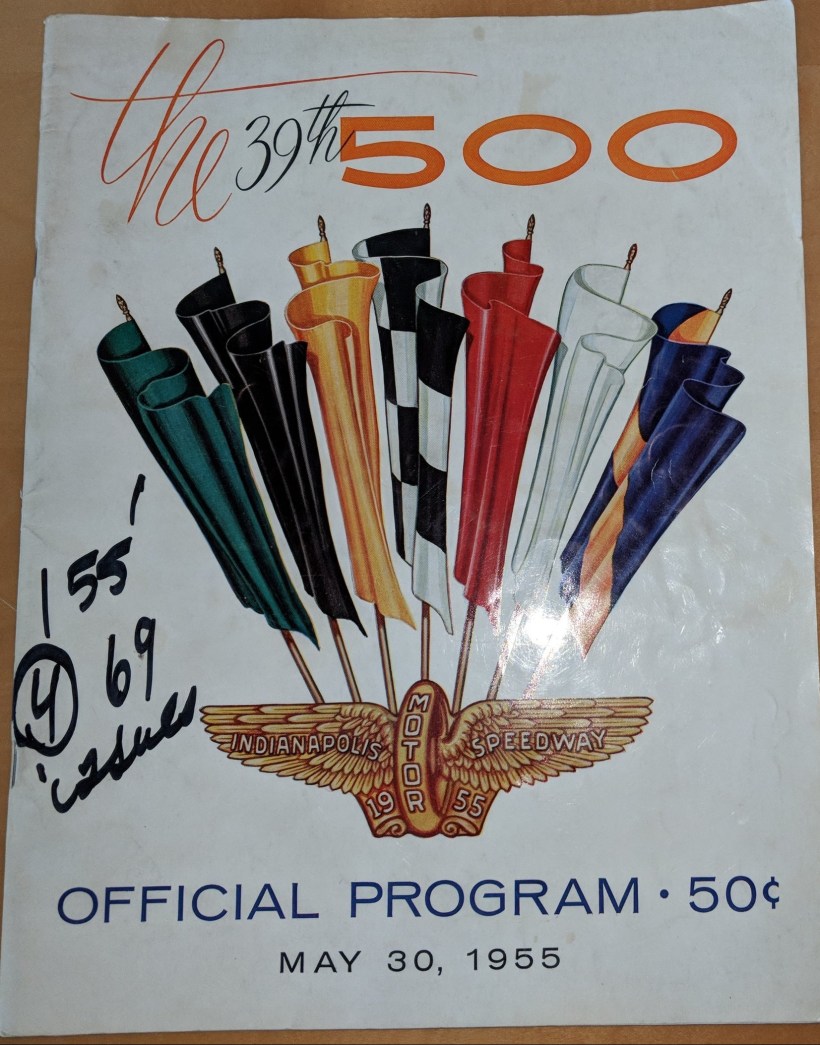
This program is another memorabilia show find. It was a bargain price. Tjis is the first program I have purchased at one of these shows that didn’t have a race day scorecrard in it. Given the events of the day, I’m not surprised.

The 1955 program dedicated full page to Shaw:

wp-15537111788616319029957246964632.jpg

Tony Hulman assumed the president’s role, which he held until his death in 1977.

The race started at 10 am Central Standard Time.  The forty minute pre-race lists Dinah Shore singing “Back Home Again in Indiana.”  The Purdue Band played the National Anthem.  There was no invocation. To the best of my memory, there was no invocation until the race started running on Sundays rather than May 30. I know a couple of people who may know if that’s correct.

The program has a full page ad for Eastern Airlines with a message. from former track owner Eddie Rickenbacker.  Rickenbacker sold the speedway to Hulman.

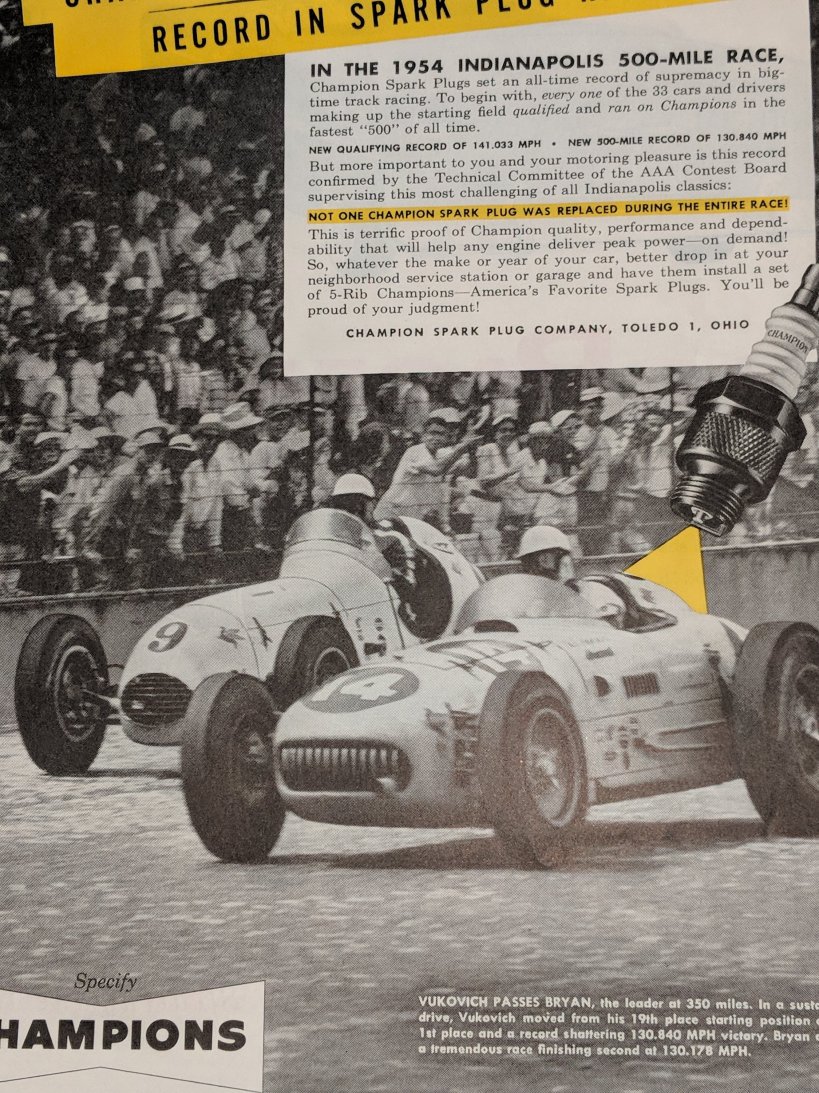
Another phot I found interesting was in Champion Spark Plug ad:

wp-1553711209817887418785961272530.jpg

The speedway record page shows that all track records except one, for the first lap were set in 1954. All but six milestones belonged to either Vukovich or Jack McGrath. I don’t think McGrath gets enough credit for his performances in the 500. The lone record not set in 1954 was set in 1953.

The month of May began with high anticipation. Bill Vukovich, winner of the 1953 and 1954 races, was favored to become the first driver to win three 500s in a row.  Shaw and Mauri Rose both had a chance to do this but could not. But Vuky was probably given better odds than either of them were at the hat trick. Vukovich came to Indianapolis with the same crew headed by Jim Travers and Frank Coon. Howard Keck, who owned the winning car from 1953-54, decided not to enter the 1955 race. Vukovich signed to drive for Lindsey Hopkins.

The race began with a furious duel between McGrath and Vukovich which lasted 50 laps. McGrath pulled into the pits with mechanical problems. As he was working on his car, one of the worst accidents in the history of the 500 occurred on the backstretch. Vukovich tried to avoid the car of Rodger Ward and collided with Al Keller, who had gone into the grass and returned to the track. Vukovich’s car launched over the wall, flipped several times, and caught fire. He was killed instantly.

The race went on and Bob Sweikert won.

The 39th Indianapolis 500 was just the beginning of a tragic year in auto racing. Four of the first seven starters in the race would die in racing accidents before the 1956 race- Vukovich, McGrath, Jerry Hoyt, and Walt Faulkner. Bettenhausen was killed in practice in 1961 the day before qualifying began.  I June, 83 spectators were killed during the LeMans 24 hour race when a fatigued driver crashed into the crowd. \

There were calls for a total ban on racing. The American Automobile Association decided they would no longer sanction racing. Tony Hulman formed the United States Auto Club to sanction the 500 and other races. The organization was the sanctioning body of the 500 through 1997.


Quick Thoughts- The Season’s First Day

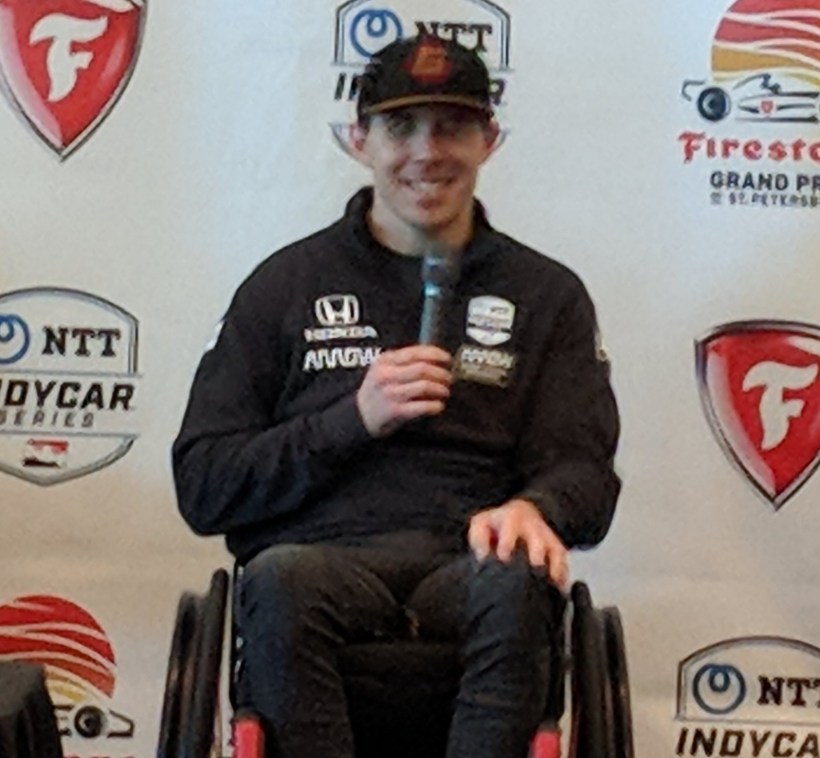
Robert Wickens returned to a race track for the first time since his accident. He spoke to the media. He is in good spirits and doing well.  Some excerpts:

“Being back at a race track makes everything a little better.”

“It was strange being on the smart side of the pit wall.”

“I’m getting some stuff back. Trying to utilize every day to get as healthy as I can.”

He called the fan support here at St. Petersburg “Amazing. I thought the fans would be more focused on the race cars.”  “Fan support has been a big motivation piece.”

“100%” he wants to race again. “I want tog et back into racing as I left off. I don’t want to just run at the back of the field.”

Wickens’ appearance was a great emotional lift for him. I think it was just as much as an emotional lift for the media. The press doesn’t usually applaud at the end of a conference.

A pleasant problem-Additional teams at a street course race means a more crowded paddock.

It’s not quite 10:30 and there is already a good sized crowd here.

The top six in Practice 1 were all Hondas. Rookie Felix Rosenqvist led the session with a time of 1:01.8215. Josef Newgarden was the fastest Chevy 0,35 seconds behind. The rookies I spoke with the other day are interested to see how the red tires work in today’s second session.

Dale Coyne announced a third car for James Davison for the 103rd Running of the Indianapolis 500. Davison drove for Belardi in partnership with A. J. Foyt Racing last year. he finished 33rd. Davison becomes the official 33rd entry for this year’s field.

Max Chilton has the best looking car.


wp-15520690438525966971260713200821.jpg

Ben Hanley Looks for a Solid Weekend

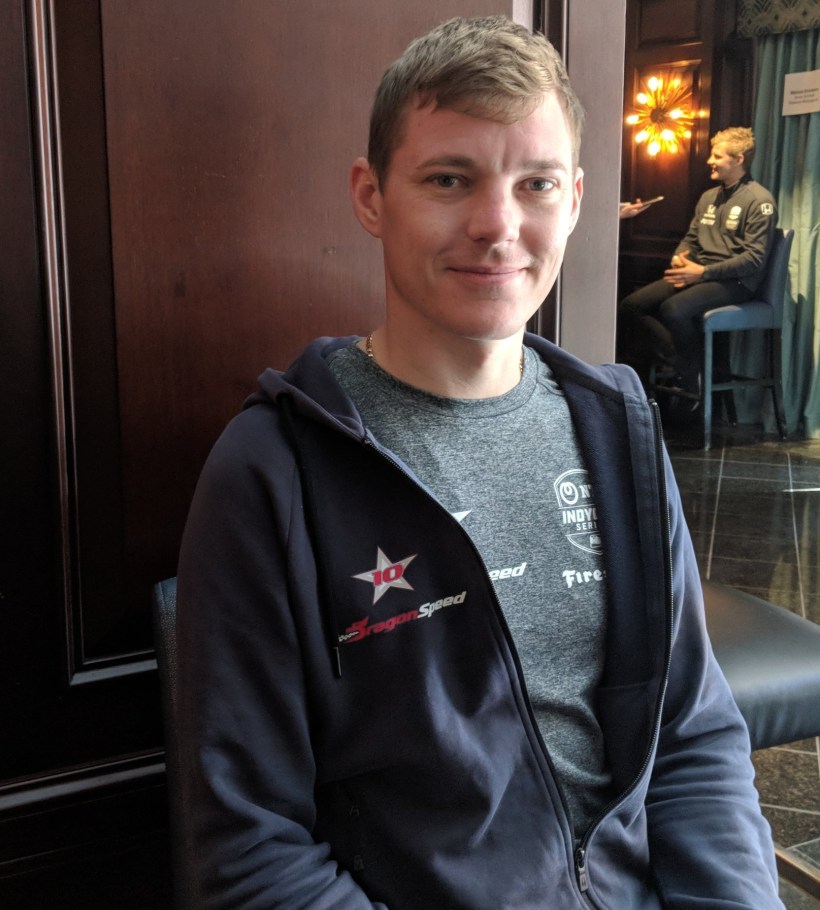
Ben Hanley eagerly anticipates his first Indycar weekend at the Firestone Grand Prix of St. Petersburg. The driver oft he number 81 Dragonspeed entry, the newest car in The NTT Indycar Series paddock, told The Pit Window the team has no major expectations except to have “Solid results and concentrate on getting a good race car Sunday. ”

Hanley, 34, from Manchester, UK, won the LMP2 pole for Dragonspeed at the Rolex 24 in January. He has open wheel experience driving in the GP2 series.

Hanley said the Indycar is similar to  the  prototype he drives in IMSA and the WEC, perhaps a little heavier on the downforce. He is eager to drive in traffic. Although there were other cars testing at Sebring with him, he realizes this weekend this will be different.

He has not run on the alternate red tires and won’t until Friday afternoon’s practice session. I asked Hanley what he expected from the tires.

“Hopefully stickier, ” he said. He is eager to see how the tires will change as the track changes throughout the weekend.

As for overall team goals for their five races in 2019, “We want be in it for the long term.   Just put our heads down and go to work.”