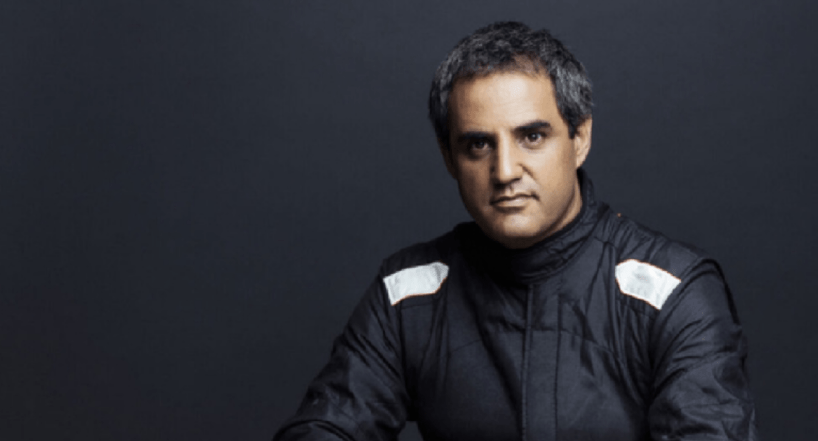
Two time Indianapolis 500 winner Juan Pablo Montoya will once again drive in the Indianapolis 500, this time with Arrow McLaren SP. Montoya will pilot a third car for the team, alongside reglkar drivers Pato O’Ward and Felix Rosenqvist.
Montoya spent the last three season driving for Team Penske Acura in the Weather Tech Championship Series, winning the championship in 2019. He also has won a CART title. Montoya has driven just about everything. He will drive next season for Dragonspeed in the WEC. Monotya has also .won races in Formula 1 and NASCAR.
With Montoya’s entry into the 105th running of the Indianapolis 500, the field has the potential to include eight former winners. Montoya’s former Penske teammate, three time winner Helio Castroneves, will be driving for Meyer Shank Racing. May 30 will be the first time the pair will be driving on different teams.
Hoosier Hundred Gets Another Chance
The Hoosier Hundred returns to the USAC Silver Crown Schedule at the Indiana State Fairgrounds May 27. 2019 was expected to be the final running of the 65 year old race. The track was schedule to be resurfaced for the sole use of the trotting and pacing horses which normally run during the Indiana State Fair. The COVID pandemic has prevented the track work from being done. The longer the work is delayed is more time to convince the fair board to keep this race.
The night following the Hoosier Hundred is the Carb Night Classic at Lucas Oil Raceway/ The schedule also includes the Silver Crown’s first visit to Winchester Speedway.
The full schedule:
Gift Ideas
My friend Johanna, (@writebend) has compiled a list of some small businesses that sell racing related items. These businesses have had a difficult year and could use any support you can give. Here is the link to her post:
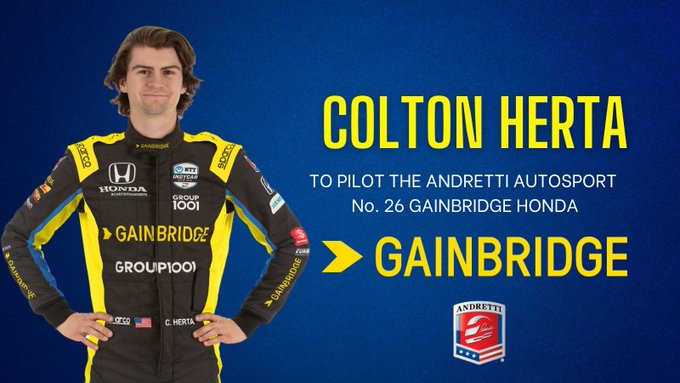
Colton Herta is moving his office down the hall at Andretti Autosport, moving from the Hardin Steinbrenner Andretti number 88 to the Gainbridge number 26 of Andretti Autosport. Herta essentially replaces Zach Veach, who brought Gainbridge sponsorship to Andretti in 2017. Gainbridge also is the presenting sponsor of the Indianapolis 500.
The multi year deal gives the three time winner beginning his third Indycar season the sponsor stability he has lacked his first two seasons. The number 26 was Herta’s number in his karting days, and it was also his father Bryan’s number when he drove the Andretti Green Acura LMP2.
The number 88’s driver will be named at a later date. Mike Harding and George Steinbrenner continue their association with that car. I’m expecting James Hinchcliffe to get that ride, and it is possible the car may carry a different number.
Ferrari-In or Out?
Conflicting stories abound about whether ferrari is still in talks with Indycar regarding their involvement as a third OEM. Saturday a published report said they were no longer involved. Penske immediately responded with a statement saying Indycar was still in discussion with the italian manufacturer. A report today seems to indicate that conversations are still ongoing.
No matter the status of the talks, I don’t ever expect to see a Ferrari in any form running in an Indycar race. Ferrari is known to tease companies an organizations to use as leverage for something more.
Ferrucci to XFinity?
Santino Ferrucci reportedly has signed a deal to run 20 races in the NASCAR XFinity Series in 2021. Ferrucci, who drove for Dale Coyne racing with Vasser Sullivan the last two years, has not resigned with the team. This deal might make a full Indycar season difficult.
Ferrucci was Indianapolis 500 Rookie of the Year in 2018. He finished 13th in the standings in 2020.
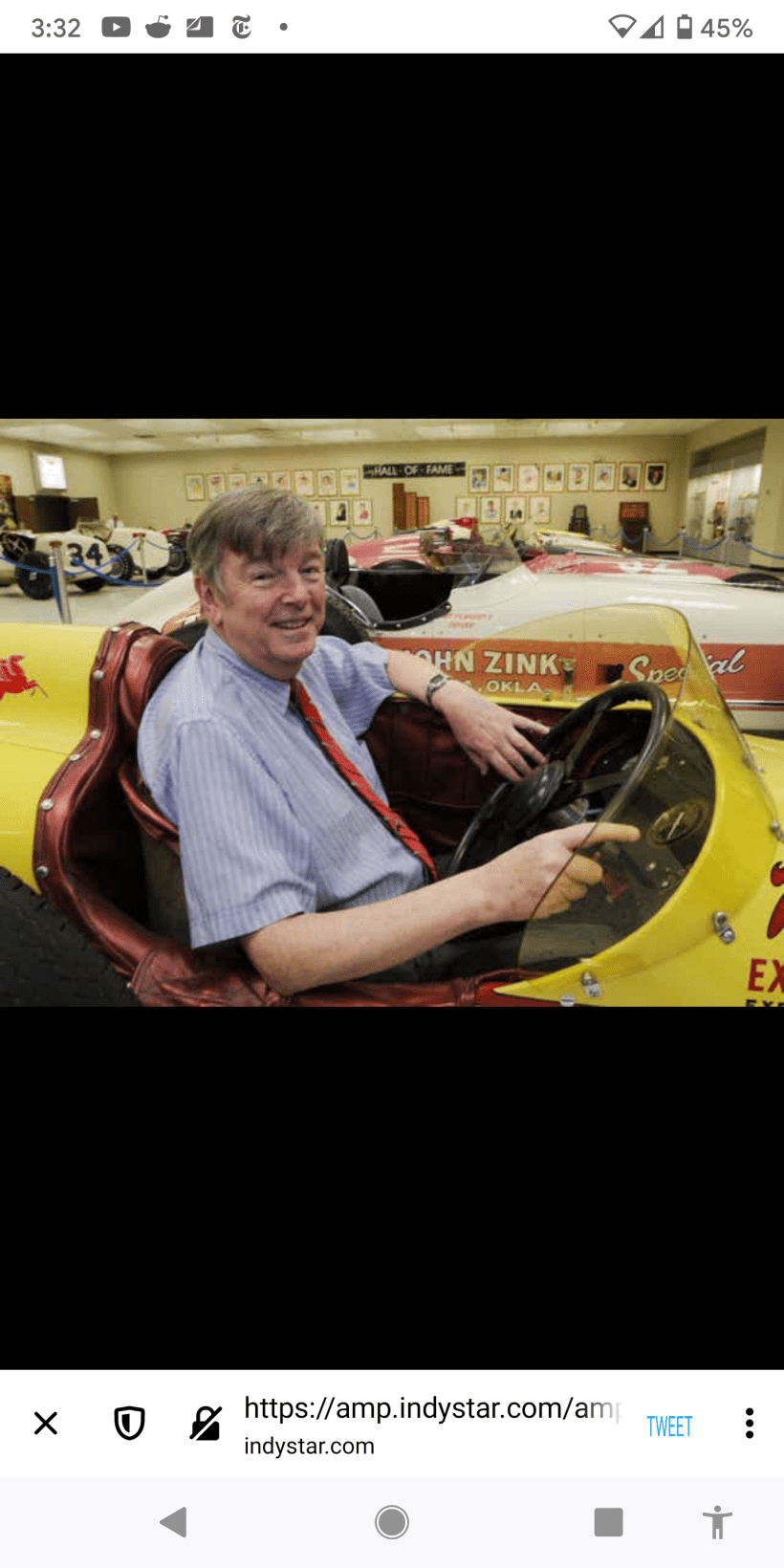
Photo: Donald Davidson sitting in the Belond Exhaust Special. Photo by Greg Griiffo, Indy Star
If each fact about the Indianapolis Motor Speedway and the Indianapolis 500 in Donald Davidson’s head were a physical object, the building needed to store them all would dwarf the track a hundredfold.
Davidson announced his retirement from the Indianapolis Motor Speedway yesterday, effective December 31, ending a 65 year career as statistician, historian, media commentator, and author. His popular May show, Talk of Gasoline Alley, was a staple of May evenings for nearly 50 years. Fans tuned in to glean nuggets of history about the 500, the Speedway, and the people involved. I hope this show finds a way to continue. It has sadly been reduced to just one week from its former month long run, making each night that more special.
Some personal remembrances:
I was at the track the first day that Davidson arrived. It was Bump Day, 1964. During the usual lull in the middle of the afternoon, one of the track announcers, I believe it was Jim Phillipei, announced a special guest, “a young man from England with some knowledge about the speedway,” I believe he said. He asked Donald some questions which he handled easily. Henry Banks joined the pair, and Donald proceeded to run through Banks’s career in the Indianapolis 500. Davidson didn’t pause as he ran through each year- car, starting position, finishing position, laps completed. Banks accepted the information as correct, saying he couldn’t remember every race.
In the fall of 2012 I had the opportunity to take Davidson’s class on the history of the Indianapolis 500. Four weekly 3 hour sessions, beginning with Carl Fisher through the present day. The sessions ran long, but I didn’t mind. Several people in the class had attended it previously. It was one of the last of these classes he taught. He had some fascinating film of the early days of the track, as well as many incredible stories.
I always enjoyed seeing him on one of my trips to the Speedway Museum, even if it was just to say hello. Davidson and I have been at the track for nearly the same number of years.
Davidson’s retirement did not come on suddenly. This has been planned for awhile. There is someone who will take his position as historian. This person is not replacing Donald as much as carrying on his work. May evenings won’t be the same without Donald adding to my learning about the Greatest Spectacle in Racing.
I don’t normally bombard you with back to back stories, but this broke as I was writing the earlier piece. This is the official story from the Indianapolis Motor Speedway. I will post my own thoughts tomorrow. All I will say for now is that i was at the track 56 years ago this past May when he first appeared at the Speedway. More on that tomorrow. Thank you, Donald.
From Indianapolis Motor Speedway
INDIANAPOLIS, Monday, Dec. 7, 2020 – Donald Davidson, beloved by race fans worldwide for nearly six decades for his encyclopedic knowledge of Indianapolis Motor Speedway and the Indianapolis 500, is retiring Dec. 31 as IMS historian.
Davidson has amazed, entertained and delighted millions since he first crossed the Atlantic to visit IMS in May 1964, fulfilling a dream and his fascination with “The Greatest Spectacle in Racing” since his teenage years growing up in Salisbury, England.
Since then, Davidson has become known and respected around the globe for his preservation and promotion of the history of IMS and the Indianapolis 500. His unique blend of passion, knowledge and a genial personality is immediately apparent to all, whether through interaction with fans at the IMS Museum or the track, answering historical queries from fans and car collectors, countless public speaking engagements and his popular television and radio appearances.
During his long association with IMS and auto racing, Davidson has become one of the most well-liked and respected figures in Speedway history.
“I have been blessed with a truly amazing career which has been jam-packed with hundreds upon hundreds of personally rewarding experiences, but the years have flown by at an alarming rate and never in my wildest dreams did I ever imagine that this magical ride would last as long as it has,” Davidson said. “Over the last three or four years, I have begun contemplating other areas of my life for which I wish I had been able to spend more time, and this has only been further underscored with daily reminders during the challenging last few months of having to work from home.
“I have enjoyed an unbelievable rapport over the decades with the participants and their families, the media, my colleagues and superiors at the Indianapolis Motor Speedway, the United States Auto Club, the Speedway’s magnificent Museum and the Radio Network, and, especially, that incredibly devoted legion of the most passionate fans in the world.
“I hope that everyone will understand and respect that this basically private individual, who would really prefer to quietly take a little step back into the shadows without fanfare, has decided the time has come to retire from the official day-to-day duties.
“This was not an overnight decision, and we would like to sincerely thank the close-knit dedicated team that has been discretely working for several weeks on its implementation.”
Davidson has served as IMS historian since January 1998 and is believed to be the only person in the world to hold that role full time for a motorsports racetrack. But his involvement with the Speedway started much earlier.
He developed a passionate interest in auto racing as a teenager in England and saved enough money to come to America and make his first appearance at IMS in 1964. During that visit, Davidson dazzled members of the racing community and IMS officials, including track owner Tony Hulman, with his ability to recite year-by-year accounts of participants’ careers. Davidson also was first introduced to international audiences with a brief appearance that year on the IMS Radio Network.
Befriended by legendary IMS Radio Network anchor Sid Collins, Davidson returned to the United States permanently in 1965. He joined the Radio Network and was hired by the United States Auto Club (USAC) as a statistician, a job he fulfilled with great pride and detail for nearly 32 years.
Davidson then briefly joined TelX (now IMS Productions) as a historical archivist in 1997 before moving to the Indianapolis Motor Speedway Foundation as historian in January 1998.
“No one has more knowledge or more appreciation of the heritage of the Indianapolis Motor Speedway than Donald Davidson,” said Roger Penske. “I have always admired Donald’s passion and dedication to the Speedway and ‘The Greatest Spectacle in Racing.’ His ability to seemingly recall every detail of IMS history is remarkable, and he is one of the greatest storytellers racing has ever seen. I want to thank Donald for all he has done for our sport and for helping to bring the personalities and the legends of IMS to life for more than 50 years. Donald will always have a place at the Speedway, and we wish him all the best in this next chapter of his life.”
Davidson’s vast knowledge, painstaking attention to detail and friendly, polished manner led him into numerous media roles across many platforms.
He has served in many on- and off-air roles for the IMS Radio Network broadcast of the Indianapolis 500 since 1965, and he also was part of the broadcast team for selected Brickyard 400 races and other open-wheel events. From 1971-2020, Davidson was the host of the popular call-in radio show “The Talk of Gasoline Alley” on Indianapolis radio station 1070 AM.
Davidson also is a prodigious and skilled writer, with many lyrical turns of phrase and colorful anecdotes bringing IMS and racing history to life. His writing credits include scores of historical articles and columns for various print and digital outlets, Indianapolis 500 Yearbooks in 1974 and 1975, and he co-wrote with Rick Shaffer the acclaimed “Autocourse Official History of the Indianapolis 500,” published in 2006 and updated in 2013.
He also has made countless appearances on Indianapolis-area TV broadcasts and has been featured on national and international TV segments.
Over the years, Davidson also has cherished participating in speaking tours throughout the Midwest during the late winter and early spring to promote the Indianapolis 500 and share its rich history. He has spoken at venues ranging from large auditoriums to small-town public libraries, just as enthusiastic about presentations to a crowd of 12 as he was to a throng of 1,200.
But Davidson most treasures his relationships with fans, drivers, media members and officials. He has built lasting friendships with legends of the sport, such as A.J. Foyt and Mario Andretti, and its lesser lights, giving equal time and his warm personal touch to all. He patiently and humbly answers questions from legions of fans, often posing for a picture or signing an autograph if the request is in person.
“There will never be another Donald Davidson – he is like an encyclopedia on racing,” Foyt said. “I bet he knows more about my career than I do. And I don’t think he should be allowed to retire before me. All joking aside, I wish him the best.”
Said Andretti: “There is something very special about Donald Davidson, and I noticed it from almost the minute I met him. When we first met, we gravitated to each other immediately. I think that was because we were both relatively fresh immigrants from Europe, so we had something in common. But very quickly I realized how remarkable this man was – a walking encyclopedia of everything Indianapolis. He immediately started educating me about the ‘500.’ I was so impressed; the furthest thing I expected from a Brit.
“He and I personally engaged and remained connected over the years. I could ask him where I was on Lap 32 in 1971 or what the track temperature was on Race Day 1984, and he would answer me without the blink of an eye. I thought it was almost miraculous.
“He’s everyone’s go-to guy for information on anything of historical significance, and he can talk about it in the most compelling way, which has earned him tremendous respect.
“And aside from his job at the Museum, he’s a well-liked gentleman who is genuinely kind and so enjoyable to be around. I can honestly say that I looked forward to seeing him every time I returned to Indy. I have so much respect for Donald. I’m very happy that I was able to enjoy and learn from his wisdom. And what I cherish most is that we became friends. I look forward to our paths crossing again.”
In honor of his accomplishments and significant contributions to Indiana culture, Davidson was presented with the state’s highest civilian honor, the Sagamore of the Wabash, in 2016.
Davidson’s remarkable career and personality also have been recognized with induction into the IMS Hall of Fame in 2010, the Indiana Broadcast Pioneers Hall of Fame in 2013 and the USAC Hall of Fame in 2017.
“Donald always has been one of a kind – a true gem,” said Tony George, board chair, Indianapolis Motor Speedway Museum board of directors. “He has parlayed his love and knowledge of the Indianapolis 500 into a unique style of storytelling, one that captivates audiences and deepens their experience of the sport they love.
“He was invaluable in creating the architecture that became the Indy Racing League and was deeply involved in plans leading up to the inaugural event at Walt Disney World Speedway. We thank him for his many contributions throughout his entire career and wish him well as he spends more time pursuing his passions, including racing and its rich history!”
Fans are encouraged to share their tributes to Davidson on social media with the hashtag #DonaldDavidson.
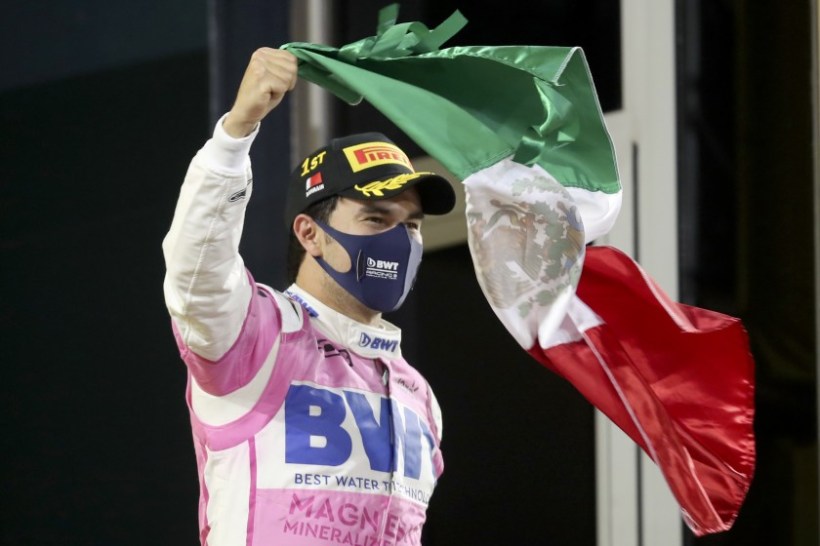
Sergio Perez jubilant after winning the Sakhir Grand Prix
Yesterday was just one week after Romain Grosjean’s fiery crash at Bahrain. With all that happened in Formula 1 since then, it seems as if more time than that has passed. After last week’s race, winner Lewis Hamilton tested positive for COVID-19 and missed yesterday’s race. George Russell, who drives for Williams, replaced Hamilton and did a superb job, only to be thwarted by a tire mix up. Sergio Perez led Racing Point to the team’s first double podium and his first win in Formula 1 in one of the most exciting Grand Prix in a long time. The race resembled an Indycar race at times.
In a Twitter video early Sunday, Grosjean told fans that he would not be in shape to drive in the season’s final race at Abu Dabi next weekend. Grosjean is not returning to Haas F1 and has no prospects in the series. Perez will not return to Racing Point and is out of a job after the Abu Dabi race. Where might the two end up? Indycar?
There has been speculation that Grosjean is in talks with A. J. Foyt and possibly another team about driving next year. Foyt is still seeking to fill the seat in the 4 car. I have not heard Perez mentioned in conjunction with an Indycar ride, but he would be a great addition to the series.
With Perez and Pato O’Ward both in Indycar, the case for the series to hold a race in Mexico in 2022 is much stronger. I think a Mexican race would be a strong draw. But who will Perez drive for?
As far as I know the following Indycar seats are open:
Coyne-2
Foyt-1, possibly 2, but one of those will go to Dalton Kellett if he can fully fund it.
Carlin- possibly 1 and the oval portion of the 59
Carpenter- 1 road/street ride in the 20. Conor Daly might fill that role again unless he can find funding for a third Carpenter full time car.
My guesses right now? Grosjean to Foyt and Perez to Coyne. Pairing Sebastien Bourdais with another French driver who could learn from him just sounds like a good move.
Perez seems like the type of driver that is attractive to Coyne. Coyne tends to find drivers with little to no Indycar experience, and somehow manages to wring some success out of them. The key is funding, as it would be with Coyne’s second car.
Bottom Line: Two Formula 1 drivers need rides for 2021; Indycar has spots. Let’s see what happens.
In the 1930’s African American driver Charlie Wiggins submitted an entry for the Indianapolis 500. It was rejected, not because of his ability. Wiggins was a multiple winner of the Gold and Glory Sweepstakes at the Indiana State Fairgrounds. The 500 would not have a driver of color until 1991.
Today, a new era of diversity begins at IMS, thanks to efforts from Roger Penske and Rod Reid, who introduced Force Indy to the media today.
Reid laid out his mission early in today’s press conference.
“I kind of see this two ways. One is that we are inviting the black community to come into motorsports through our effort as Force Indy. We are also inviting the motorsports industry to embrace seeing and having the presence of African Americans and people of color in the pits, in the paddock, in other places in motorsports.
I want to be very, very clear that we are about diversity. We are about more than just me as a principal and the drivers. As a matter of fact, one of our core projects that we’ve engaged in in terms of putting this team together is to make sure that we have those positions like mechanics and engineers and others in the mix.”
With the support of Team Penske, Reid, the CEO of NXG Motorsports, will field a car in the 2021 USF2000 series, the first step on the Road to Indy. Reid has spent 40 years in motorsport helping people of color succeed in the sport. Reid believes the mentoring of Team Penske will be a significant boost to the team in its first year.
Jimmie McMillan, Penske Entertainment Chief Diversity Officer, said, “This is very pivotal for the Race for Equality and Change that we are undergoing right now. I could tell you under our leadership, certainly under Roger Penske, but also under Mark Miles, Bud Denker, Doug Boles, Allison Melangton, Jay Frye, we are all committed to changing this sport. It is an everyday laser focus on what we can do to move the needle.”
McMillan added,”As an African American male, I cannot understate the importance of today. Someone who did not grow up with the sport, but grew to fall in love with the sport over time and over being introduced to it by others. I have strived to spread that love to other African Americans, people of color. This is a pivotal morning.”
The car will carry number 99. Reid explained the significance of that number.
“It’s so important for us to know where we’ve come from. There’s a lot of history. African Americans have been in motorsports ever since the beginning of the car, the sport itself.
A gentleman in the 1920s by the name of Dewey Gaston, he went by the nickname Rajo Jack. He actually ran No. 33 for a lot of years, was very, very successful with that number.
He was staging a comeback in the early ’50s, late ’40s. He brought a car that he thought would be extremely successful. That car was a big block engine, thought he was going to put it up front. It was No. 99. He was never able to win in that car. I think he finished the best with like a fourth in one of his races. Then he stopped.
I thought it would be fitting for us to take on that heritage and use the No. 99 to move forward. With the help of the Penske organization, ourself, we wanted to put No. 99 in the winner’s circle.”
Reid expects members of his team to eventually find jobs with other teams in the Indycar paddock. He never speaks just of drivers, but always talks of mechanics, engineers, and people on the business side of the sport. Reid indicated that the team plans to move up the Road to Indy ladder to land in Indycar in the future.
A driver has not been selected as yet. Reid said they are looking for someone who fits their criteria.
“I can tell you there’s a lot of talent out there. There are a lot of deserving drivers. Our goal is to sit down and make a decision and choose one of them that we think fit our criteria.
Very quickly, that criteria includes being an American, it includes being someone that has been given an opportunity to go from karts to cars as part of that transition. We’re also looking for someone that is youthful and can grow with us as we start to develop our team.
Probably the most important thing is they’ve got to fit what our mission is. We’re really all about the full team. This is not just about the driver, as you’ve heard from everyone here.”
There is a lot of speculation that Myles Rowe, who tested with a USF 2000 team last month is the prime candidate, but Reid was noncommittal. Neither would he rule out a female driver.
Unlike the Indianapolis 500 drives of Will T. Ribbs and George Mack, which were essentially one off ventures, Reid is looking at a long term sustainable model to infuse diversity throughout Indycar.
The support from the top should give Force Indy the foundation to succeed. I’m sure Charlie Wiggins is smiling today.
From the Indianapolis Motor Speedway today. Follow up story later.
Team Penske to mentor new team as it launches competition in 2021 USF2000 Series INDIANAPOLIS (Thursday, Dec. 3, 2020) – African American business leader and former team manager Rod Reid has announced the formation of Force Indy, a race team set to compete in the 2021 Cooper Tires USF2000 Championship. For 30 years, USF2000 has been the formative step of the popular Road to Indy Presented by Cooper Tires ladder system, which culminates in scholarship opportunities in the NTT INDYCAR SERIES. This program has grown into a proven pipeline for open-wheel racing’s future stars. Force Indy Team Principal Reid brings years of karting and auto racing experience and a recently expanded relationship with NXG Youth Motorsports Inc., which has introduced more than 2,300 students from under-represented communities, ages 11 to 15, to the educational benefits of the sport. Force Indy’s race team will focus on hiring and developing Black American men and women mechanics, engineers, staffers and drivers. “I started a race team in 1984, and I have always had a desire to have a team of talented individuals who look like me in the professional ranks of the sport,” Reid said. “I have been in and around the sport for 40 years, and this is just the culmination of years of hard work. I simply cannot wait to see this race team on the track this spring.” The Force Indy announcement includes a mentorship from the legendary Team Penske, winners of a record 18 Indianapolis 500’s and 16 NTT INDYCAR SERIES championships. During its first season, Force Indy will be based in Concord, North Carolina, as it receives guidance from Team Penske’s key personnel. “When the IMS and INDYCAR acquisition happened a year ago, I was pleased to learn of the work Rod Reid was doing,” Indianapolis Motor Speedway Chairman Roger Penske said. “To lend our support to an effort like this is a natural. Together, we’ll work to not only get this new team off the ground but continue to support it and its mission as it continues down a path to compete at the top level.” Force Indy will make its debut at the Firestone Grand Prix of St. Petersburg, March 5-7, 2021. The team will use No. 99 on the car in honor of the late Dewey “Rajo Jack” Gatson, who drove a roadster with that number toward the end of his career in 1951. Gatson, one of the winningest African American drivers and mechanics in racing history, never received an opportunity to race in the Indianapolis 500. Overall, the initiative is part of a broader picture in the INDYCAR and Indianapolis Motor Speedway “Race for Equality & Change,” announced in July. The goals include recruiting and developing a diverse workforce throughout all levels of INDYCAR and IMS, ultimately creating a community that fundamentally transforms the sport. “Rod is a passionate leader and talented team builder who has demonstrated a fundamental commitment to equality and opportunity in our sport,” IMS President J. Douglas Boles said. “IMS has been privileged to be a partner with Rod and NXG for more than a decade, and we know he’ll bring the same commitment and drive for excellence to Force Indy.” Sponsorship and driver for Force Indy’s inaugural season will be announced at a later date. “We are fortunate to have Team Penske offer guidance and race-winning experience,” Reid said. “Roger’s experience will be an invaluable resource in creating a successful organization. There’s no better time than now to start a team.” For additional information, please visit the team’s website: www.ForceIndy.com
One of the lessons tracks learned in 2020 was to plan ahead for fan safety. With a COVID-19 vaccine soon to be available, some may have thought that tracks could operate as they used to. If tracks can return to their normal operations, it may not be until late in the season. The French Grand Prix, a June race yesterday announced that only 15,000 fans would be allowed to attend.
Daytona International Speedway yesterday announced that attendace at the Daytona 500 will be limited to those who have already bought tickets. Those fans’ seats will be reassigned to create social distance. Fans may turn in their tickets, I assume for credit, and those tickets will be sold to the general public until an unspecified attendance limit is reached. This is a procedure that many more venues may follow.
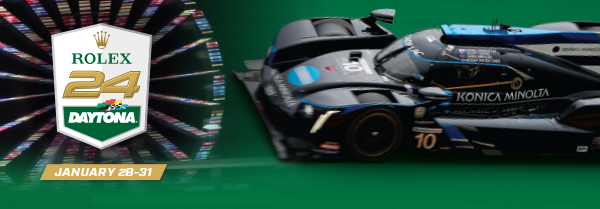
I received this somewhat cryptic message yesterday about the Rolex 24:
Dear Mike, Thank you for your continued support of Daytona International Speedway. As we look forward to the start of a new IMSA season and continue preparations for the Roar Before The Rolex 24 and Rolex 24 At DAYTONA Weekend, we are more grateful than ever to have the best fans in sports!
We continue to work with our local, state, and health officials regarding fan attendance during both IMSA event weekends. More specific information, such as event details, available fan experiences, and health and safety measures will shared in the upcoming weeks. With the announcement that NASCAR’s reigning Cup Series champion Chase Elliott and 7-time Cup Series champion Jimmie Johnson are joining us for this event, we look forward to carrying on the storied tradition of hosting the world’s best drivers for this grueling showcase of man and machine. The Rolex 24 At DAYTONA is sure to once again deliver the pageantry, thrills, and drama for all fans, especially those able to attend in person. We hope each and every one of you is staying safe, and we look forward to seeing all of you back at the track, hopefully very soon. Warm Regards,
My attendance at the 2021 Rolex is doubtful. I did buy a ticket in order to retain my camping spot. Endurance races in general have many fans spread over a large area. What I saw on television from Sebring and Road Atlanta was a larger than safe number of fans at the track.
At the five tracks I went to this season, I felt safe for the most part. Each track seemed to be better prepared than the one before as far as fan safety and enforcement of protocols.
I think we will see fewer outright race cancellations this coming season, although races may still be postponed until later. Even as many people receive the vaccine, masks will likely still be required for another year. I don’t think pit or paddock access for fans will return in 2021.
The early events on the Indycar schedule may give us a clue to the state of fan limits. I know the Indianapolis Motor Speedway has several contingency plans for May in the works. I think the 500 will run as scheduled with a limited number of fans.
The main thing to keep in mind is that things should improve as 2021 goes on, but that 2022 may be the first completely normal racing season.
I will be back later this afternoon following a press conference at IMS regarding the Race for Equality and Change Program.
Formula 1’s busy week continues with driver announcements, musical chairs, and the latest update on Romain Grosjean.
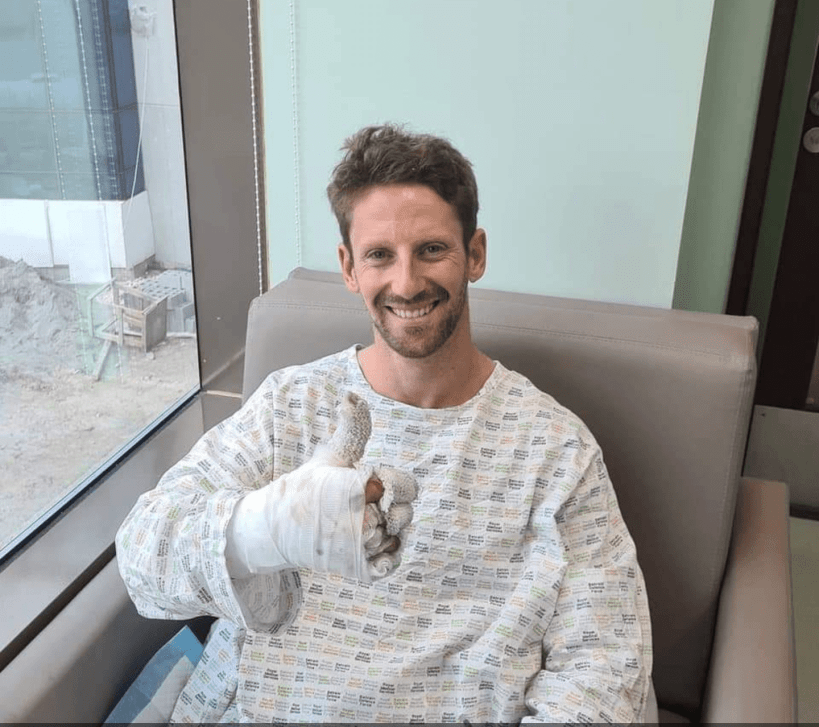
Grosjean’s release from the hospital was postponed until Wednesday in order for him to receive more treatment for the burns on the back of his hands. He is responding well to treatment. In a compelling interview yesterday, Grosjean said that he “saw death” as he looked to escape from the burning car. Twenty eight seconds elapsed from the time of the car’s impact with the armco and Grosjean getting over the barrier to safety. It certainly seemed much longer than that as I watched.
Update- Grosjean has been discharged from the hospital.
Russell Fills In for Hamilton
George Russell
George Russell will substitute for Lewis Hamilton, who tested positive for COVID-19, in this weekend’s Sakhir Grand Prix at Bahrain. Russell has driven full time for Williams this season. Jack Aitken will drive the Williams car Russell normally pilots.
Haas Announces 2021 Driver Lineup
The announcements were probably already scheduled for this week, but in light of Sunday’s incident, perhaps they could have been pushed back a week. Haas had announced that neither Grosjean nor teammate Kevin Magnussen would return to the team next year.
Haas on Monday announced that Nikita Mazepin would fill one of the seats. Yesterday Mick Schumacher. son of seven time F1 champio Michael Schumacher, completed the Haas F1 lineup for 2021.
Nikita Mazepin
Mazepin currently is third in the F2 standings heading into this weekend’s finale on Bahrain’s outer circuit. he has won feature races at Silverstone and Mugello. He will be the fourth Russian driver to race in F1 after Vitaly Petrov, Daniil Kvyat and Sergey Sirotkin.
Mick Schumacher
Schumacher , also 21, is a member of the Ferrari Driver Academy and leads the Formula 2 standings by 14 points. He has 10 podium finishes in 2020, including a pair oft Feature Race wins at Monza and Sochi.
With pietro Fittipaldi racing for Haas this weekend and Schumacher full time in 2021, F1 looks to be on the verge of a second generation change. It will be nice seeing the name Schumacher on the pylon again.




 Dear Mike, Thank you for your continued support of Daytona International Speedway. As we look forward to the start of a new IMSA season and continue preparations for the Roar Before The Rolex 24 and Rolex 24 At DAYTONA Weekend, we are more grateful than ever to have the best fans in sports!