9:00 to 10:00 AM | Today at the 500 streaming show airing
11:00 AM | Optional Drivers Meeting
12:30 to 1:30 PM | Final 500 Mile Race Practice Session (1 hour)
2:00 PM | Veterans 100 Race presented by Goke (40 Laps, 100 Miles)
3:30 PM | Pit Stop Competition presented by The Pit Window (30 Laps, 75 Miles)
The Pit Stop Competition is different from the one at the Indianapolis 500. I actually like this idea better.
Round One- Four heats of 12 laps with the top four in each heat advancing to the final round.
Round Two- The top 16 drivers participate in a 20 lap race.
In each heat and the final, cars have only 17% of full fuel load, necessitating pit stops. When they pit, the car can only be filled to the 17% level, just a bit more than three gallons. According to Race Director Tanner John Watkins, drivers will need to pit every three or four laps. Stops will be crucial to winning the race.
Action can be viewed on twitchtv. https//twitch.tv/openwheels
Tomorrow the Open-Wheels 500 presented by Mitchell Transmissions begins at 11:45 am EST. The race can be seen on RaceSpot TV. Go to
I’m not sure Ford vs. Ferrari is the appropriate title for this film. Shelby vs. Ford, Miles vs. Beebe, or The Ken Miles Story might have more aptly described the content. Ferrari plays just a small part in the overall plot. The good news is this is a very entertaining film, well acted by Matt Damon and Christian Bale. It features some decent racing sequences of LeMans, including some shots at night. I found those especially good.
The first two thirds of the film focuses on Henry Ford II’s plan to pull his company out of its sales slump. In the early sixties, sales had dropped as the baby boomers sought sleeker, faster cars. He decides on the quick fix of buying financially strapped Ferrari. On the verge of the sale, Enzo Ferrari rejects the offer because he would lose of the control of the racing program. Ferrari then accepts an offer from Fiat for the same price.
Ford soon introduces the Mustang under Lee Iacocca’s direction and plans to build a LeMans car to beat Ferrari. They reach an agreement with Carroll Shelby to build what became the Ford GT40. Shelby and his friend and test driver Ken Miles don’t exactly see eye to eye with the Ford executives. Miles and Leo Beebe in particular don’t care for each other. Shelby and Miles are abrasive characters who have issues following the company line. However, when they win the 1966 24 Hours of Daytona and the 12 Hours of Sebring, Ford grudgingly gives them some respect.
After Ford’s disastrous showing in the 1965 24 Hours of LeMans, Shelby’s team continues to develop the car with the aid of a larger 427 engine. Miles, who was not allowed to drive in the 1965 race, starts the 1966 event and charges from a lap down at the start to a commanding lead. The controversial finish of that year’s race, dictated by Leo Beebe, is still contentious.
If you go expecting lots of racing, you will be disappointed. Almost all the racing footage takes place in the last third of the movie. I was expecting more racing. There are lots of shots of the speedometer(?) and the tachometer hitting 7,000 rpm. And of course some crash scenes, a few of which seemed gratuitous.
A subplot involves Miles, his supportive wife, and his son Peter, who adores his father. Theses scenes help round out Miles’ character and give him a sympathetic touch. Shelby races vicariously through Miles after Shelby’s career was cut short by a heart condition.
As a film Ford vs Ferrari is entertaining. I liked the depictions of the characters, especially since last week I read Go Like Hell. I found their screen portrayal true to the book. I was a bit disappointed that most of the other stars of the era were not depicted, even in a cameo. Several were mentioned, but not portrayed.
If you want to see a racing movie with lots of racing, I recommend Rush or Grand Prix. I recommend Ford vs Ferrari as a study of the era when the business model of racing began to change as Ferrari’s dominance begins to fade from the sports car scene.
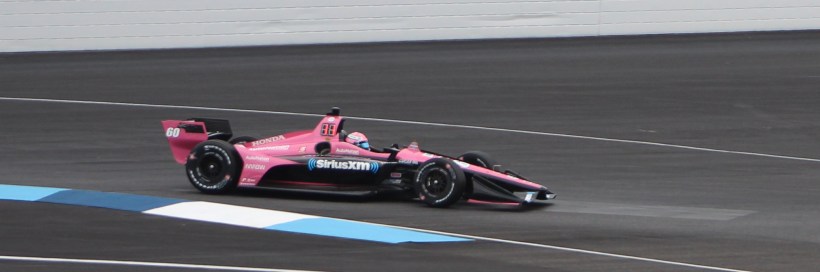
Photo: Spencer Pigot on Pole Day, 2018. Photo by Mike Silver
The 2019 Silly Season keeps spinning along. It seems as if it has been a decade Alexander Rossi re-signed with Andretti and we all thought we were in for a boring off season. Today, two changes came to light. Neither is actually a surprise, but the reality always seems to hit hard.
After hearing rumblings all day, confirmation came that Spencer Pigot has lost his ride in the number 21 Ed Carpenter Racing car for 2020. The decision appears to be financial. Carpenter is looking for a driver who is bringing funding, which Pigot does not have. No replacement has been announced, but there are indications that 2019 Indy Lights runner-up Rinus VeeKay may be in line for that car.
Update
On Friday November 15 Rinus Veekay issued the following statement:
Pigot won every step on the Road to Indy, but has not achieved much success in Indycar. his best finish was second at Iowa in 2018. He may find an entry for the Indianapolis 500, but I think IMSA may be his best bet for steady employment next season. I have always thought Pigot had loads of talent, but he never consistently showed it in the NTT Indycar Series.
Pigot practicing for the 103rd Running of the Indianapolis 500 in May
There is speculation as to who will drive the number 20 on the road and street courses. Ed Carpenter struck down the talk of F1 driver Nico Hulkenberg joining the team next year.
SCRAMP Out as Laguna Seca Management
In an email from SCRAMP today:
“After 62 years of continuous management of the Laguna Seca Raceway, the Sports Car Racing Association of the Monterey Peninsula (SCRAMP) has been advised via email by County of Monterey Assistant County Administrative Officer (ACAO) Dewayne Woods that “…the County is now in negotiations with another proposer for management services at Laguna Seca Recreational Area.”
According to the agenda for Tuesday, November 19 Board of Supervisor’s meeting, that proposal is centered on Monterey County’s direct management of the Raceway and Recreation Area.
“This news comes as a surprise to the SCRAMP organization,” said Tim McGrane, CEO of WeatherTech Raceway Laguna Seca and SCRAMP, who took over the position in June 2018. “We were starting to make real progress on getting the facility and the raceway operations turned around and poised for the future, but it appears at this time we may not have the opportunity to see these plans through,” continued McGrane.
“As the existing facility operator, we were stunned by the fact that we were not provided the opportunity to discuss our proposal with the ACAO. The entire process has been unconventional, ranging from the bypassing of the County’s usual Request For Proposal (RFP) process, the announcement in mid-October requesting proposals from any interested parties with only two weeks’ notice, and complaints that SCRAMP had not met deadlines to submit a proposal when in fact a submission date had been agreed upon in May, and subsequently met, has been challenging,” McGrane said.
This is not the first time that the County has sought an alternative to SCRAMP. “We have been in this position before with the County administration, but we, our fans, racing series and teams, do have to look at the possibility of the era of SCRAMP operating Laguna Seca Raceway coming to an end,” McGrane said.
In 2015, Monterey County began private talks with International Speedway Corporation (ISC) who, after a careful review of the operational parameters of the facility, determined not to submit a formal proposal for management of the track. In 2016, the Monterey County Administrators Office entered into negotiations with another group to replace SCRAMP for 2017 but were unable to agree to terms that were mutually acceptable. The County then reverted back to a three-year agreement with SCRAMP to continue running Laguna Seca.
In 2018, the SCRAMP-run Laguna Seca Raceway attracted 263,888 attendees and generated $84.4 million in direct spending generated by event attendees over 26 days of the seven major events. 2019 saw SCRAMP orchestrate the long-awaited and highly-successful return of IndyCars to Laguna Seca, with a larger than anticipated spectator count for the weekend.
“We’ve delivered an extensive, forward-looking proposal to the County for a new, long-term 20-year management and operating agreement that incorporates solid plans for revenue generation and expense reduction, expansion of the use of existing facilities, and development of Laguna Seca into a world-class destination,” said CEO McGrane. “We are building the right team, both paid staff and volunteers, with extensive motorsports experience, institutional knowledge, and the dedication to lead this important Monterey County asset into a successful future. We hope we still have the opportunity to present our plans directly to the County Board of Supervisors and we would be proud to continue SCRAMP’s 62-year stewardship of Laguna Seca on behalf of Monterey County.”
The Sports Car Racing Association of the Monterey Peninsula, a 501(c)4 not-for-profit, was formed in 1957 by local business owners and civic leaders. SCRAMP’s goal was to raise the funds needed to construct a permanent motor racing circuit to maintain the tradition of sports car racing on the Monterey Peninsula which had begun in 1950 in the Del Monte Forest at Pebble Beach. SCRAMP is comprised of a Board of Governors, Race and Events Committees, and hundreds of loyal volunteers who donate thousands of hours each year to ensure the successful operation of events here.
The SCRAMP organization acquired leased land from the US Army at Fort Ord on August 7, 1957, and the now-legendary track, built with funds raised by SCRAMP, held its first race, the 8th Annual Pebble Beach at Laguna Seca SCCA National Championship Sports Car Road Races, on November 9 & 10, 1957. In 1974 the site was transferred from the Army to Monterey County, who together with SCRAMP, have managed the facility through this year.
SCRAMP’s current three-year management and operating agreement with Monterey County ends on December 31, 2019. SCRAMP currently employs a full-time professional staff of just over 40 team members. “
I thought the season finale at Weather Tech Raceway Laguna Seca was a well organized event. The media center was one of the best all year. I know there has been some differences between SCRAMP and the county.
My hope is that this change does not jeopardize the Indycar event in the future. I always get nervous when track management changes.
Back later this weekend with a review of Ford vs. Ferrari.
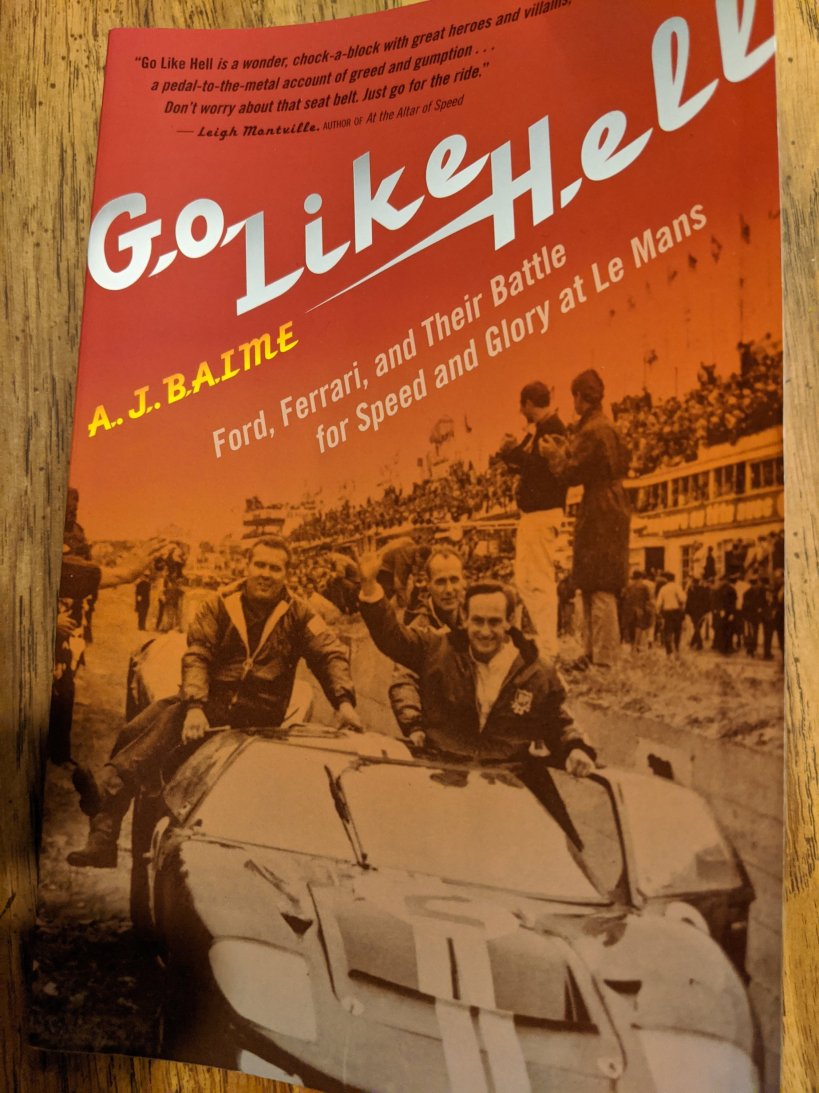
Editor’s note: I read this book to refresh my memory of the time period in preparation to seethe movie Ford vs Ferrari. I recommend it to anyone who plans to see the film. It provides great background.
Two determined men and their prestigious car companies compete to win the 24 Hours of Le Mans in the mid 60’s. Go Like Hell by A. J. Baime chronicles the efforts by Ford to win the race and the efforts of Ferrari to maintain their six year win streak. It is a study of contrasting styles. Henry Ford II tries to create a fresher look for the company his grandfather started, and Enzo Ferrari who wants to continue his car’s dominance of the world’s most famous sports car race.
The book also chronicles the stories of Carroll Shelby and Ken Miles. Shelby develops the Cobra with an investment from Ford. Miles, an accomplished racer who excelled at developing race cars, tests Shelby’s racers. Like Ford, Shelby has a reason to beat Ferrari.
The story switches back and forth between Henry Ford II and Enzo Ferrari, presenting a brief biography of each man. The rivalry begins in earnest in 1963 when at the last minute Ferrari rejects an offer from Ford to buy the famous Italian company. Ford decides to build its own race cars and challenge the Le Mans champions directly.
The book is brutally honest about the fatalities which occurred too often at the time. Ferrari’s attitude seems to be that drivers are expendable. Phil Hill walks away after winning the world championship in 1961, saying he didn’t want to die for Ferrari. We also see a glimpse of the politics of racing as John Surtees quits the team on the morning of Le Mans in a dispute over who would start the race.
The 1966 Le Mans roster of drivers mentioned is an all star list of the middle 1960’s. Some of Ford’s lineup includes Mario Andretti, Mark Donohue, Bruce McLaren, Chris Amon, Dan Gurney, Lloyd Ruby, Ken Miles, Denny Hulme, and Ronnie Bucknum.
Ferrari counters with Pedro Rodriguez, Richie Ginther, Masten Gregory, Bob Bondurant, and Richard Atwood.
The 1966 Le Mans finish is controversial, and the story ends by relating what happens to the principals in the years following.
For those in my age bracket, it is a great retelling of the times. I learned some things and recalled several of the races and drivers mentioned. For younger fans, it is a good introduction to that era of sports car racing. . If you see Ford vs Ferrari first, I would still recommend the book to fill in the background. I’m looking forward to the movie this weekend.
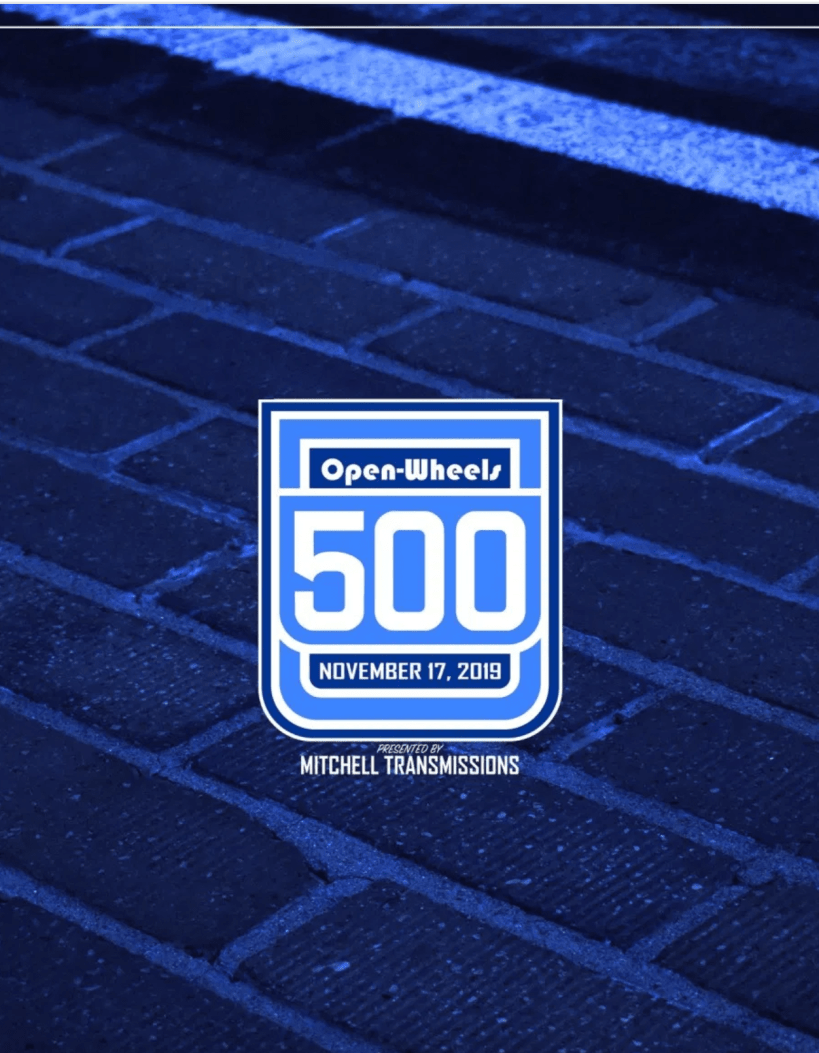
After a hectic weekend the starting lineup for Sunday’s Open-Wheels 500 Presented by Mitchell Transmissions is set.
Three rookies and seven former winners of the past iteration of the the event made the field. Three time winner Yang Ou is on the pole. Yang Ou returns to iracing after sitting out for a few years. All cars are the Dallara IR-18 chassis. the chassis was definitely the fastest during practice as well.
Logan Simmons, starting 10th, is the fastest rookie.
On Saturday race weekend festivities begin with the Veterans 100 followed by the Pit Stop Competition Presented by The Pit Window.
Saturday’s schedule:
Saturday, November 16
“Day Before the 500”
9:00 to 10:00 AM | Today at the 500 streaming show airing
11:00 AM | Optional Drivers Meeting
12:30 to 1:30 PM | Final 500 Mile Race Practice Session (1 hour)
2:00 PM | Veterans 100 Race (40 Laps, 100 Miles)
3:30 PM | Pit Stop Competition (30 Laps, 75 Miles)
Later in the week I’ll provide viewing opportunities and times.
Yang Ou returned to iracing and picked up right where he left off. Yang won the pole Saturday for the inaugural Open-Wheels 500 Presented by Mitchell Transmissions. he edged Wilson Neto by 0.009 seconds. Neto had the fastest lap, 39.101 seconds, and both drivers had two laps over 230 mph. Yang’s other two laps were higher in the 229 range than Neto’s 229 mph laps. Both drivers earned their spots on second qualifying attempts.
After receiving the Pit Lane Parley Pole Award, Yang said, It was “a no-brainer to go out again. I was little conservative on my second run, but just enough.” For next Sunday’s race day, he is looking for “a little more speed” and to “learn to drive in traffic.”
Sunday’s race will e his first race in the IR-18. Yang previously drove the DW 12.
Neto had the fastest lap of the day at 230.173 mph. “I knew I had car to be in the top 5,” Neto said. To prepare for the race, he will run a couple of races during the week.
65 cars completed qualifying attempts yesterday. On the bubble in 33rd position is Niall McBride with an average time of 39.292.
Bump Day is currently ongoing and ends at 5:50 pm, when the field of 33 will be set for the race.
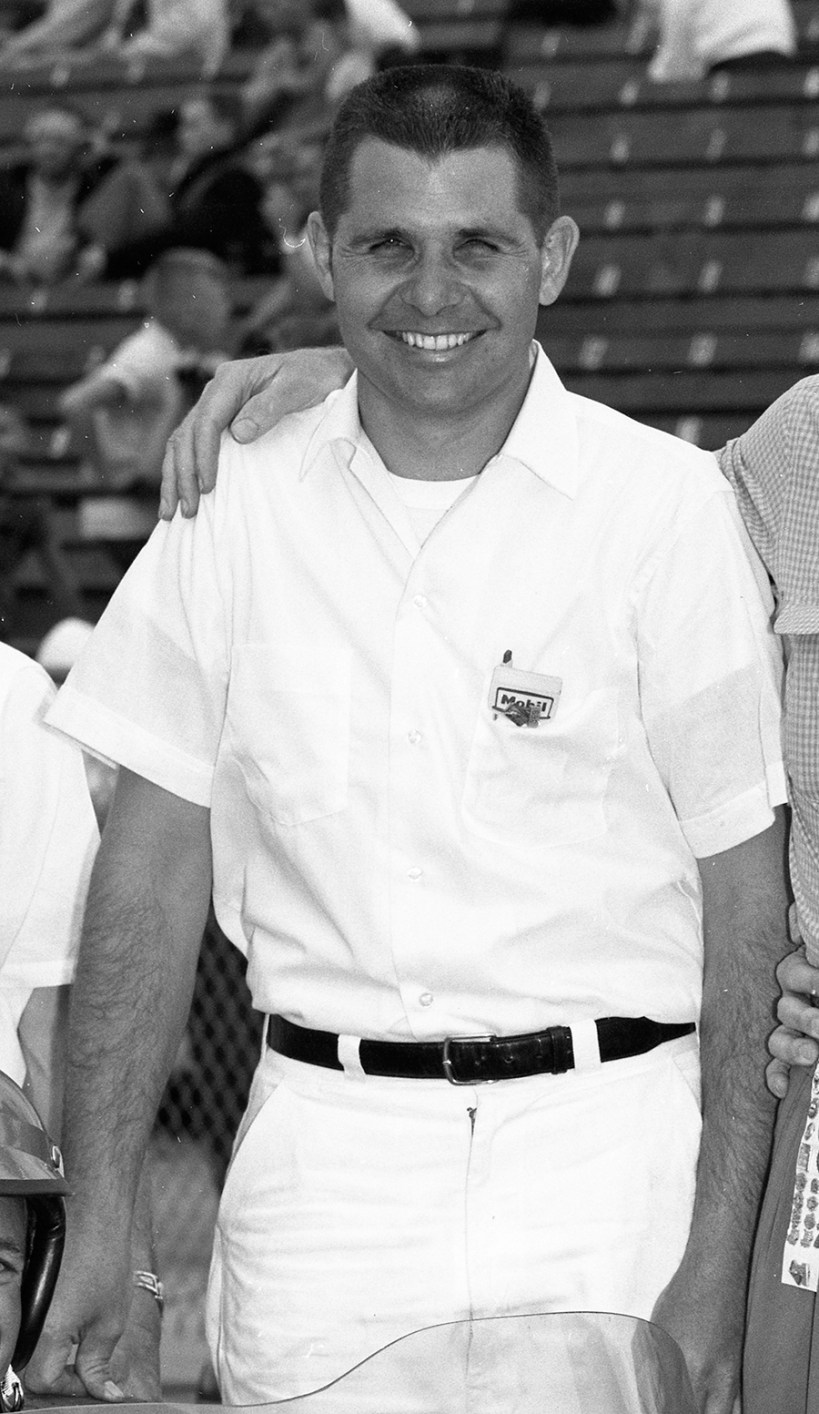
Photo: Sonny Meyer in 1960. Photo from the Indianapolis Motor Speedway Museum
For the second time this week, the Indianapolis 500, the Indianapolis Motor Speedway, and Indycar racing has lost a legendary link in the chain of its past.
Sonny Meyer, 89, died Saturday. Meyer was the son of the 500’s first three time winner, Louis Meyer. He began working on engines as a teenager after his father purchased the Offenhauser engine business. Meyer was directly in involved in at least 15 winning Indianapolis 500 engines. He worked with many of the greats, including Bill Vukovich, Tony Bettenhausen, Troy Ruttman, Gordon Johncock, and A. J. Foyt.
The events earlier this week and now this news intensifies my resolve to continue writing about Indycar racing’s past. Beginning next month I plan to recognize those links to the past that are still living, so fans can pay tribute to the people who have made this sport what it is.
As I have said before, should you encounter one of these heroes of yesteryear, please say hello and let them know how much they are appreciated. Time is speeding by quickly.
I’m very happy to see Meyer-Shank and Jack Harvey will run the entire season for the next two years.
Michael Shank has set a great example for other fledgling teams of how to build up to a full season. I admire his tireless work to get to this point.
Last year Harvey had good results in the first part of the season where they ran the majority of their schedule. After the team took a break, they seemed to struggle in the remaining races which were scattered through the last part of the year. I’m hoping the consistency of running every race will provide even better results.
With Meyer-Shank in an alliance with Andretti, this eliminates any chance of another full time car. i wouldn’t be surprised if there is an extra entry for May, though.
Their video is very cool. Welcome to a full season, MSR.
💥Announcing our full season @IndyCar program for 2020 with the return of @jack_harvey42 and the expansion of our partnership with @AutoNation and @SiriusXM. And we’re excited for a new technical alliance with @AndrettiTech.



 The Pit Window by Mike Silver